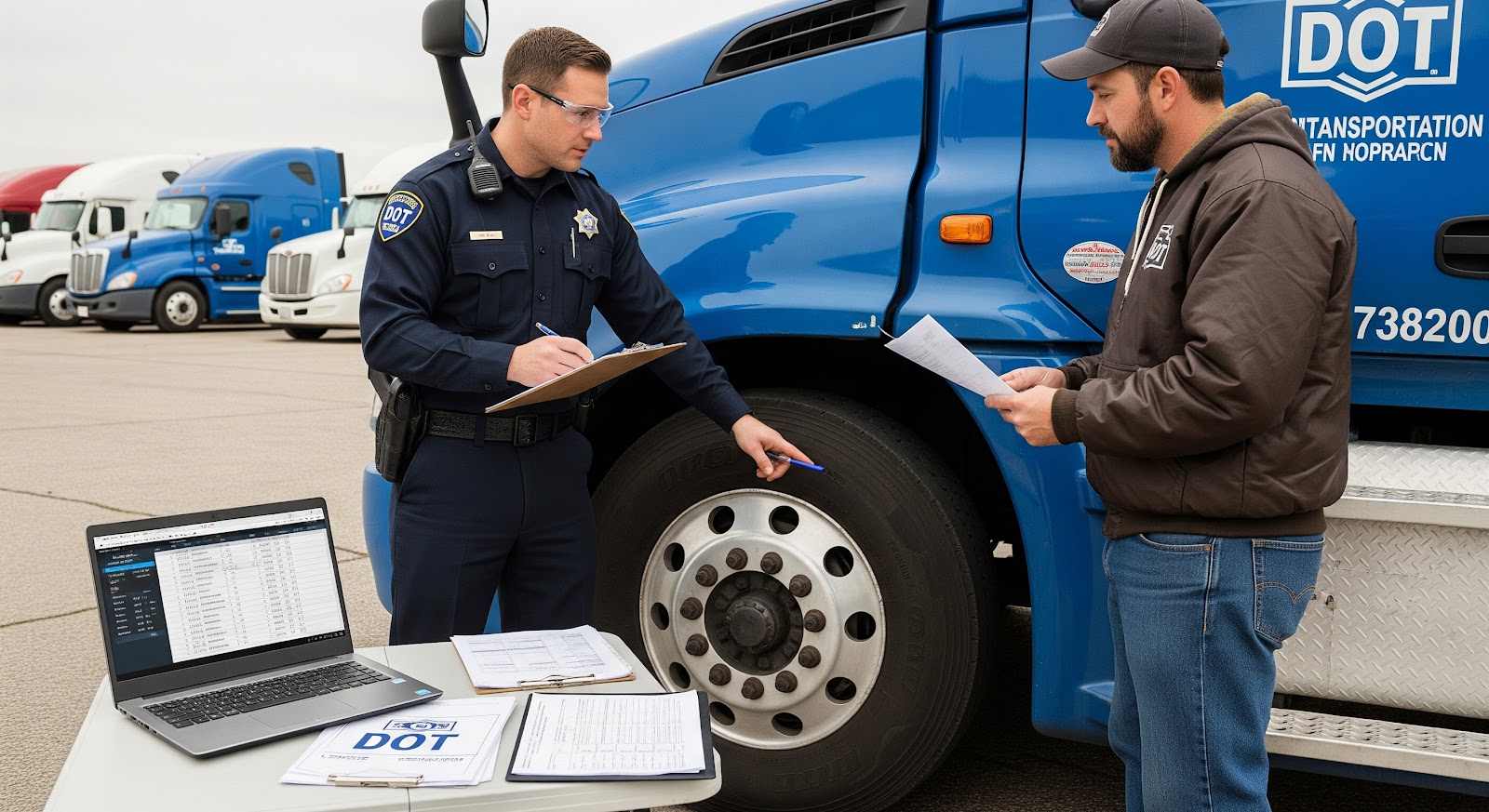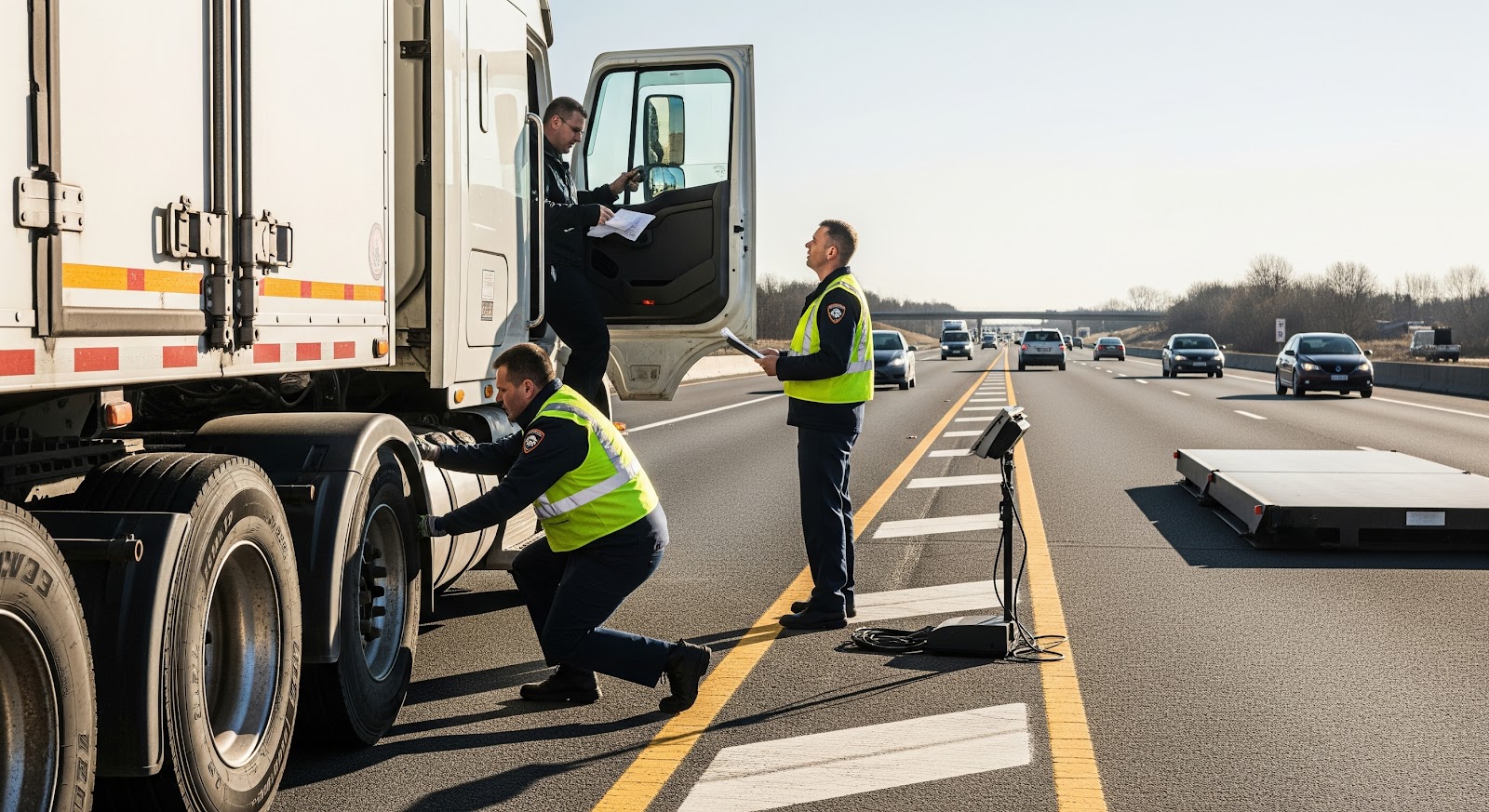
For every trucker on the road, roadside inspections are an inevitable part of the job, but being prepared for them can mean the difference between a smooth haul and costly downtime. These inspections are carried out by Department of Transportation or FMCSA-certified officers to ensure both drivers and vehicles meet federal and state safety regulations. They can happen anywhere, anytime, at weigh stations, rest areas, or random stops on the highway.
With increasing adoption of Electronic Logging Devices, telematics, and real-time diagnostic tools, enforcement is becoming more data-driven. Inspectors are now relying more on digital records and automated pre-screening systems, reducing the time it takes to identify issues, but also increasing scrutiny on things like Hours of Service, vehicle maintenance records, and tax documentation such as the IRS 2290 Schedule 1.
Let’s walk through everything you need to know to prepare for and pass a roadside inspection in 2026, from vehicle checklists and driver documentation to behavioral tips and the latest tech tools. Whether you’re an owner-operator or managing a fleet, this proactive approach will help you stay compliant, avoid penalties, and keep your wheels rolling.
Understanding Roadside Inspections
What Are Roadside Inspections?
Roadside inspections are official examinations of commercial motor vehicles conducted by Department of Transportation officers or Federal Motor Carrier Safety Administration certified inspectors. These inspections are intended to evaluate both the mechanical condition of the vehicle and the legal compliance of the driver. They can be conducted at fixed weigh stations, rest stops, or on the side of the road during random or targeted enforcement efforts.
The goal of a roadside inspection is not to disrupt your trip, it’s to ensure that your vehicle is safe to operate, your documents are up-to-date, and you are in full compliance with federal and state laws. Inspections also play a major role in reducing crashes, minimizing mechanical breakdowns, and improving the overall safety of our highways.
Inspectors will typically review:
- The vehicle’s mechanical components such as brakes, tires, lights, and coupling devices.
- The driver’s credentials, including CDL, medical certificate, and Hours of Service logs.
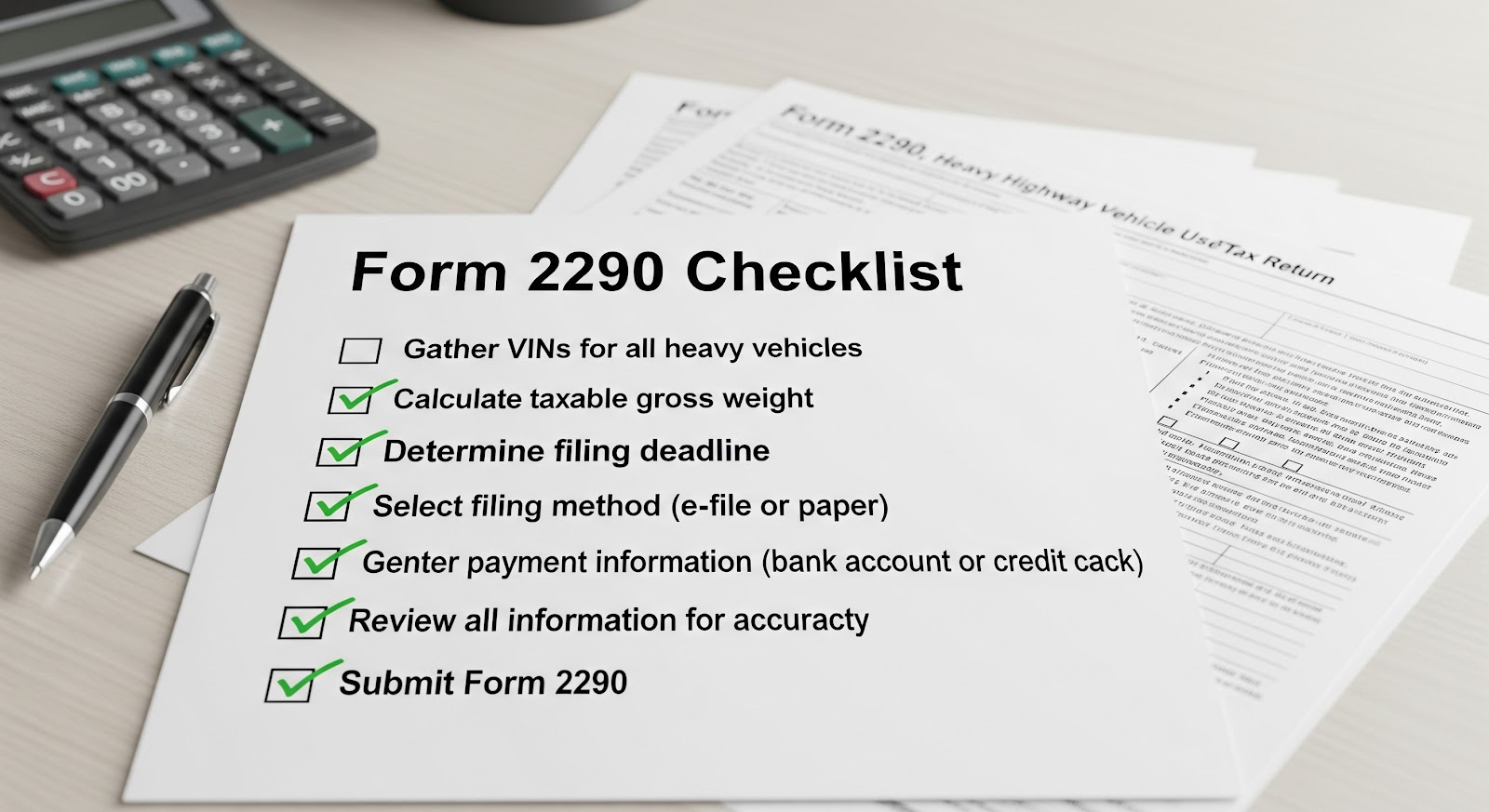
- Required documentation, such as registration, insurance, and the IRS Form 2290 Schedule 1 to prove that your Heavy Vehicle Use Tax has been paid.
Any violations found during the inspection can lead to citations, out-of-service orders, or impact your company’s CSA scores.
Levels of Inspections (FMCSA)
The FMCSA outlines six levels of inspections, each varying in scope and depth. Knowing the differences can help you better prepare and understand what an inspector may be looking for:
Level I: North American Standard Inspection
This is the most thorough and comprehensive inspection. It includes a complete check of both the driver and the vehicle:
- Driver’s license, medical examiner’s certificate, HOS logs, and documentation.
- Vehicle inspection including brakes, tires, lighting, steering, suspension, and cargo securement.
- Inspectors may crawl under the vehicle to check components.
Tip: If you pass a Level I inspection with no violations, you may receive a CVSA decal that signals compliance to other officers.
Level II: Walk-Around Inspection
Similar to Level I, but the inspector does not go underneath the vehicle. They will check:
- Driver credentials and documentation.
- Vehicle components that are visible during a walk-around (e.g., tires, lights, reflectors, cargo tie-downs).
It’s still detailed, but faster than a Level I.
Level III: Driver-Only Inspection
Focuses entirely on the driver’s compliance:
- CDL and medical card.
- HOS (Hours of Service) logs from your ELD.
- Proof of insurance.
- Vehicle registration and required tax forms like Form 2290 Schedule 1.
This level is often used to verify documentation without checking the physical vehicle.
Level IV: Special Inspection
This is a one-time, targeted inspection, typically conducted for research, compliance studies, or after a known issue or accident. It can focus on a specific issue (e.g., brakes, emissions, or logbook falsification).
Level V: Vehicle-Only Inspection
This inspection involves only the vehicle, without the driver being present. Often done at terminals or during compliance reviews. It includes all the mechanical checks of a Level I inspection.
Level VI: Enhanced NAS Inspection for Radioactive Shipments
This level applies to CMVs transporting radioactive materials. It involves stricter protocols, documentation, and inspection procedures under the U.S. Department of Energy guidelines. It’s rarely encountered unless you’re in that specialized field.
Understanding these levels can help truckers and fleet managers tailor their pre-trip inspections and recordkeeping to match what might be expected during a stop. Preparation is key, especially as roadside inspections continue to integrate digital data systems and automated screening technologies in the years ahead.
What’s New in 2026?
Here’s what truckers and fleet operators can expect to see more of in 2026:
1. Greater Focus on ELD Data and Telematics
Electronic Logging Devices, once a new requirement, are now fully integrated across the industry, and enforcement is catching up. In 2026, expect:
- Tighter scrutiny of HOS (Hours of Service) violations via ELD downloads at inspection sites.
- Automated flagging of form and manner errors, unassigned driving time, and violations.
- Real-time access to driver logs during inspections, reducing inspection time but increasing accountability.
- Potential expansion of telematics data (e.g., speed, harsh braking, diagnostics) being used to assess overall compliance or safety risk during an inspection.
Tip: Make sure your ELD is up-to-date and your logs are clean, complete, and properly annotated.
2. Automated Inspections via Weigh Station Pre-Clearance Systems
With programs like Weigh Station Bypass (Formerly Drivewyze) and PrePass expanding, more weigh stations are equipped to perform automated Level VIII electronic inspections, often without the truck even stopping. In 2026:
- More states may adopt weigh-in-motion (WIM) and transponder-based inspections, using your safety score and telematics to decide whether to bypass or flag your truck.
- Vehicles with poor CSA scores, out-of-date documents (like Schedule 1), or inconsistent telematics data may be automatically flagged for inspection.
- Integration of license plate readers, USDOT number scans, and VIN checks at pre-clearance points.
These “invisible inspections” mean you may be assessed without even realizing it.
3. Enhanced CVSA Criteria Updates (If Announced)
The CVSA North American Standard Inspection Program often updates its out-of-service criteria annually. While the full 2026 updates are yet to be released, likely areas of change include:
- Stricter enforcement around electronic documentation (e.g., digital registration, insurance, tax forms).
- Updated standards for automated safety systems like lane-departure warnings or auto-braking (especially on newer trucks).
- Greater focus on driver fitness, including recent changes to medical certification and drug/alcohol clearinghouse compliance.
Staying informed of CVSA updates is crucial, especially before International Roadcheck or targeted enforcement events.
4. Integration with Fleet Management Systems and AI-Based Scoring
Fleet operators using telematics and fleet management software may see more integration between inspection data and their internal platforms. By 2026:
- Some fleets may automatically receive inspection summaries, CSA score updates, and compliance risks via their telematics dashboard.
- AI may be used to predict violations or maintenance risks, allowing proactive interventions.
- Expect an increase in “predictive safety scores” that insurers, shippers, or regulators may use to assess your compliance, even before an inspection happens.
This trend rewards well-maintained vehicles, digital recordkeeping, and proactive safety culture.
Bonus: Expanded Role of Digital Tax Documentation
In 2026, inspectors may rely even more heavily on digitally verified documents, including:
- IRS Form 2290 Schedule 1 to confirm HVUT payment.
- Electronic IFTA permits, IRP registration, and digital cab cards.
Having a mobile-friendly, instantly accessible copy of these documents can speed up inspections and avoid unnecessary delays.
2026 roadside inspections will be faster, smarter, and more reliant on data than ever before. Staying ahead means embracing technology, keeping records clean and current, and understanding how automated systems interpret your compliance.
Pre-Trip Preparation: What to Check
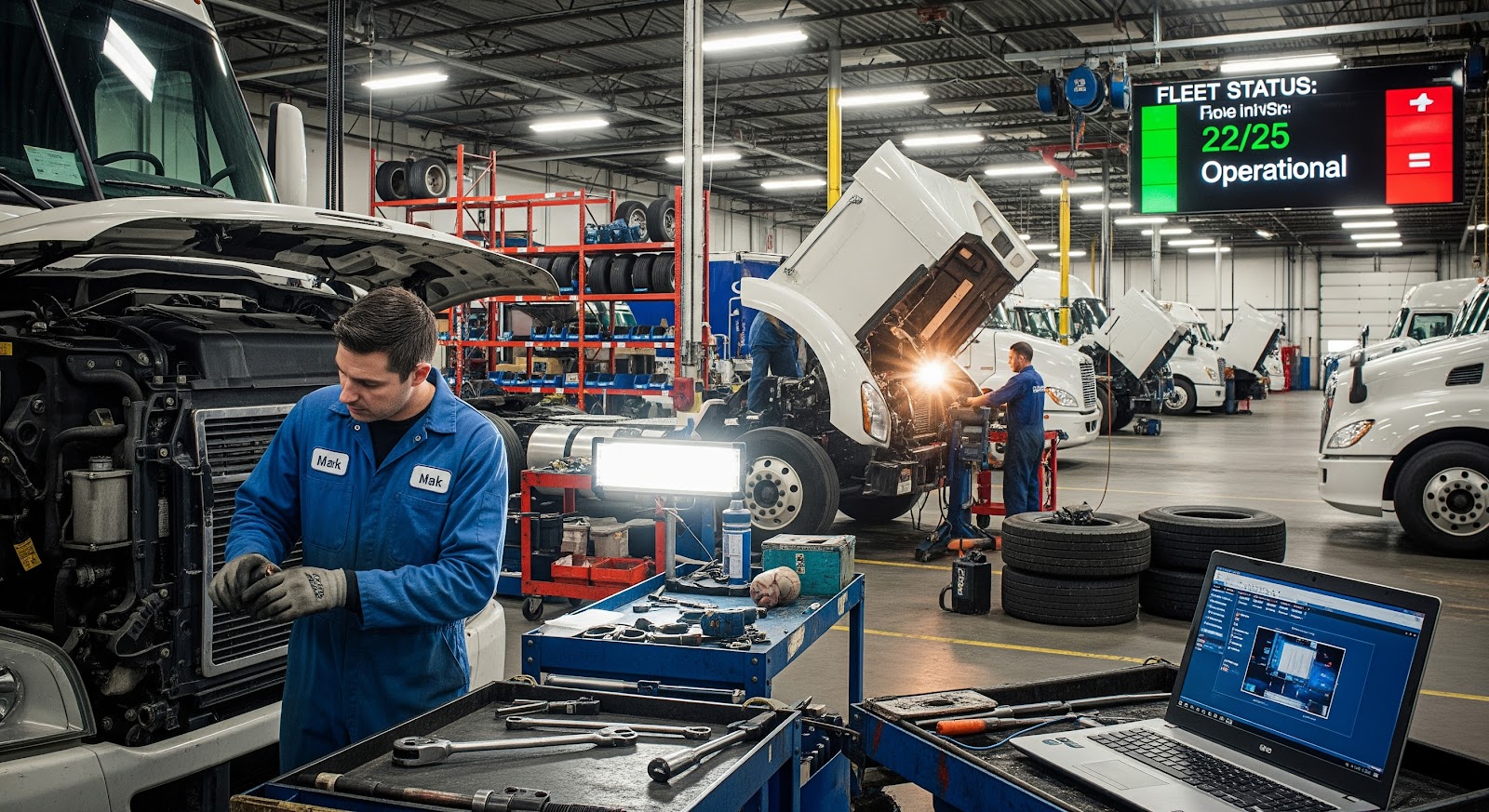
The best way to pass a roadside inspection in 2026 is to prepare before you even hit the road. A thorough pre-trip inspection, backed by up-to-date documentation, minimizes the risk of violations and can save you from costly fines, delays, and out-of-service orders.
This section outlines exactly what drivers and fleet managers should check before each trip, broken down into vehicle and driver responsibilities.
A. Vehicle Checklist
Performing a detailed inspection of your truck and trailer before every haul is not just good practice, it’s also a federal requirement under FMCSA regulations. Inspectors are trained to look for the most common violations, many of which you can spot and fix yourself.
Here’s what you should always check:
Brakes
- Look for worn brake pads, air leaks in brake lines, and proper slack adjuster travel.
- Make sure the brake warning system functions correctly.
- Brakes are one of the most cited violations during roadside inspections.
Tires
- Check for proper tread depth (minimum 4/32” on front tires and 2/32” on others).
- Ensure tires are properly inflated, free of cuts, bulges, or exposed cords.
- Inspect for matching tire sizes and condition on dual wheels.
Lights
- Test all headlights, brake lights, turn signals, marker lights, and reflectors.
- Replace any burned-out bulbs immediately.
- Ensure lenses are clean and visible.
Windshield Wipers & Mirrors
- Confirm wipers are in good working order with adequate fluid in the reservoir.
- Check for cracked or obstructed side and rearview mirrors.
Fluid Levels & Leaks
- Check oil, coolant, transmission fluid, windshield washer fluid, and power steering.
- Inspect under the truck for any active fluid leaks.
Emergency Equipment
- Ensure you have:
- A fire extinguisher (properly charged and mounted),
- At least three reflective triangles,
- Extra fuses (if required).
- A fire extinguisher (properly charged and mounted),
Air System & Leaks
- Listen for air leaks during your walkaround.
- Test the low air pressure warning system and verify proper air pressure build-up.
Cargo Securement
- Verify all cargo is properly tied down using the appropriate straps, chains, or binders.
- Inspect load locks, bulkheads, and dunnage for security.
- Flatbed drivers should inspect all tie-down points and tarps.
Trailer Condition
- Inspect trailer flooring, doors, lights, and tires.
- Confirm kingpin latch and fifth wheel connection are secure.
Tip: Document any issues in your DVIR (Driver Vehicle Inspection Report) and don’t move the truck until they’re resolved.
B. Driver Checklist
Even if your truck is in perfect shape, you can still fail a roadside inspection due to missing or expired documents. Keep the following items organized and easily accessible, whether in print or digitally stored on a tablet or secure cloud folder.
Valid CDL (Commercial Driver’s License)
- Ensure your license is not expired or suspended.
- Check the correct endorsements (e.g., hazmat, tank, doubles/triples).
Medical Certificate
- Your medical card must be current and properly filed with your state.
- Keep a copy with you at all times.
Hours of Service Logs (via ELD)
- Ensure your Electronic Logging Device is functioning properly and up to date.
- Review for any unassigned drive time, log gaps, or form and manner errors.
- Know how to operate the ELD and transfer logs to an inspector when asked.
Driver Vehicle Inspection Reports (DVIR)
- Have current and previous DVIRs available.
- Show that defects were noted and corrected (or not present).
Proof of Insurance
- Maintain an updated copy of your insurance card or policy documentation.
- Make sure the policy matches the vehicle you’re operating.
Vehicle Registration and Permits
- Verify that all registration documents are current.
- Include IFTA, IRP cab card, and any state-specific permits.
2290 Schedule 1 (HVUT Proof of Payment)
- This is your IRS-stamped proof that you’ve paid the Heavy Vehicle Use Tax.
- Required for vehicles with a taxable gross weight of 55,000 pounds or more.
- Missing or outdated Schedule 1 can lead to roadside inspection delays, citations, or refusal to register your vehicle at the DMV.
- If you need to file or renew, you can do it instantly through ExpressTruckTax and receive your stamped Schedule 1 in minutes.
Tip: Keep all your documents in a binder or digital folder labeled by category so you can provide them quickly and confidently during an inspection.
Daily pre-trip inspections are not optional, they are your first line of defense against violations and out-of-service orders. When combined with clean, accessible documentation, they help you build a reputation for safety, compliance, and professionalism.
Conclusion
Roadside inspections are a fact of life for every trucker, but they don’t have to be stressful or disruptive. The key to passing them consistently lies in two things: preparation and attitude.
A well-prepared truck, organized documents, and a calm, respectful demeanor go a long way in making your inspection smooth and uneventful. By doing thorough pre-trip checks, staying current with your driver and vehicle documentation, and addressing small issues before they turn into violations, you not only stay in compliance, you protect your CSA score, your livelihood, and your reputation as a professional.