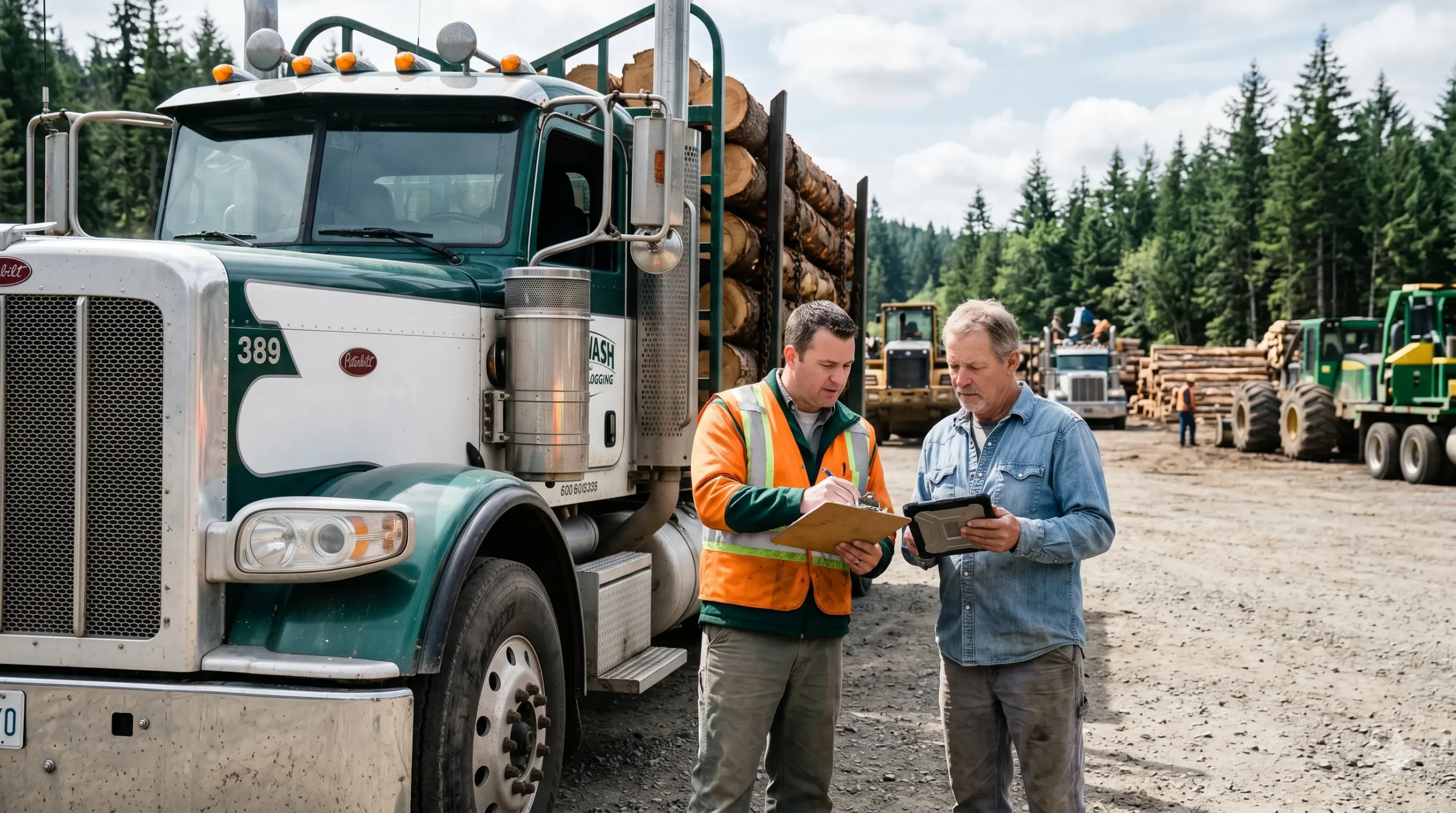
If you file Form 2290 logging vehicles returns, the most important step is classifying the truck correctly. Form 2290 is used to report and pay Heavy Highway Vehicle Use Tax on highway motor vehicles with a taxable gross weight of 55,000 pounds or more.2 Logging vehicles are not fully exempt in most cases, but they do receive favorable treatment under federal law. A qualifying truck generally pays 25% less HVUT than a similar non-logging truck.3
That reduced rate only applies when the truck meets the IRS definition of a logging vehicle and the filer can support that classification with records.1 If the truck later hauls general freight or other non-logging loads, the reduced treatment may no longer apply and an amended filing may be needed.1 For owner-operators, fleet managers, and tax professionals, that makes documentation just as important as the tax calculation itself.
What are Logging Vehicles and do they need to File Form 2290?
A logging vehicle is a highway motor vehicle used exclusively to transport products harvested from the forested site, or to move those harvested products between locations on a forested site, even if public highways are used between those locations.1 The truck also must be registered under the applicable state law as a highway motor vehicle used exclusively in the transportation of harvested forest products.1
The exclusive-use requirement is what separates a true logging vehicle from a truck that only works in the timber business part of the time. Qualifying loads may include logs, timber, pulpwood, bark, chips, sawdust, and similar forest products taken from the harvest site to the first processing point, scale, or storage yard.1 If the same truck hauls general freight, construction materials, unrelated equipment, or any other non-logging load during the tax period, the reduced logging treatment can be lost for that period. In practical terms, a mixed-use truck creates the greatest filing risk.
Form 2290 applies to taxable highway motor vehicles, such as trucks and truck tractors, not to trailers by themselves.1 Many logging operations use pole trailers or other specialized trailers, but the taxable vehicle is still the self-propelled highway unit.
Logging Truck Rules for Form 2290 Filing
The phrase hvut logging truck rules covers the general Form 2290 requirements plus the special reduced-rate treatment for logging vehicles. A taxable truck must meet the 55,000-pound threshold, and the Form 2290 tax year runs from July 1 through June 30.1 The return is usually due by the last day of the month following the month of first use on a public highway.1
The first used month matters because tax is prorated when a vehicle first goes into service after July. If a logging truck is first used on the highway in November, the filer does not owe a full-year amount. Instead, the tax is figured from November through the end of the tax period.1 This is one of the most common error points in Form 2290 filings, especially when trucks are purchased, rebuilt, or newly placed into service mid-year.
An EIN is required to file Form 2290, and businesses that report 25 or more taxed vehicles must file electronically.1 After filing, the stamped Schedule 1 serves as proof of payment and is generally required for state registration or renewal.1 Because of that, the VIN on Form 2290, Schedule 1, and registration records must match exactly.
| Filing Rule | Practical Meaning |
|---|---|
| 55,000-pound threshold | HVUT generally starts when taxable gross weight reaches 55,000 pounds or more.2 |
| Tax period | The Form 2290 year runs July 1 to June 30.1 |
| Due date | File by the last day of the month after the first used month.1 |
| EIN rule | You need an EIN to file.1 |
| E-file rule | E-file is required for 25 or more taxed vehicles.1 |
| Registration proof | A stamped Schedule 1 is generally needed for registration.1 |
Logging Vehicle Exemption 2290
Many searchers use the phrase logging exemption 2290, but that wording often causes confusion. For most taxpayers, logging status is not a full exemption from Form 2290. Instead, it is a 25% reduction in the tax imposed on a qualifying logging vehicle.3 The vehicle is still reported on the return, and the tax still must be paid unless another rule, such as mileage suspension, applies.
A simple rate comparison shows the value of proper classification. At 55,000 pounds, the standard annual HVUT is $100, while the logging rate is $75.1 As the taxable gross weight goes up, the tax increases in graduated amounts, but the logging rate remains 25% lower than the standard amount for the same category.1 At the top annual category, the standard tax reaches $550, while the logging amount is $412.50.1
| Taxable Gross Weight | Standard HVUT Example | Logging HVUT Example |
|---|---|---|
| 55,000 lbs | $100 | $75 |
| 60,000 lbs | $190 | $142.50 |
| 75,000 lbs | $550 | $412.50 |
This reduced-rate rule is separate from suspension based on mileage. Form 2290 allows a suspension when a vehicle is expected to be driven 5,000 miles or less during the tax period, or 7,500 miles or less for agricultural vehicles.2 A logging truck may also qualify for suspension if it stays within the mileage limit, but that is a different rule from the reduced logging rate. If the truck later exceeds the mileage threshold, an amended return is required and tax becomes due from the month the limit was exceeded.1
Credits and refunds can also matter. If tax was paid and the vehicle is later sold, destroyed, stolen, or used no more than the applicable mileage limit, the taxpayer may claim a credit on a later Form 2290 or request a refund on Form 8849, Schedule 6.2 That makes mileage and disposition records especially important for logging fleets.
Form 2290 Special Vehicle Rules
The section of the brief titled form 2290 special vehicle rules matters because logging classification is only one part of overall HVUT compliance. Some vehicles are not subject to Form 2290 at all because they are not considered highway motor vehicles. In general, vehicles designed and used primarily for off-highway functions and not customarily operated on public roads may fall outside the tax, depending on their design and actual use.1 Forestry businesses should evaluate that issue carefully when dealing with specialized equipment that operates mostly on private land.
Another important special rule is change in use. If a truck was reported at the reduced logging rate and later begins hauling non-logging loads, the month the change happened should be documented and the return may need to be amended.1 The same is true when taxable gross weight increases because of equipment changes, permit changes, or a different operating configuration.2
VIN corrections are another frequent issue. They do not usually change the tax by themselves, but they are critical because a wrong VIN can delay state registration even when the payment was correct.1 Newly acquired used vehicles can also create special filing questions, especially if the prior owner had already paid or suspended the tax for the period.
How Logging Classification Changes HVUT Treatment
Correct logging classification lowers tax, while weak classification can create back tax, interest, penalties, and registration delays if the IRS or a state agency questions the filing.14 A useful check is to confirm four points in order: the truck is taxable at 55,000 pounds or more,2 the weight category is correct,1 the first used month is correct,1 and the truck meets the IRS logging definition for the period being reported.1 If the final answer changes during the year because the truck begins hauling non-logging freight, the filing position may need to change as well.
Step-by-Step: Filing Form 2290 for Logging Vehicles
Start by confirming eligibility. Review the truck’s actual use, load types, and state registration records to make sure the exclusive-use standard is met.1 Then determine the taxable gross weight and identify the first used month for the current tax period.1
Next, complete the vehicle information carefully. Enter the VIN exactly as shown on the registration, select the proper weight category, and apply logging treatment only if the records support it. Choose an approved payment method, file by the correct deadline, and e-file if the fleet includes 25 or more taxed vehicles.1
After the return is accepted, save the stamped Schedule 1 with the registration documents and keep the supporting records together. During the rest of the tax year, monitor mileage, weight, and actual use. If the truck exceeds a suspension threshold, moves into a higher weight category, or begins hauling non-logging freight, correct the filing promptly rather than waiting until renewal time.1
Proof and Recordkeeping for Logging Status
Strong records are what make a logging classification defensible. The best file usually includes bills of lading, contracts, scale tickets, mill receipts, trip logs, dispatch records, ELD extracts, and state registration documents showing logging use where available.1 Together, those records should show what was hauled, where it came from, and where it went.
| Record Type | Why It Helps |
|---|---|
| Bills of lading and contracts | Show that the loads were harvested forest products. |
| Scale tickets and mill receipts | Support the product type and destination. |
| Trip logs and ELD records | Help prove exclusive use and identify non-logging trips. |
| Registration and permits | Support the state-registration element of the rule. |
| Mileage summaries | Support suspension claims and change-in-use analysis. |
Keep these records for at least three years from the filing date, and longer if there is an amendment, refund claim, or dispute.
Common Filing Mistakes and How to Avoid Them
The most common mistake is calling a mixed-use truck a logging vehicle because it works in timber operations most of the time. The IRS standard is not “mostly.” It is exclusively used for harvested forest products.1 Another common error is failing to amend the return after a change in use, a mileage issue, or a taxable gross weight increase.1
Filers also run into trouble by using the wrong first used month, forgetting proration, or entering a VIN that does not match the registration file.1 Suspension claims can create problems too when mileage records are weak or incomplete. The safest approach is simple: classify conservatively, document thoroughly, and correct changes as soon as they happen.
FAQ: Common Questions About Form 2290 Logging Vehicles
What is considered a logging vehicle for Form 2290?
A logging vehicle is a highway motor vehicle used exclusively to transport products harvested from the forested site and registered under state law as a vehicle used exclusively for that purpose.1
Do logging vehicles pay less HVUT than regular trucks?
Yes. Qualified logging vehicles receive a 25% reduction in the tax that would otherwise apply.3
Is the logging rate a full exemption from Form 2290 tax?
Usually no. It is generally a reduced rate, not a full exemption. A separate mileage suspension may apply if the vehicle stays under the annual mileage limit.2
What happens if my logging truck hauls general freight mid-year?
If the truck no longer meets the exclusive-use requirement, document the month the change happened and determine whether an amended Form 2290 is required.1
What documents prove a truck is a logging vehicle for HVUT?
Useful records include bills of lading, trip logs, ELD data, scale tickets, mill receipts, contracts, and state registration records that support logging use.1
Conclusion
The main issue in Form 2290 logging vehicles compliance is classification. If the truck is truly used exclusively for harvested forest products and the records support that use, the reduced logging rate can lower HVUT in a meaningful way.14 If the truck performs non-logging hauls, however, the treatment can change quickly.
The best practice is to confirm eligibility before filing, use the correct first used month and weight category, keep the VIN and Schedule 1 accurate, and maintain audit-ready proof of logging use. Because tax rules and filing instructions can change, always verify the latest rates and requirements on IRS.gov before you submit the return.1