A new career in weeks, not years, with pay tied directly to real freight demand is what draws thousands of people to the driver’s seat every year. If you’re considering becoming a truck driver, you probably want clear, straightforward answers: the exact steps involved, how long the process takes, what it costs, and what life on the road is actually like.
This guide provides those answers with a compliance-first perspective.
What You’ll Learn
- FMCSA eligibility requirements
- DOT medical standards
- Drug and Alcohol Clearinghouse requirements
- CDL endorsements that unlock higher-paying freight
- Training options and financing possibilities
- What recruiters look for when hiring new drivers
Earnings and Career Path
You’ll also learn about realistic driver earnings and the typical career progression, from starting as a company driver to eventually operating your own trucking business. Understanding this path helps set accurate expectations and prevents costly mistakes early in your career.
The Basic Path to Becoming a Truck Driver
The process becomes straightforward when you follow the correct sequence:
- Confirm eligibility requirements
- Complete CDL training
- Pass required testing and certifications
- Secure your first driving position
Starting with the fundamentals, eligibility, training, and testing, sets you up to begin driving safely, legally, and confidently on your first miles.

Is Truck Driving Right for You? The Work, Mindset, and Who Succeeds
Before investing in training, evaluate whether trucking fits your work style and lifestyle expectations. Trucking is a skilled and highly regulated profession that offers independence, but it also carries significant responsibility. The best fit involves more than simply enjoying driving.
What the Work Feels Like: Miles, Schedules, and Home Time
Most new drivers begin with over-the-road (OTR) positions that involve multi-state routes and staying out one to three weeks at a time, followed by two to three days at home. Carriers typically schedule 2,000–2,800 miles per week for solo OTR drivers. Regional routes generally allow drivers to return home weekly but may include slightly fewer miles. Local routes provide daily home time but usually involve more stops and tighter schedules. These work rhythms directly influence earnings, sleep patterns, and family routines, so it is important to be realistic about what schedule you can maintain.
The Driver Mindset: Independence, Planning, and Patience
Drivers who succeed often enjoy working independently, following structured procedures, and solving problems calmly. The job requires managing traffic stress, planning ahead for fuel stops, parking, and weather conditions, and maintaining composure when delays occur. Individuals who value predictable routines, clear rules, and the satisfaction of completing a task often find the culture of trucking rewarding.
Safety First, Always: The Record That Builds Your Career
In trucking, your safety record determines future opportunities. Hours-of-Service rules, electronic logging devices, pre-trip inspections, load securement practices, and speed management are essential parts of the job. These procedures protect your commercial driver’s license and ensure freight moves safely and legally. A clean motor vehicle record can lead to better routes, higher-paying freight, and faster advancement.
Beyond Driving: Service, Communication, and Reputation
Professional drivers do more than operate a truck. They communicate with dispatch teams, arrive on time for shipper and receiver appointments, and represent their carrier at loading docks and yards. Courtesy, accurate paperwork, and well-maintained equipment often translate into more consistent miles and better load assignments.
Who Succeeds in Trucking: Backgrounds and Strengths That Translate
Certain professional backgrounds adapt well to trucking. Veterans often thrive because they are accustomed to procedures, equipment maintenance, and structured operations. Tradespeople and individuals with warehouse or delivery experience frequently transition smoothly because they understand freight handling and schedule discipline. Some parents begin in OTR roles to build experience before moving into regional or dedicated lanes that provide more predictable home time.
Earnings and Outlook: Industry Demand and Pay Expectations
Trucking carries the majority of freight in the United States, creating steady demand for qualified drivers. According to the American Trucking Associations, trucks move most domestic freight tonnage in the country. Data from the Bureau of Labor Statistics shows that median annual pay for heavy and tractor-trailer truck drivers sits in the low $50,000 range, with higher earnings tied to safe driving records, endorsements, and specialized freight. Drivers who maintain strong performance often gain faster pay increases, improved equipment, and additional compensation tied to productivity.
What Can Disqualify You, and How to Address It
Certain issues may temporarily prevent someone from entering the industry. Recent DUIs, major traffic violations, or a pattern of accidents may require waiting periods before carriers will consider an application. Medical conditions such as untreated sleep apnea may also require documented treatment before qualifying for a DOT medical card. Reputable training schools and carriers can clarify their lookback periods and explain what documentation or timeframes are needed to become eligible.

How to Get Your CDL: From Permit to Skills Test, Start to Finish
The process of earning a commercial driver’s license follows a clear sequence: qualify, learn, practice, test, and onboard with a carrier. For anyone planning to become a truck driver, understanding this roadmap prevents confusion and helps you move through each requirement efficiently. While minor details vary by state or training provider, the overall structure is consistent nationwide because it is based on federal regulations.
Eligibility First: Age Rules and the DOT Medical Card
The CDL journey begins with eligibility. Drivers can operate commercial vehicles within their state at age 18, but interstate driving requires a minimum age of 21. Before taking written CDL exams, you must complete a Department of Transportation physical exam with a certified medical examiner. This evaluation confirms that you meet the vision, hearing, and overall health standards required for commercial drivers.
After the exam, you receive a Medical Examiner’s Certificate, commonly called a DOT medical card. Drivers managing medical conditions such as sleep apnea or diabetes may need additional documentation or proof of treatment. Preparing this information in advance can prevent delays in the licensing process.
Earning Your CLP: Written Tests and ELDT Theory Basics
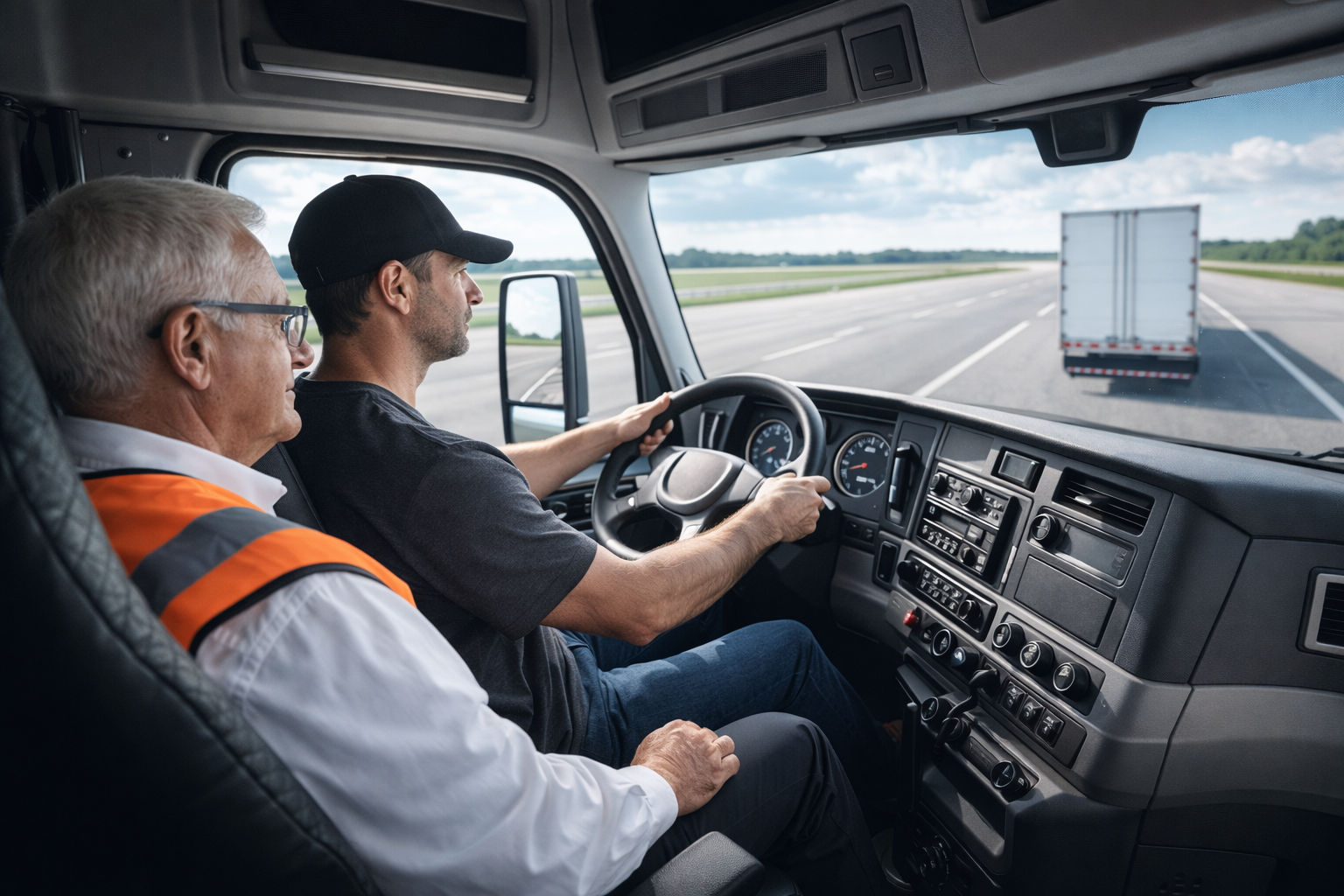
Once you have your medical card, the next step is obtaining a Commercial Learner’s Permit (CLP). This permit allows you to practice driving a commercial vehicle while supervised by a qualified CDL holder.
To earn the permit, you must study your state CDL manual and pass written knowledge tests. Most future tractor-trailer drivers pursue a Class A CDL, which requires passing the general knowledge test along with combination vehicle and air brake exams. Class B licenses focus on straight trucks and buses, but Class A offers broader job opportunities across the trucking industry.
After passing the written tests, new federal regulations require completion of Entry-Level Driver Training (ELDT). All CDL applicants must complete both theory instruction and behind-the-wheel training with a provider listed in the Federal Motor Carrier Safety Administration’s Training Provider Registry.
Behind the Wheel: Range Drills and Real-World Road Practice
ELDT programs combine classroom knowledge with practical driving experience. The theory portion covers key safety and compliance topics including vehicle systems, hours-of-service rules, trip planning, hazard awareness, and space management.
Behind-the-wheel training begins on a controlled range and gradually progresses to public roads. Students learn to perform detailed pre-trip inspections, control the truck and trailer during backing maneuvers, and operate safely in real traffic environments. Core skills include straight-line backing, offset backing, and alley dock setups. High-quality training programs emphasize meaningful driving time and structured coaching rather than minimal practice.
Skills Test Essentials: Pre-Trip, Basic Control, and Road Driving
The CDL skills test consists of three main segments. The first portion is the pre-trip inspection. During this step, applicants must identify vehicle components, explain their functions, and check for potential safety defects.
The second segment focuses on basic control skills in a closed course. Drivers demonstrate maneuvers such as straight-line backing, offset backing, and either parallel parking or alley docking depending on state requirements. Precision and patience are more important than speed.
The final stage is the road test. Applicants drive in normal traffic while demonstrating safe lane control, proper mirror use, speed management, and correct turning techniques so the trailer tracks safely around corners and curbs. Many trainees practice narrating their observations to stay focused and anticipate potential hazards.
After You Pass: Adding Endorsements and Clearing Hiring Checks
Once you pass the skills test, you officially earn your CDL. At this point, endorsements allow you to expand the types of freight you can haul. A tanker endorsement allows transportation of liquid loads, doubles and triples endorsements apply to certain less-than-truckload operations, and a hazardous materials endorsement allows drivers to transport regulated cargo after completing a Transportation Security Administration background check.
Many drivers choose the combined tanker and hazardous materials endorsement to broaden their job options. Because hazmat endorsements require fingerprints and background screening, the process may take several additional weeks.
From CDL to Carrier: Screenings, Orientation, and Trainer Time
After licensing, hiring processes typically include several compliance checks. Carriers review records in the FMCSA Drug and Alcohol Clearinghouse, conduct a pre-employment drug test, and examine your motor vehicle record and work history.
Orientation introduces new drivers to company policies, electronic logging systems, and cargo securement standards. Many carriers also assign new drivers to work with experienced trainers for several weeks. This on-the-job training helps new drivers develop consistent habits, refine trip planning skills, and build confidence in real operating conditions.

What Truck Drivers Do Day to Day: Routes, Freight, and Schedules
Trucking is not a single job. The day-to-day experience varies based on route length, freight type, and how much control you have over your schedule. Understanding how these factors shape a typical week helps you evaluate the lifestyle as well as the earning potential.
Segments and Schedules
Different trucking segments create different weekly rhythms. Over-the-road drivers often run 2,500 to 3,000 miles per week with multi-day trips and extended time away from home. Regional drivers usually average 1,800 to 2,400 miles and return home weekly. Local drivers may run 1,200 to 1,800 miles but complete many stops during daily shifts and typically return home each night.
Freight Type Changes Your Day
The type of freight you haul also shapes your daily responsibilities. Dry van freight generally requires less physical work but may involve longer wait times at shipping docks. Flatbed hauling includes tasks such as tarping and load securement, which increase physical effort and often pay higher rates. Tanker driving demands smooth vehicle control and strict safety procedures because of the nature of liquid cargo.
Equipment and Technology Define Workflow
Modern tractors rely heavily on technology. Electronic logging devices track hours-of-service compliance, in-cab navigation assists with route planning, and many trucks use automatic transmissions. Sleeper cabs often include auxiliary power units or power inverters that support cooking appliances, climate control, and rest during off-duty hours.
Time Management Is the Job
A large part of professional driving is managing time effectively. Drivers must plan their routes around the federal 11-hour driving limit within a 14-hour on-duty window. They also account for parking availability, fuel stops, and shipping or receiving appointment times.
Relationships Drive Consistency
Driver relationships with dispatchers and customers play an important role in job stability. Dedicated accounts provide familiar routes, predictable schedules, and repeated visits to the same shipping locations. Spot freight operations may offer higher pay during strong freight
How to Choose a CDL School: Program Types, Quality Checks, and Veteran Paths
Where and how you train influences your early driving experience and your long-term earning potential. When evaluating CDL training programs, focus on quality indicators, total cost, and job placement outcomes rather than choosing a program based solely on speed or upfront tuition.
Accreditation and ELDT Compliance
Ensure the training provider appears in the Federal Motor Carrier Safety Administration Training Provider Registry. Schools listed in this registry meet Entry-Level Driver Training requirements for classroom instruction and behind-the-wheel driving. Programs outside the registry may delay your ability to schedule a CDL skills test or secure employment.
Instructor Ratios and Real Driving Time
Look for training programs with no more than four students per instructor during range practice and road driving sessions. Quality programs typically provide 30 to 40 hours of actual driving within a 160 to 200 hour course. Review the school’s syllabus to confirm that behind-the-wheel training is clearly defined rather than replaced by ride-alongs or simulator sessions.
Equipment Quality and Test Access
Training on modern equipment helps students develop realistic driving skills. Ideally, programs should provide late-model tractors and standard 53-foot trailers similar to those used in commercial operations. Ask whether the CDL skills test will be conducted using the same equipment used during training. Schools that offer on-site third-party testing often reduce scheduling delays and allow students to test with familiar vehicles.
Job Placement Outcomes and Carrier Partnerships
Review each school’s job placement statistics, including the percentage of graduates hired and the average time between graduation and first driving assignment. Programs that maintain relationships with multiple carriers may provide more job options and help align graduates with employers offering preferred schedules, such as regional routes with weekly home time.
Total Cost of Attendance and Funding Options
When comparing programs, calculate the full cost of attendance. This may include tuition, testing fees, DOT physical exams, permit and license fees, endorsement costs, basic gear, and lost income during training. Financial assistance may be available through workforce development programs, grants, employer sponsorships, or veterans education benefits.
Veteran Training Paths and Apprenticeships
Veterans should verify whether a program accepts GI Bill funding or participates in apprenticeship programs that provide structured pay increases during the first year of employment. Military vehicle experience may also help some applicants transition more quickly into commercial driving roles.
Choosing the right CDL training program helps you build safe driving habits, pass the CDL skills test sooner, and begin your career with a carrier that matches your lifestyle and income goals. The next step is evaluating the financial side of training so you can choose the program that delivers the strongest return on investment.
Truck Driver Benefits Compared: Pay, Home Time, and Long-Term Security
Choosing trucking as a career usually involves weighing several advantages rather than focusing on one single benefit. Earnings, lifestyle flexibility, and long-term stability all play a role. The decision becomes clearer when you evaluate trucking across three main factors: income potential, time and lifestyle, and control over your career path.
Earnings Potential Across Trucking Roles
Income varies based on route type, freight specialization, and experience level. Many new over-the-road drivers begin with consistent weekly mileage, often around 2,500 to 3,000 miles, with pay that increases relatively quickly during the first year. Regional routes typically offer slightly lower mileage but provide more predictable home time while still including additional pay for delays, layovers, or special handling.
Local driving roles frequently pay hourly and may include overtime, allowing drivers to return home every day. However, total weekly income may be somewhat lower if overtime opportunities are limited. Specialized freight often raises earning potential. Flatbed drivers may receive additional pay for tasks such as tarping and load securement, while tanker or hazardous materials endorsements can add further pay premiums.
Compared with many four-year degree paths, trucking can offer a faster return on investment. Training programs commonly last between six and ten weeks, after which new drivers can begin earning income within a few months rather than waiting years to enter the workforce.
Time and Lifestyle Trade-Offs
Work schedules vary significantly depending on the type of trucking job. Over-the-road positions may require two to three weeks away from home followed by several days off. This schedule offers travel variety and long-distance driving but requires extended time away from family or personal commitments.
Regional positions generally allow drivers to return home weekly and operate on familiar routes. This provides a balance between steady mileage and more predictable routines. Local driving roles allow drivers to return home each night, which can be ideal for maintaining family schedules. However, these jobs often include heavier city traffic, more frequent stops, and earlier start times.
A common comparison might look like this: an OTR driver may earn more during a strong mileage week but miss a weekend event, while a regional driver might earn slightly less yet maintain consistent weekly home time.
Stability and Job Security
Freight demand fluctuates with economic conditions, but drivers with clean motor vehicle records and strong safety histories tend to remain employable across market cycles. Additional endorsements can expand job opportunities if certain freight sectors slow down.
Company driving positions often include benefits such as health insurance, retirement contributions, paid time off, and maintained equipment. Drivers working under percentage-of-load pay structures may earn more during strong freight markets but must be comfortable with income variability.
While automation continues to develop within transportation, many aspects of trucking, such as safety decision-making, weather response, and interaction with shipping facilities, still require skilled human drivers. Industry projections suggest gradual technological changes rather than immediate large-scale replacement of drivers.
Control and Career Flexibility
One of the long-term advantages of trucking is the ability to choose different career paths within the industry. Company drivers typically receive steady pay, equipment maintenance, and administrative support. This structure allows drivers to focus primarily on safe operation and freight delivery.
Owner-operators gain greater control over routes, freight selection, and business decisions. They may also benefit from business tax deductions and higher revenue potential. However, they also assume responsibility for fuel costs, insurance, equipment maintenance, and periods of downtime when trucks require repairs.
Many drivers begin their careers as company employees, gaining experience and building savings before deciding whether to transition into operating their own trucking business.
Matching the Benefits to Your Goals
The most valuable benefit of trucking depends on personal priorities. Some drivers prioritize higher earning potential, while others focus on predictable home time or long-term independence. Matching the right trucking segment and pay model to your current life stage can make the career far more sustainable.
Drivers who invest in endorsements, maintain strong safety records, and build experience across different freight types keep more opportunities available as their careers progress.

Will Self-Driving Trucks Replace Drivers? What the Next Decade Really Looks Like
Concerns about automation often appear in conversations about trucking careers. Headlines about autonomous truck pilots can make it seem as though human drivers may soon be replaced. In reality, current technology demonstrations operate in limited environments and do not represent the complexity of the national freight network.
Where Autonomous Truck Technology Works Today
Most autonomous trucking projects operate under tightly controlled conditions. These tests usually occur on specific highway corridors with favorable weather, well-mapped routes, and limited traffic complexity. Even in these scenarios, many operations still involve safety drivers, remote monitoring teams, or escort vehicles.
These pilot programs often avoid dense urban areas, unpredictable weather conditions, and complicated loading facilities. While the technology can demonstrate highway driving capabilities, it still struggles with many real-world challenges encountered in everyday freight operations.
The Parts of the Job Automation Cannot Easily Replace
Professional truck drivers do much more than steer a vehicle down a highway. Their responsibilities include conducting pre-trip inspections, securing loads, navigating crowded shipping facilities, communicating with dispatchers and customers, and responding to unexpected road or equipment issues.
Freight pickups and deliveries frequently involve busy distribution centers, narrow docks, and changing schedules. These environments require judgment, communication, and adaptability, skills that current autonomous systems are not designed to manage independently.
Industry Adoption Remains Gradual
Autonomous truck technology continues to develop, but widespread deployment faces several obstacles. Insurance liability, regulatory approvals, and safety validation remain major considerations. Shippers and carriers must also ensure that automated systems can operate safely in mixed traffic environments that include passenger vehicles, construction zones, and unpredictable road conditions.
At the same time, the trucking workforce continues to experience steady demand. Retirements, freight growth, and specialized freight sectors create ongoing hiring needs for qualified commercial drivers.
Specialized Skills Increase Long-Term Stability
Drivers who develop specialized skills tend to remain especially valuable within the industry. Freight segments such as tanker, hazardous materials, and flatbed require hands-on expertise in load handling, safety procedures, and compliance practices.
These tasks occur outside the truck itself and rely heavily on human judgment. Because of this, specialized freight roles are less likely to be affected by automation developments in the near future.
Technology as a Tool, Not a Replacement
Rather than replacing drivers entirely, many emerging technologies are designed to assist them. Driver-assistance systems, advanced navigation tools, and safety monitoring systems help improve efficiency and reduce risk. Professional drivers who become comfortable using these technologies can benefit from safer operations and more efficient route management.
For individuals considering a career in trucking, the key question is not whether automation will eliminate driving jobs but how technology will change the way drivers work. By maintaining a strong safety record, gaining endorsements, and staying adaptable as technology evolves, drivers can remain valuable contributors to the freight industry for years to come.
Looking Ahead in Trucking: A Practical Map from First Job to Lasting Career
The decisions you make during your first few years in trucking can shape your opportunities for the next decade. Freight patterns, technology, and regulatory expectations continue to evolve, but one constant remains: drivers with strong safety records and professional habits maintain the most control over their careers. Treating your CDL as a professional credential, not just a job requirement, helps you build long-term value in the industry.
Freight Markets That Are Growing
Freight movement patterns are shifting due to manufacturing growth, nearshoring, and expanding distribution networks. Several highway corridors have become increasingly important for trucking operations. Routes running through the Texas Triangle, including Interstate 35 and Interstate 45, support heavy freight volumes tied to manufacturing and distribution. Interstate corridors such as I-10, I-20, I-65, and I-75 also connect key industrial regions from the Southeast to the Midwest.
At the same time, e-commerce and logistics hubs continue to grow around major cities such as Dallas–Fort Worth, Atlanta, Chicago, the Inland Empire in Southern California, Columbus, and Memphis. These hubs support regional, dedicated, and intermodal freight operations. For drivers, this means greater opportunities for consistent lanes, predictable schedules, and home time through dedicated routes or local distribution work.
Aligning your endorsements and experience with these freight markets can strengthen your long-term career prospects. Tanker endorsements may open opportunities in Gulf Coast chemical corridors, refrigerated freight is common around major food distribution centers, and hazardous materials endorsements can expand options near industrial shipping hubs.
Technology in the Modern Trucking Workplace
Technology continues to play a larger role in day-to-day trucking operations. Electronic logging devices have become standard, and many fleets now use telematics systems that monitor driving performance, fuel efficiency, and safety metrics.
Modern trucks often include safety technologies such as collision mitigation systems, lane departure alerts, and speed management tools. Many fleets also use inward- and outward-facing cameras to support driver coaching and safety verification.
Drivers who are comfortable using onboard technology, communicating schedule updates through fleet management systems, and maintaining strong safety scores often gain access to better routes and more competitive pay packages.
While autonomous trucking technology continues to develop, its current applications remain limited to controlled pilot projects on specific highway corridors. In the near term, most trucking jobs will still rely heavily on human drivers, especially roles involving urban deliveries, specialized freight, and customer-facing responsibilities.
Compliance as a Career Advantage
Regulatory compliance plays a major role in long-term career stability. Maintaining a clean record in the Drug and Alcohol Clearinghouse, following hours-of-service regulations, and passing roadside inspections consistently help protect your professional reputation.
For drivers who eventually plan to become owner-operators, building strong compliance habits early is especially important. Tracking fuel usage for International Fuel Tax Agreement reporting, maintaining accurate records, and filing required tax forms such as Heavy Vehicle Use Tax each year can prevent costly penalties and downtime.
Successful drivers often treat their career like a small business. Tracking cost per mile, monitoring fuel efficiency, and setting aside funds for equipment maintenance all contribute to long-term financial stability. Many experienced owner-operators recommend maintaining a maintenance reserve of approximately ten to fifteen cents per mile to prepare for unexpected repairs.
Turning Strategy Into Action
A durable trucking career comes from combining safe driving habits with strategic career decisions. Drivers who build endorsements, maintain strong safety scores, and develop experience in freight markets with consistent demand often gain greater flexibility when choosing employers or negotiating compensation.
The most practical strategy is simple: focus on safe performance, learn the business side of trucking early, and remain adaptable as technology and freight networks evolve. By doing so, your CDL becomes more than a license, it becomes a long-term professional asset that continues to create opportunities throughout your career.
Truck Driver Career FAQ
What are the main steps to become a commercial truck driver, from meeting requirements to landing the first job?
Start by confirming eligibility. You must be at least 18 to drive commercially within your state and 21 to drive across state lines, and you must pass a DOT medical exam to obtain a valid medical card. Next, study for and pass the written knowledge exams required to obtain a Commercial Learner’s Permit. After receiving your permit, complete Entry-Level Driver Training that includes both classroom instruction and behind-the-wheel driving practice.
Once training is complete, you must pass the CDL skills test, which includes a pre-trip inspection, basic vehicle control maneuvers, and an on-road driving exam. Drivers can then add endorsements for specialized freight if desired, and those pursuing hazardous materials endorsements must complete Transportation Security Administration background screening. The final step is completing carrier hiring checks, attending company orientation, and driving with a trainer before operating solo.
What is a commercial driver’s license, and how do the permit, training, and skills tests work?
A commercial driver’s license (CDL) allows individuals to operate commercial motor vehicles. The most common license for tractor-trailer drivers is a Class A CDL, while Class B licenses typically apply to straight trucks and buses. To begin the process, applicants obtain a Commercial Learner’s Permit by passing written knowledge tests covering topics such as general trucking knowledge, combination vehicles, and air brake systems.
After receiving the permit, applicants complete Entry-Level Driver Training with a registered training provider. This training includes safety theory instruction and practical driving experience. To earn the CDL, candidates must pass a three-part skills test that includes a pre-trip inspection, a basic vehicle control test, and a road driving exam.
How do over-the-road, regional, and local trucking jobs differ in duties, schedules, and lifestyle?
Over-the-road drivers typically run long-distance routes across multiple states, often driving 2,000 to 3,000 miles per week. These jobs usually involve staying on the road for one to three weeks before returning home for several days.
Regional trucking positions generally involve shorter routes within a specific region and usually allow drivers to return home weekly. Local trucking jobs provide daily home time but often involve more stops, tighter delivery schedules, and driving in busy urban areas. Because of the increased number of stops, local routes may involve fewer total miles compared with OTR jobs.
What endorsements can drivers add to a CDL, and how do these affect freight options and earning potential?
Common CDL endorsements include tanker (N), doubles and triples (T), and hazardous materials (H). Many drivers pursue the combined tanker and hazardous materials endorsement (X) because it expands the types of freight they can haul.
These endorsements can open opportunities in specialized freight sectors that often offer higher pay due to increased safety requirements and additional responsibility. Obtaining a hazardous materials endorsement requires fingerprinting and a Transportation Security Administration background check, which can take several weeks to complete.
What safety and compliance practices do professional drivers follow, and how do they impact career opportunities?
Professional truck drivers follow strict safety and compliance practices that protect both their licenses and their career prospects. These include complying with Hours-of-Service regulations using electronic logging devices, conducting thorough pre-trip inspections, properly securing cargo, and maintaining safe speeds and following distances in traffic.
Drivers must also maintain a clean motor vehicle record and remain compliant with federal programs such as the Drug and Alcohol Clearinghouse. Drivers who consistently demonstrate safe driving habits often gain access to better routes, more reliable freight, and higher-paying opportunities.
How do company driver positions compare with owner-operator paths in responsibilities, risks, and control?
Company drivers typically receive steady pay, employee benefits, and equipment maintained by the carrier. This structure allows them to focus primarily on safe driving and freight delivery without managing business expenses.
Owner-operators operate as independent businesses. They have greater control over the freight they haul and the routes they run but also assume responsibility for costs such as fuel, insurance, maintenance, and equipment financing. Owner-operators must also manage administrative tasks including fuel tax reporting and filing annual Heavy Vehicle Use Tax forms to keep their equipment compliant.
What does a realistic trucking career progression look like, and what choices help drivers advance?
Many drivers begin their careers as company over-the-road drivers to gain experience and establish a strong safety record. After building experience, they may add endorsements and transition into regional or dedicated routes that offer improved home time.
Some drivers move into specialized freight sectors such as flatbed, tanker, or refrigerated hauling to increase earnings and develop specialized skills. Others eventually become owner-operators after gaining industry knowledge and saving funds to support the financial responsibilities of operating their own trucking business.
What are common myths about self-driving trucks, and what role will human drivers likely play over the next decade?
One common misconception is that self-driving trucks will soon replace human drivers. In reality, most autonomous trucking tests occur on limited highway routes and still involve safety drivers or remote monitoring.
Many aspects of trucking—such as navigating shipping docks, handling urban traffic, inspecting equipment, and communicating with customers—require human judgment and adaptability. Because of these factors, automation is expected to supplement drivers rather than replace them in the foreseeable future.
How can I evaluate a CDL training program for quality, cost, and job placement outcomes?
When evaluating a CDL training program, confirm that the school is listed in the Federal Motor Carrier Safety Administration Training Provider Registry so it meets Entry-Level Driver Training requirements. Ask about instructor-to-student ratios and the number of actual driving hours provided, ensuring that the program emphasizes real behind-the-wheel practice.
You should also review equipment quality, test scheduling availability, and job placement outcomes. Programs with on-site testing and relationships with multiple carriers often help graduates enter the workforce more quickly. Compare the total cost of training, including exams, endorsements, gear, and lost income during training, and explore funding options such as workforce grants or veterans education benefits.
What industry trends are shaping trucking today, and what skills and habits help drivers stay in demand?
Freight demand continues to grow along major transportation corridors and near logistics hubs across the United States. Fleets increasingly rely on technologies such as electronic logging devices, telematics systems, and safety monitoring tools.
Drivers who maintain strong safety records, become comfortable using onboard technology, and add specialized endorsements tend to remain highly employable. Understanding compliance requirements, managing time effectively, and maintaining accurate documentation all contribute to long-term career stability and earning potential.