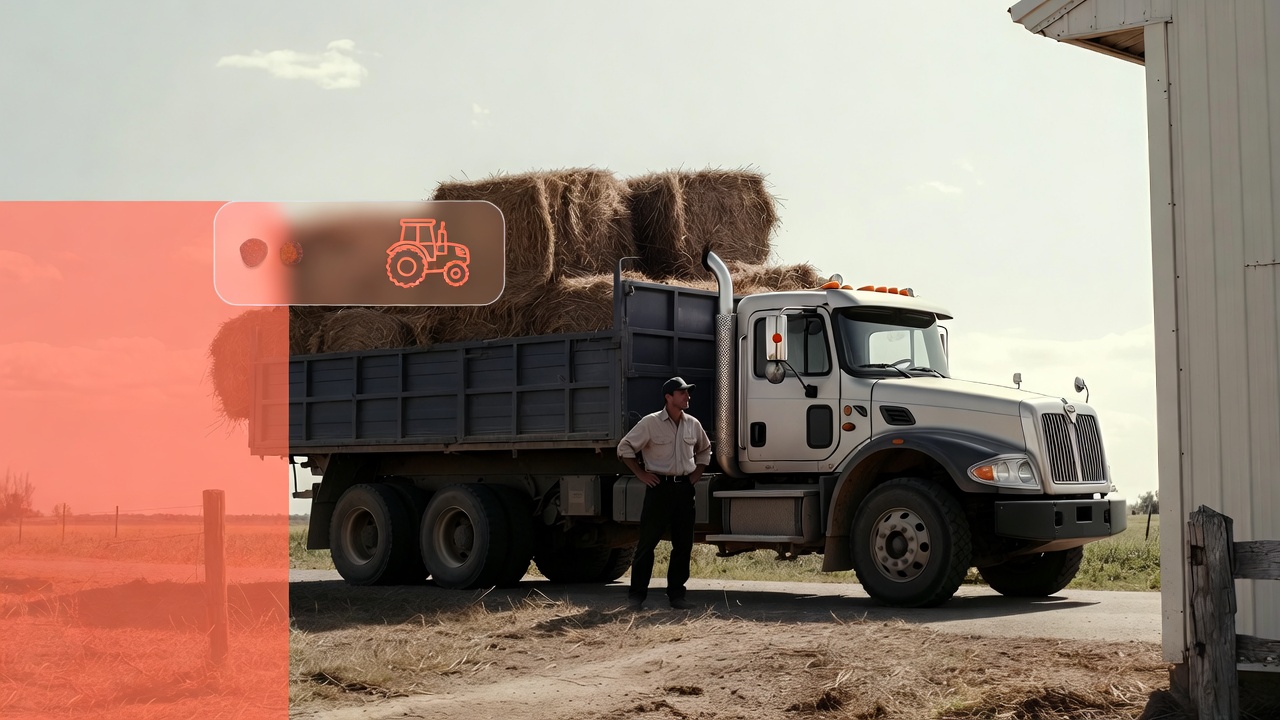
If you operate a heavy vehicle weighing 55,000 pounds or more on public highways, you’re required to file IRS Form 2290, also known as the Heavy Vehicle Use Tax (HVUT) return. This annual filing ensures that all heavy vehicles contribute fairly to the upkeep of the roads they use. The HVUT is collected by the IRS and helps fund federal highway programs.
Whether you’re an owner-operator, part of a fleet, or involved in agricultural operations, compliance with Form 2290 is essential—not just to avoid IRS penalties, but also to keep your vehicle legally registered. Without an IRS-stamped Schedule 1, your state’s DMV will typically refuse to register your vehicle or renew tags.
But what if your vehicle is used exclusively for farming? Do the same HVUT rules apply?
That’s where things get interesting.
The IRS makes special allowances for agricultural vehicles, recognizing that these trucks and tractors generally travel fewer miles on public roads. If your vehicle qualifies as “agricultural” under IRS guidelines, you may be eligible for significant tax relief—even if you still need to file Form 2290.

What Is an Agricultural Vehicle According to the IRS?
Not all heavy vehicles are treated the same under IRS regulations. If you’re a farmer or agricultural operator, your vehicle may fall under a special category that offers tax benefits, but only if it meets the IRS definition of an agricultural vehicle.
So, what exactly qualifies?
According to the IRS, an agricultural vehicle is a highway motor vehicle that is:
- Primarily used for farming purposes, and
- Registered with your state as an agricultural vehicle.
Let’s break that down:
1. Primarily Used for Farming Purposes (50% Rule)
To be considered “primarily” used for farming, more than 50% of the vehicle’s total mileage during the tax period must be related to agricultural operations. This includes activities such as:
- Transporting crops or livestock to market or storage
- Hauling feed, seed, fertilizer, or other farm supplies
- Moving equipment between fields or farm locations
- Performing work directly connected to the farm’s day-to-day operations
If your truck spends most of its time doing farm work and not general hauling or commercial transport, it likely meets this criterion.
2. Registered as an Agricultural Vehicle with the State
Even if your vehicle is used exclusively for farming, the IRS still requires it to be registered as an agricultural vehicle with your local Department of Motor Vehicles (DMV) or relevant state agency. This formal designation helps prove that your vehicle qualifies for the special tax treatment under Form 2290.
Registration requirements may vary slightly by state, but typically involve:
- Paying reduced registration fees
- Showing proof of farming use
- Displaying a special agricultural or farm-use plate
If your truck isn’t properly registered as agricultural, even if you use it only for farming—you may not be eligible for HVUT exemptions or mileage extensions.

Key Differences in IRS Form 2290 for Agricultural Vehicles
While agricultural vehicles still fall under the scope of IRS Form 2290, there are some important distinctions that set them apart from standard commercial trucks. Understanding these differences can help you stay compliant and potentially reduce or eliminate your tax liability.
Let’s break down the three biggest differences:
a. Mileage Limit
One of the most important differences for agricultural vehicles is the higher mileage threshold before Heavy Vehicle Use Tax (HVUT) is owed.
- Standard commercial vehicles are taxed if they travel more than 5,000 miles on public highways during the tax year (July 1 – June 30).
- Agricultural vehicles, however, can travel up to 7,500 miles before HVUT is due.
This means if your qualifying farm truck stays under 7,500 miles of public highway use during the year, you do not owe the HVUT, even though you still need to file Form 2290.
This special allowance reflects the reality that most farm-use vehicles are driven much less on public roads and are typically operated within a limited radius from the farm or field.
Important Note: The IRS defines “public highways” as any roads open to public use—not just interstates or major highways. So even limited on-road use counts toward this mileage total.
b. Suspended Vehicle Status (Category W)
Even if your agricultural vehicle qualifies for exemption due to low mileage, you are still required to file Form 2290.
In this case, you would file your vehicle under “Suspended Vehicle” status, which is also referred to as Category W.
Here’s what that means:
- You’ll report the vehicle on Form 2290.
- You’ll check the box indicating that it is suspended from HVUT because it will not exceed the mileage limit.
- No HVUT payment is required, as long as the vehicle stays under the 7,500-mile threshold.
- The IRS will return a stamped Schedule 1 that shows your vehicle is suspended—but still compliant.
This stamped Schedule 1 is essential for renewing your vehicle’s registration with the DMV. Even if you owe no tax, you won’t be able to register your truck without it.
If the vehicle later exceeds the mileage limit, you must file an amended return and pay the HVUT from that point forward (more on that later).
c. First Used Month and Pro-Rated Tax
Just like all other heavy vehicles, agricultural vehicles follow the “First Used Month” rule for filing Form 2290.
- The HVUT is an annual tax that runs from July 1 to June 30 each year.
- However, if your vehicle was first put into service during the middle of the tax year, your tax is prorated based on the month the vehicle began operating on public roads.
This rule applies whether the vehicle is agricultural or not. The IRS will calculate the tax due (if applicable) based on how many months remain in the tax year.
Example: If you start using your agricultural truck in October, and it’s not suspended, you’ll only owe tax for 9 months rather than the full 12-month amount.
Even if your agricultural vehicle qualifies as suspended, the First Used Month is still important, because:
- You must file Form 2290 by the end of the month following the first use month.
- Filing late, even for suspended vehicles, can trigger penalties or delays in registration.
How to File Form 2290 for Agricultural Vehicles
Filing Form 2290 for agricultural vehicles doesn’t have to be complicated. With ExpressTruckTax, you can complete the process online in minutes and receive your IRS-stamped Schedule 1 instantly.
Here’s a step-by-step guide to filing your Form 2290 for agricultural vehicles using ExpressTruckTax:
Step 1: Log In or Create a Free Account
Visit ExpressTruckTax.com or open the mobile app.
- If you’re a returning user, simply log in.
- New users can set up a free account in under a minute—no credit card required until you file.
Pro Tip: Your account stores past filings, vehicle details, and EIN information—saving time year after year.
Step 2: Enter Business Information
You’ll need to provide basic business details, including:
- Legal business name
- EIN (Employer Identification Number) – Note: The IRS does not accept Social Security Numbers for Form 2290.
- Business address and contact info
ExpressTruckTax also verifies your EIN format to reduce IRS rejection risk.
Step 3: Add Vehicle Information and Select “Agricultural Vehicle”
Here’s where you enter the details for each truck or tractor:
- Vehicle Identification Number (VIN)
- Taxable Gross Weight
- Logging status (most agricultural vehicles are non-logging)
- Select the “Agricultural Vehicle” checkbox to apply for the higher mileage exemption (up to 7,500 miles)
Helpful Feature: Use the free VIN checker to avoid common mistakes like typos or transposed characters, which can lead to rejections or delays.
Step 4: Indicate Suspended Status (If Applicable)
If your agricultural vehicle will travel 7,500 miles or fewer on public roads during the tax year:
- Check the box to file it as a “Suspended Vehicle” (Category W)
ExpressTruckTax will automatically calculate $0 tax owed for suspended vehicles but still generate a valid IRS Schedule 1.
Step 5: Choose IRS Payment Method (If Tax Is Due)
If your vehicle exceeds the 7,500-mile limit, or was placed into service mid-year, tax may be due.
Choose from several IRS-approved payment options:
- Electronic Funds Withdrawal (EFW)
- EFTPS (Electronic Federal Tax Payment System)
- Credit or Debit Card
- Check or Money Order
ExpressTruckTax helps you compare methods and includes step-by-step instructions for each.
Step 6: Review and Transmit to the IRS
Before you submit, ExpressTruckTax runs smart error checks to catch common issues like:
- Invalid VINs
- EIN formatting errors
- Duplicate vehicle entries
Once everything is verified, hit “Transmit to IRS”—and you’re done!
Step 7: Receive Your IRS-Stamped Schedule 1
After filing, you’ll receive your IRS Schedule 1 via:
- Download from your account
- Fax (optional)
- Mobile push notification (if using the app)
In most cases, you’ll get your stamped Schedule 1 within minutes—perfect for taking to the DMV for registration or renewal.
Why ExpressTruckTax Is Ideal for Agricultural Filers
ExpressTruckTax makes the process even easier with:
- Free VIN corrections if you make a mistake
- Instant Schedule 1 notifications
- Mobile app for filing from the field or on the go
- Wallet system to prepay and save on future filings
- US-based, bilingual customer support via phone, chat, and email
Whether you’re a solo farmer with one truck or managing a fleet of agricultural vehicles, ExpressTruckTax offers the fastest, most reliable way to stay compliant with the IRS.

Tips for Farmers and Agricultural Fleet Owners
Whether you operate a single farm-use truck or manage a large agricultural fleet, staying compliant with IRS Form 2290 is a critical part of running your business smoothly. While agricultural vehicles do benefit from mileage-based tax exemptions, that doesn’t mean you can skip filing.
Here are some essential tips to help you stay on top of your HVUT obligations and avoid common pitfalls:
Always File — Even If No Tax Is Due
One of the most common misconceptions among farmers is that if your truck qualifies as a low-mileage agricultural vehicle, you don’t need to file Form 2290 at all.
That’s false.
Even if your agricultural vehicle:
- Travels fewer than 7,500 miles/year, and
- Qualifies for a suspended (Category W) status
You are still required to file Form 2290 and list the vehicle as suspended.
The IRS requires this filing so they have a record of the vehicle’s mileage status, and your IRS-stamped Schedule 1 is still necessary for:
- Vehicle registration
- Tag renewals
- Proof of compliance during audits
Skipping the filing altogether, regardless of tax owed, can result in penalties, fines, or DMV registration issues.
Keep Accurate Mileage Logs to Track Eligibility
The IRS gives agricultural vehicles a 7,500-mile limit before HVUT becomes due. But if your vehicle exceeds that threshold at any point during the tax year, you must:
- File a 2290 Amendment (Mileage Exceeded)
- Pay the tax due from the month mileage was exceeded
- Update your Schedule 1
To ensure you don’t accidentally violate this limit, it’s crucial to:
- Track vehicle mileage consistently throughout the year
- Use logbooks, ELDs (Electronic Logging Devices), or telematics systems
- Document farm vs. public highway use, if applicable
Good mileage records protect you from IRS scrutiny and help you avoid late amendment filings that may result in penalties.
File Early to Avoid Penalties and DMV Delays
Even if no tax is due, late filing can still lead to:
- IRS late filing penalties
- Delayed Schedule 1
- Holds or rejections at the DMV
- Difficulty renewing farm vehicle plates
Filing as early as possible gives you time to:
- Fix any errors (e.g., VIN corrections)
- Re-file if your return is rejected
- Ensure your Schedule 1 is ready when you need it for registration or proof of use
With ExpressTruckTax, you can file in minutes and get instant confirmation from the IRS, no waiting in line, no mailing forms, and no guesswork.