Operating commercial motor vehicles in the U.S. comes with significant responsibility, especially when it comes to safety and regulatory compliance. One of the most critical ways the Federal Motor Carrier Safety Administration (FMCSA) ensures companies are meeting these responsibilities is through a DOT audit.
What is a DOT Audit?
A DOT audit (also referred to as a FMCSA compliance review or safety audit) is a formal review conducted by the Department of Transportation to verify that a motor carrier is complying with federal safety regulations. These audits are designed to evaluate whether a fleet is operating safely, maintaining accurate records, and properly managing drivers, vehicles, and hours-of-service requirements.
Depending on the type of audit, it may be conducted on-site at your place of business, virtually (off-site), or via roadside inspections. The audit may be routine, triggered by a safety issue, or part of a new entrant review for carriers who recently received their USDOT number.
Why DOT Audits Matter
DOT audits aren’t just a formality, they have real operational, financial, and reputational consequences:
- Financial Risk: Failing an audit can result in costly fines and civil penalties.
- Operational Impact: A poor audit outcome may lead to your carrier being placed out of service, meaning you cannot legally operate.
- Safety Rating: Your Safety Fitness Determination may be downgraded to “Conditional” or “Unsatisfactory,” affecting your ability to retain customers or secure contracts.
- CSA Scores: Audit results can negatively impact your Compliance, Safety, Accountability scores, increasing your risk profile.
Why Preparation is Key
Many fleets wait until they receive notice of an audit to start scrambling for records, but by then, it’s often too late to fix what’s missing. Being audit-ready at all times should be the goal of every fleet operation. It demonstrates a proactive safety culture, reduces risk, and ensures that your company can withstand regulatory scrutiny without disruption.
This guide offers a step-by-step framework to help you understand, prepare for, and successfully navigate a DOT audit, whether it’s tomorrow or a year from now.
Step 1: Understand the Types of DOT Audits
The first step in preparing for a DOT audit is understanding what kind of audit your company might face. The FMCSA conducts several types of audits, each with different purposes, scopes, and levels of intensity. Knowing the differences helps you tailor your preparation and avoid being caught off guard.
1. New Entrant Safety Audit
This is a mandatory audit for all new motor carriers operating in interstate commerce. It typically occurs within the first 12 months of receiving a USDOT number.
Purpose: To ensure that new carriers are aware of and following the core safety regulations, including driver qualification, hours of service, drug and alcohol testing, and vehicle maintenance.
Key Points:
- Conducted either on-site or remotely (off-site).
- Carriers must pass to continue operating interstate.
- Failure to correct identified violations can lead to revocation of authority.
- Not graded with a safety rating, but passing is required to complete the New Entrant Program.
2. Compliance Review (CR)
This is the most comprehensive and intensive type of audit. A Compliance Review is usually conducted on-site by an FMCSA Safety Investigator and evaluates a carrier’s overall compliance with federal safety regulations.
Purpose: To determine a carrier’s safety fitness and compliance with regulations under 49 CFR.
Outcomes May Include:
- Issuance of a Safety Fitness Rating: Satisfactory, Conditional, or Unsatisfactory
- Fines or civil penalties for violations
- Mandatory corrective action plans
- Possible Out-of-Service orders for severe noncompliance
Common Focus Areas:
- Driver qualification files
- Drug and alcohol program compliance
- Hours of service logs
- Maintenance and inspection records
- Accident history and register
- Hazmat compliance (if applicable)
3. Focused Review
A Focused Review is a targeted audit that hones in on specific areas of concern, often triggered by poor performance data or specific complaints.
Purpose: To address identified problems in limited compliance areas, such as driver logs, drug testing, or maintenance, without reviewing the entire operation.
When It Occurs:
- Elevated CSA BASIC scores in one or two areas (e.g., Unsafe Driving, HOS Compliance)
- Complaints filed against the carrier
- Follow-up to prior violations or audit outcomes
Benefit: Since the scope is limited, it’s an opportunity to correct issues without a full Compliance Review, but serious findings can escalate to a full audit.
4. Security Contact Review
Primarily applicable to Hazardous Materials carriers, this review evaluates security plans and protocols.
Purpose: To ensure compliance with the Hazardous Materials Regulations (HMR) regarding transportation security risks.
Focus Areas Include:
- Security plan and risk assessment
- Security training for employees
- Security contact designation
- Emergency response procedures
Important For: Carriers transporting hazardous materials that require placarding or are considered high-risk.
What Triggers a DOT Audit?
While some audits are scheduled as part of standard FMCSA protocol (like the New Entrant Safety Audit), others are triggered by data, safety performance, or complaints.
Here are the most common triggers:
- Poor CSA Scores: Elevated scores in any of the seven BASIC categories (e.g., Unsafe Driving, HOS Compliance, Driver Fitness) may prompt a focused or full audit.
- Crash Rates: A high number of DOT-reportable crashes, especially involving injuries or fatalities, can lead to scrutiny.
- Roadside Inspection Violations: Frequent or severe violations during roadside inspections raise red flags for compliance issues.
- Public Complaints: Complaints submitted through FMCSA’s National Consumer Complaint Database (NCCDB) or whistleblower reports can lead to an investigation.
- Data Quality Issues: Inaccurate or inconsistent MCS-150 filings and out-of-date fleet or contact information can attract attention.
- Follow-Up on Past Audits: If a carrier previously received a Conditional or Unsatisfactory rating, FMCSA may conduct a follow-up review.
- HazMat Operations: Operating under a HazMat permit increases the likelihood of receiving both compliance and security reviews.
Understanding the type of audit your fleet could face, and what triggers them, empowers you to proactively address risk areas and stay prepared year-round. It also helps you prioritize internal reviews and compliance efforts based on what regulators are most likely to scrutinize.
Step 2: Know What the DOT Will Look For
To successfully prepare for a DOT audit, you must understand exactly what auditors will examine. The FMCSA’s focus is on determining whether your operations comply with federal safety regulations and whether your policies, records, and practices demonstrate a strong safety culture.
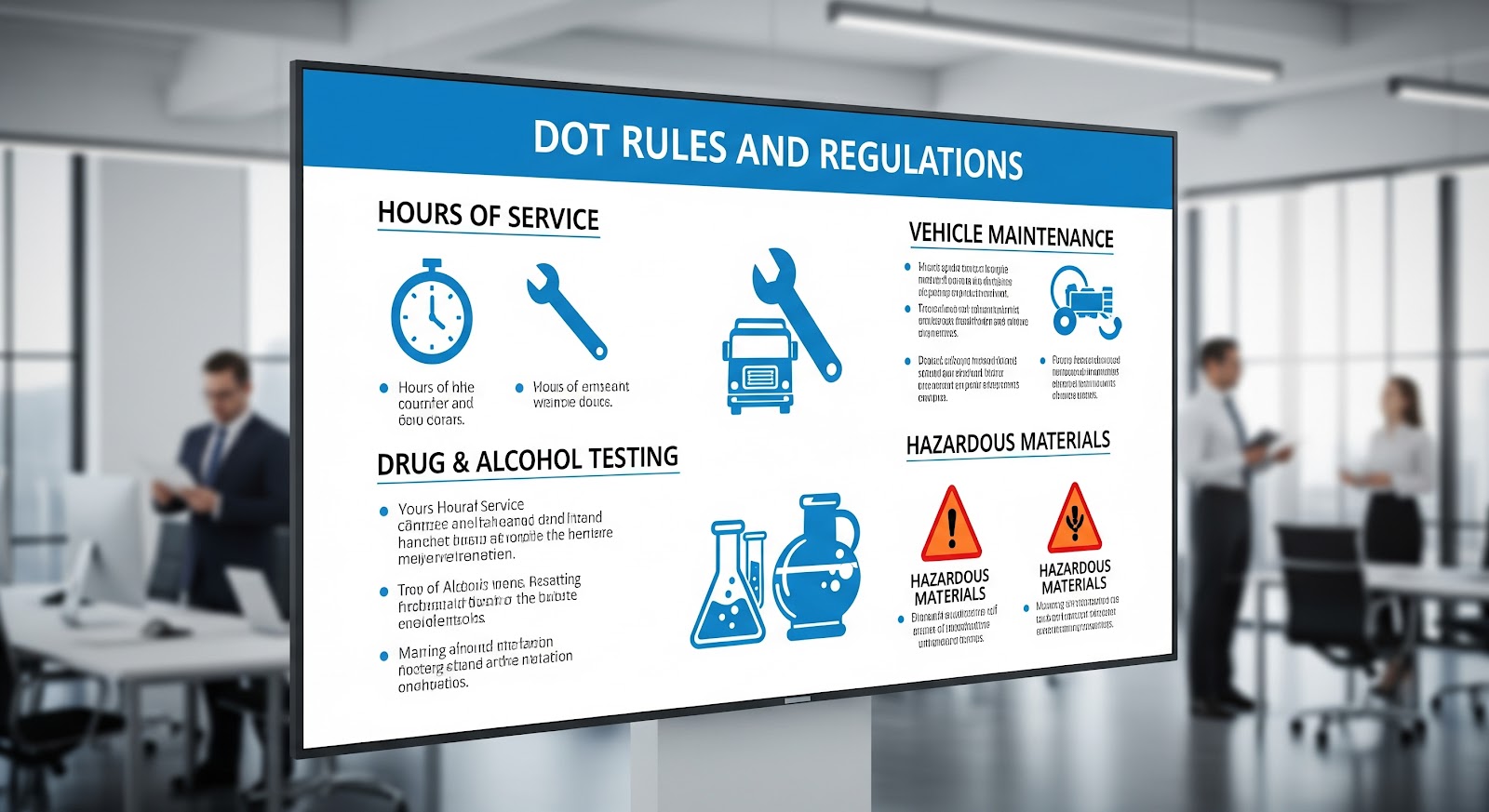
During an audit, investigators will review records across several core compliance categories. Each area aligns with specific parts of the Federal Motor Carrier Safety Regulations (FMCSRs), and failure to meet requirements in any of them can result in penalties or a downgraded safety rating.
1. Driver Qualification Files
Regulation Reference: 49 CFR Part 391
Auditors will thoroughly inspect your Driver Qualification Files to ensure all drivers meet FMCSA requirements.
Required DQF Elements Include:
- Driver’s employment application
- Copy of valid Commercial Driver’s License
- Medical Examiner’s Certificate (DOT physical)
- Motor Vehicle Record, initial and annual
- Road test certificate or equivalent CDL road skills waiver
- Background checks (including previous employer safety performance history)
- Annual review and certification of violations
- Driver’s Statement of On-Duty Hours (for new hires)
Key Tip: Missing or expired documents in a DQF are some of the most common audit violations. Keep files up to date and audit them internally at least quarterly.
2. Hours of Service Records
Regulation Reference: 49 CFR Part 395
Auditors will examine your driver logs to verify compliance with Hours of Service limits and the use of Electronic Logging Devices.
What They Look For:
- Accurate HOS records for each driver
- Proper use of ELDs (unless exempt)
- Supporting documents (fuel receipts, bills of lading, etc.)
- Identification of false logs or log manipulation
- Evidence of violations (e.g., driving beyond the 11-hour or 14-hour limits)
Common Red Flags:
- Log inconsistencies
- “Unassigned drive time” not properly accounted for
- Repeated form and manner violations
3. Vehicle Maintenance Files
Regulation Reference: 49 CFR Part 396
Proper vehicle maintenance is critical to fleet safety, and auditors will evaluate whether your maintenance program meets regulatory standards.
Required Records Include:
- Scheduled and unscheduled maintenance logs
- Daily Driver Vehicle Inspection Reports
- Annual DOT inspections and certifications
- Repair records and defect corrections
- Records of brake inspections (every 90 days)
Tip: Maintenance-related violations, such as failing brakes or lighting systems, are frequent CSA score contributors. Organize records by unit number and ensure documentation covers at least the past 12 months.
4. Drug & Alcohol Testing Program
Regulation Reference: 49 CFR Part 382
All CDL drivers operating vehicles requiring a DOT number must be part of a compliant Drug & Alcohol Testing Program.
Program Must Include:
- Pre-employment drug tests
- Random drug and alcohol testing (with proper selection methods)
- Post-accident, reasonable suspicion, return-to-duty, and follow-up testing
- Designated Employer Representative (DER)
- Proof of enrollment in a compliant consortium (if applicable)
- Substance Abuse Professional (SAP) process for return-to-duty cases
Documentation Required:
- Chain of custody forms
- Test results and records
- Random selection rosters and results
- Supervisor training records (for reasonable suspicion)
Audit Risk: A non-compliant drug & alcohol program is considered a “Critical Violation” and can result in an Unsatisfactory rating or immediate Out-of-Service Order.
5. Accident Register and Reports
Regulation Reference: 49 CFR Part 390.15
The DOT requires carriers to maintain an accident register for all DOT-reportable crashes over the last 3 years.
Must Include:
- Date and location of each accident
- Driver name
- Number of injuries or fatalities
- Whether hazardous materials were released
- Copies of police reports (if available)
Auditors use this data to evaluate your crash rate and identify patterns of unsafe operations. Even if a crash wasn’t your fault, how you respond and document it matters.
6. Hazmat Compliance (If Applicable)
Regulation Reference: 49 CFR Parts 171–180
For fleets that transport hazardous materials, DOT auditors will assess compliance with HazMat-specific regulations.
Areas Reviewed:
- Proper shipping papers and placarding
- Employee HazMat training certifications
- Security plans (if transporting high-risk materials)
- Container markings, labels, and packaging compliance
- Incident reporting
Note: HazMat violations are taken very seriously due to public safety risk and can lead to major penalties, including federal enforcement action.
Key Regulations to Know
Here’s a quick reference list of the most relevant FMCSA Parts tied to audit categories:
| FMCSR Part | Regulatory Focus |
| Part 382 | Drug and Alcohol Testing |
| Part 383 | Commercial Driver’s License Standards |
| Part 385 | Safety Fitness Procedures |
| Part 387 | Insurance Requirements |
| Part 390 | General FMCSA Requirements |
| Part 391 | Driver Qualification |
| Part 392 | Driving of Commercial Vehicles |
| Part 395 | Hours of Service |
| Part 396 | Inspection, Repair, and Maintenance |
| Parts 171–180 | Hazardous Materials Regulations |
Each of these categories represents a pillar of DOT compliance. A single weak point, such as outdated DQFs or missing maintenance records, can jeopardize your audit outcome. By organizing documentation, cross-checking records, and keeping systems updated, your fleet can confidently withstand any compliance review.
Step 3: Conduct an Internal Audit
Even the most organized fleets can fall out of compliance without realizing it. That’s why performing a thorough internal audit, also known as a mock DOT audit, is essential. This proactive step allows you to identify and fix compliance gaps before a real DOT audit occurs, reducing your risk exposure and protecting your safety rating.
Perform a Mock DOT Audit
A mock audit is a simulated DOT audit that mirrors the structure and process of an actual FMCSA investigation. It helps you assess your level of compliance across all major regulatory categories and reveals weak spots in your systems, documentation, and processes.
Steps to Conduct a Mock Audit:
- Select an audit period (e.g., the last 6–12 months of operations)
- Randomly sample a portion of driver files, vehicle records, and logs
- Conduct mock interviews with supervisors and safety managers
- Simulate how records would be retrieved and presented to an auditor
- Review your accident register and safety event history
Tip: Approach the mock audit as if the FMCSA were in your office, ask tough questions, document findings, and treat it seriously.
Use FMCSA’s Audit Checklist or Software Tools
The FMCSA provides official checklists and forms that mirror what investigators use during compliance reviews. These include:
- Safety Audit Checklist
- Driver Qualification File Checklist
- Drug & Alcohol Testing Checklist
- Maintenance File Checklist
- Hazmat Compliance Checklist (if applicable)
How to Use These Tools:
- Download official FMCSA audit forms or use trusted compliance software
- Compare your documentation directly to the checklist requirements
- Mark areas as “Compliant,” “Needs Attention,” or “Non-Compliant”
- Note expiration dates, missing files, or documentation inconsistencies
Technology Tip: Fleet compliance platforms like Samsara, KeepTruckin, JJ Keller, or Fleetworthy Solutions offer tools that automate audit readiness by tracking expiring documents, monitoring driver logs, and generating digital audit checklists.
Involve Compliance and Safety Personnel
An internal audit shouldn’t be done in a silo. It’s important to involve key personnel who manage various aspects of your operation, including:
- Safety Managers: For driver behavior, accident tracking, training records
- Compliance Officers: For regulatory oversight and documentation
- Dispatch/Operations Staff: For HOS and trip records
- HR or Driver Recruiting: For DQF and hiring practices
- Maintenance Technicians or Managers: For inspection and repair logs
Benefits of a Team Approach:
- Identifies knowledge gaps among departments
- Encourages cross-functional accountability
- Builds a culture of compliance across the organization
Pro Tip: Schedule internal audits quarterly or semi-annually and assign responsibility for follow-up actions.
Identify Red Flags or Missing Documentation
The primary goal of an internal audit is to uncover red flags, issues that could lead to violations, penalties, or audit failure.
Common Internal Audit Red Flags:
- Incomplete or expired medical certificates in DQFs
- Drivers operating without valid CDLs or endorsements
- Missing pre-employment drug test results
- Gaps or falsifications in HOS logs
- Unrecorded roadside inspection violations
- Outdated or missing annual vehicle inspections
- Inaccurate accident records or failure to report DOT-recordable crashes
What to Do When You Find Issues:
- Document all findings and categorize them by severity
- Prioritize corrective actions (e.g., expired files = urgent)
- Establish deadlines and assign responsibility for resolution
- Track progress and re-audit problem areas after correction
Build an Ongoing Internal Audit Program
Internal audits should not be a one-time activity. A strong fleet compliance program includes a structured and repeatable internal audit schedule.
Best Practices for Ongoing Internal Audits:
- Create a written internal audit SOP (Standard Operating Procedure)
- Rotate audit focus areas each quarter (e.g., Q1: DQFs, Q2: HOS, etc.)
- Use dashboards or software to monitor compliance in real time
- Track KPIs such as “% of Complete DQFs” or “Average HOS Violations Per Driver”
By conducting a mock audit and involving your compliance team, you gain valuable insights into your fleet’s operational health and regulatory posture. This internal review is one of the most powerful tools you have to stay ahead of DOT scrutiny, reduce risk, and ensure continuous improvement.
Step 4: Organize and Maintain Documentation
No matter how compliant your fleet may be operationally, disorganization can cost you during a DOT audit. If you can’t produce the required records quickly and accurately, auditors may assume you’re non-compliant, even if the activity was done correctly.
Organizing and maintaining documentation is about more than just filing paperwork, it’s about creating systems that ensure accuracy, accessibility, and timeliness across all areas of DOT compliance.
Digitize Records for Easy Retrieval
Gone are the days when compliance binders and filing cabinets were enough. Today, fleets need digital recordkeeping systems that enable fast, secure, and organized access to documentation, especially since many audits are now conducted off-site.
Benefits of Digital Recordkeeping:
- Faster response time during audits
- Easier access across departments and locations
- Automated alerts for expiring documents (e.g., CDLs, medical cards)
- Reduced risk of lost, damaged, or outdated paperwork
- Supports audit logs and version tracking
Tools to Use:
- Fleet compliance software (e.g., Fleetworthy, JJ Keller Encompass, KeepTruckin)
- Cloud-based storage (e.g., Google Drive, SharePoint, Dropbox)
- HR/driver management systems with DQF tracking
Tip: Ensure your digital system is well-organized using consistent naming conventions (e.g., “DriverName_MVR_2026.pdf”) and folder structures by driver, vehicle, or compliance category.
Create a DOT Audit Binder or Digital Compliance Dashboard
Whether physical or digital, every fleet should maintain a central “audit-ready file” or compliance dashboard that consolidates all essential records in one place.
What to Include in Your Audit Binder or Dashboard:
- List of current drivers with hire dates and roles
- Table of contents for quick navigation
- Driver Qualification File summaries
- Drug and alcohol testing program details
- HOS and ELD compliance summaries
- Maintenance records by unit
- Accident register for the past 3 years
- Insurance certificates and operating authority
- FMCSA registration documents (MCS-150, DOT number info)
Pro Tip: Include a “Quick Reference Sheet” with login credentials or access instructions for systems like ELD platforms, telematics portals, or third-party testing consortiums, so you’re ready during virtual audits.
Ensure DQFs Are 100% Complete and Current
Driver Qualification Files are one of the first things auditors request and one of the most common sources of violations. Incomplete or outdated DQFs can result in critical violations and affect your Driver Fitness BASIC score.
DQF Must-Haves (Per FMCSA 391):
- Completed driver application
- Copy of current CDL
- Medical Examiner’s Certificate (not expired)
- Initial and annual MVRs
- Road test certification or equivalent
- Safety Performance History (from past employers)
- Annual review and certification of violations
- Driver’s certification of on-duty hours (for new hires)
Best Practices:
- Set alerts for expiring medical cards or license renewals
- Use a checklist to verify DQF completeness during onboarding
- Perform quarterly DQF audits to catch issues early
- Archive DQFs of terminated drivers for at least 3 years
Maintain Accurate Logs, Inspection Reports, and Repair Records
Proper maintenance documentation is critical to show you’re operating safe, roadworthy vehicles in compliance with FMCSA standards.
Vehicle Records Should Include (per 49 CFR 396):
- Driver Vehicle Inspection Reports (DVIRs): Pre- and post-trip inspections (especially if defects were noted)
- Maintenance Logs: All scheduled and unscheduled maintenance activities, including oil changes, tire replacements, etc.
- Annual DOT Inspections: Certification showing vehicles passed a full inspection by a qualified technician
- Repair Records: Documents showing prompt correction of safety defects
- Brake Inspection Records: Documented at least every 90 days, if applicable
Vehicle File Tip: Organize maintenance records by unit number, and track each vehicle’s compliance history across its lifecycle. Include a summary sheet for each unit with VIN, make/model, and inspection due dates.
Common Pitfalls to Avoid
- Mixing active and inactive driver files without clear labeling
- Failing to document repair completion dates on DVIRs
- Losing access to digital records due to poor file management or expired subscriptions
- Keeping handwritten logs or outdated forms without digitizing them
Having the required documents is only half the battle, being able to produce them quickly and confidently is what defines audit success. A well-organized documentation system signals to auditors that your fleet is disciplined, compliant, and safety-conscious.
Step 5: Train Staff and Drivers
Even with perfect documentation and compliance systems in place, your staff and drivers are the front line during a DOT audit. If they’re unprepared, give incorrect information, or appear confused, it may raise red flags and damage the auditor’s confidence in your operation.
That’s why investing in ongoing, targeted training is essential, not just for drivers, but also for supervisors, dispatchers, safety managers, and anyone who may interact with DOT officials or handle compliance processes.
Prepare Frontline Employees on What to Expect
DOT audits, whether on-site or virtual, often involve direct interaction with employees. Auditors may ask to speak with dispatchers, driver managers, safety personnel, and administrative staff who handle driver files or logs.
How to Prepare Non-Driver Staff:
- Explain the audit process and what documentation may be requested
- Train staff on how to access compliance systems quickly (e.g., ELD portal, maintenance software, DQF storage)
- Review policies around data privacy and appropriate communication with auditors
- Assign specific roles and responsibilities in the event of an audit (e.g., “Jane pulls maintenance files, Mark handles DQFs”)
Tip: Conduct short audit-prep huddles or refreshers at least twice per year to keep the team confident and current.
Educate Drivers on Logbook Accuracy and Roadside Inspections
Drivers are often the most visible part of your operation, and auditors pay close attention to driver behavior, log accuracy, and roadside inspection histories.
Train Drivers On:
- Hours of Service (HOS) Rules: 11-hour driving limit, 14-hour on-duty window, 30-minute break rule, 60/70-hour weekly limits
- ELD Usage: How to log in/out, certify logs, annotate discrepancies, handle malfunctions
- Unassigned Drive Time: How to claim or reject, and when to notify dispatch
- Roadside Inspections: What to do during an inspection, required documents (CDL, medical card, registration, ELD info), and respectful communication
Pro Tip: Emphasize that form and manner violations (e.g., missing location, not certifying logs) may seem minor but can quickly add up to audit findings.
Role-Play Audit Interview Questions
Practice makes perfect, especially when employees are nervous about interacting with federal auditors. Role-playing audit scenarios can build confidence and reduce errors under pressure.
Sample Interview Questions to Role-Play:
- “Can you walk me through how you verify a driver’s qualification before hire?”
- “Where do you store your DVIRs and annual inspection records?”
- “What’s your process for handling a failed drug test?”
- “How do you ensure drivers are taking required breaks?”
Role-Play Tips:
- Assign mock auditors during training sessions
- Encourage natural but accurate responses, don’t over-rehearse
- Provide feedback and clarify correct responses after the exercise
- Record mock interviews and review them for coaching
Bonus: For drivers, simulate a roadside inspection with a checklist and scorecard to reinforce correct behavior and documentation readiness.
Ensure Supervisors Understand Documentation Protocols
Supervisors play a critical role in compliance, not only do they oversee day-to-day operations, but they’re also often responsible for reviewing logs, approving time records, and maintaining driver files.
Train Supervisors On:
- Where all critical documents are stored and how to access them (e.g., DQFs, ELD logs, drug test results, maintenance records)
- How to spot and correct compliance issues (e.g., log discrepancies, expired credentials)
- What to do if contacted by a DOT officer or auditor
- Internal reporting protocols and chain of command during audits or inspections
Documentation Tip: Provide written SOPs and cheat sheets for audit preparation, including a contact list for compliance support.
Reinforce a Culture of Compliance
Training is not just about passing an audit, it’s about embedding safety and compliance into your team’s daily mindset. Ongoing reinforcement of these values reduces audit risk and improves overall operational performance.
Best Practices for Building a Compliance-Focused Culture:
- Include audit readiness and compliance in new-hire orientation
- Offer periodic refresher training on HOS, vehicle inspections, and DOT policy changes
- Recognize and reward staff for clean inspections or proactive compliance efforts
- Make training interactive, real-world, and scenario-based
DOT auditors don’t just evaluate records, they evaluate people and processes. Well-trained staff and drivers who understand what to do, how to communicate, and where to find records can make the difference between a smooth audit and one that escalates into fines, investigations, or operational disruptions.
Step 6: Leverage Technology
Technology has transformed fleet safety and compliance from a reactive, paper-based process into a proactive, data-driven system. Leveraging the right tools not only saves time and labor, it significantly reduces the risk of violations, missed deadlines, and audit failures.
In a DOT audit, the ability to quickly access, verify, and produce accurate compliance data is crucial. Technology makes that possible while also helping you automate routine tasks, flag potential risks early, and maintain continuous visibility into fleet operations.
Use Fleet Management Software to Track Compliance
Fleet management platforms centralize the data and documents needed to run a safe, compliant operation. These systems bring together driver files, vehicle records, training documentation, HOS logs, and inspection histories into one digital interface.
What It Can Do:
- Monitor driver qualification file completeness and expiration dates
- Track maintenance schedules and inspections by vehicle unit
- Log and report roadside inspections and violations
- Provide dashboards to monitor audit readiness across all compliance areas
- Simplify document uploads and storage for audits
Step 7: Review and Update Policies
Written policies form the backbone of a compliant, well-run fleet operation. They define expectations, document procedures, and guide decision-making during both day-to-day operations and regulatory audits. However, outdated or misaligned policies can create serious problems during a DOT audit, especially if what’s on paper doesn’t match what’s happening in the field.
Regularly reviewing and updating your policies ensures your operation is aligned with FMCSA regulations, internal practices, and industry best practices.
Ensure Written Policies Reflect Actual Practices
Auditors often compare your documented procedures to your actual activities. If there’s a gap between what your policy says and what your team is doing, that inconsistency can be viewed as a compliance failure.
Steps to Align Policy with Practice:
- Conduct periodic audits of both written policies and field-level procedures
- Interview drivers, dispatchers, and supervisors to understand how policies are being followed in real life
- Identify areas where behavior or practices have shifted over time (e.g., new ELD usage procedures, updated drug testing steps)
- Revise documents to accurately reflect your current systems and workflows
Key Policy Areas to Validate:
- Driver onboarding and qualification process
- Hours of Service logging and log review protocols
- Vehicle inspection and maintenance workflows
- Drug & Alcohol testing procedures (random, post-accident, etc.)
- Accident response and reporting procedures
- Disciplinary process for safety violations
Pro Tip: Include policy audits as part of your internal compliance review schedule to catch and correct inconsistencies early.
Update Safety and Compliance Procedures Regularly
Safety and compliance procedures should be treated as living documents, not static forms. They should evolve alongside your fleet’s growth, changes in operations, regulatory shifts, and technology upgrades.
When to Update Procedures:
- After significant regulatory updates (e.g., FMCSA rule changes)
- When implementing new technologies (e.g., new ELD platform or telematics system)
- Following a safety incident or audit finding
- When expanding services (e.g., adding HazMat transport or new vehicle types)
- At least annually, even if no changes seem necessary
How to Manage Policy Updates Effectively:
- Use version control to track changes and maintain historical records
- Document the reason for each policy revision (e.g., “Updated to reflect 2025 FMCSA drug testing rate increase”)
- Communicate updates clearly to staff and drivers through meetings, digital platforms, or printed manuals
- Require acknowledgment or sign-off from affected employees to confirm understanding
Pro Tip: Integrate policy updates into your training calendar so drivers and staff receive refreshers aligned with the most current procedures.
Make Sure Policies Align with Current FMCSA Rules
The FMCSA regularly updates its regulations to reflect new safety standards, technology advancements, or industry needs. If your policies aren’t reviewed regularly, they can quickly become outdated, putting your fleet at risk of violations, penalties, or poor audit outcomes.
Key Areas to Monitor for Regulatory Updates:
- Hours of Service rules (e.g., short-haul exemptions, split sleeper berth options)
- Drug and alcohol testing thresholds, procedures, and clearinghouse requirements
- Driver medical certification requirements
- ELD mandates and data transfer protocols
- Record retention timelines for compliance documentation
- DOT audit procedures (especially for off-site audits and digital submissions)
Where to Stay Updated:
- FMCSA website (https://www.fmcsa.dot.gov)
- Fleet safety publications or trade associations (e.g., ATA, CVSA)
- Telematics and compliance software alerts
- Webinars, safety bulletins, and regulatory updates from trusted vendors
Pro Tip: Assign someone on your safety or compliance team as a “regulatory watch officer” to track FMCSA updates and initiate policy changes when needed.
Well-written, up-to-date policies are a cornerstone of audit readiness. They demonstrate to auditors that your company takes compliance seriously and has systems in place to manage risk. When policies match real-world practice and align with current FMCSA rules, your fleet is positioned for operational excellence and audit success.
Step 7: Post-Audit Action Plan
The work doesn’t end when the DOT audit concludes. In fact, how you respond after the audit is just as important as how well you prepared for it. Whether your audit result was satisfactory or you received citations or violations, having a structured post-audit action plan is essential for maintaining compliance and improving your fleet’s safety posture.
A post-audit strategy helps you understand the auditor’s findings, correct any deficiencies, and reinforce your commitment to continuous improvement. It also demonstrates to regulators that your organization takes compliance seriously, even if mistakes were made.
Review the Auditor’s Findings
After the audit, the DOT (or FMCSA) will typically issue a report or summary of findings. This may include:
- A Safety Fitness Rating (Satisfactory, Conditional, or Unsatisfactory)
- A Notice of Violations (NOV) or Notice of Claim (NOC) detailing infractions
- A list of specific compliance issues discovered during the review
- Documentation of any critical or acute violations
- Guidance for submitting a Corrective Action Plan (CAP) if needed
Action Steps:
- Review the findings carefully with your compliance and safety team
- Identify which violations are factual issues (e.g., missing MVRs) vs. potential disputes or misinterpretations
- Compare the findings to your internal audit results, did you catch these issues beforehand?
- Save and securely store the audit documentation for future reference or appeals
Pro Tip: If you disagree with any of the findings, consult a transportation attorney or compliance expert before responding.
Respond to Violations Promptly (If Any)
If violations are cited during your audit, the FMCSA will usually give you a deadline to respond, often within 15 to 30 days. Delaying or ignoring a response can escalate the situation, resulting in fines, downgraded safety ratings, or even an Out-of-Service Order.
Key Response Components:
- A formal written response acknowledging each cited violation
- An explanation of the root cause (why the issue occurred)
- A description of immediate steps taken to correct the issue
- Supporting documentation (e.g., updated DQFs, proof of training, policy changes)
- A commitment to prevent recurrence
If a Notice of Claim (NOC) is issued:
- You may have the opportunity to contest the claim or request a mitigation of penalties
- Legal counsel is strongly recommended to navigate the process and protect your company’s interests
Implement Corrective Actions
A key part of your post-audit plan is creating and executing a Corrective Action Plan (CAP) that addresses the specific problems identified during the audit.
Corrective Actions May Include:
- Completing or updating missing documents (e.g., MVRs, inspection records)
- Re-training drivers or staff on compliance procedures (HOS, roadside inspections, DVIRs)
- Updating policies and SOPs to prevent future noncompliance
- Enhancing recordkeeping or using new technology for better oversight
- Revising hiring, onboarding, or drug testing procedures
How to Ensure Follow-Through:
- Assign owners for each corrective action (who is responsible?)
- Set deadlines for completion and conduct follow-up audits
- Maintain a corrective action log with dates, actions taken, and verification steps
- Submit documentation to the FMCSA (if required) showing the corrections were made
Pro Tip: If you received a Conditional or Unsatisfactory rating, you may need to formally request a safety rating upgrade after implementing your CAP.
Maintain a Continuous Improvement Cycle
Regardless of whether the audit went well or uncovered issues, use it as a learning opportunity to improve your fleet’s long-term safety and compliance performance.
Best Practices for Continuous Improvement:
- Conduct a full internal audit 30–60 days after the DOT audit to validate progress
- Update your training programs to address any deficiencies exposed during the audit
- Track key performance indicators (KPIs) like:
- Percentage of complete DQFs
- HOS violations per driver
- Maintenance-related downtime
- Driver safety scores
- Percentage of complete DQFs
- Create a quarterly or monthly compliance review process to monitor:
- Document expirations
- Inspection trends
- CSA score changes
- Document expirations
- Encourage staff and driver feedback to improve policies and close operational gaps
Cultural Impact: Use the audit as a way to reinforce a compliance-first mindset across all levels of your organization, from frontline drivers to senior leadership.
An effective post-audit action plan turns a regulatory review into a powerful catalyst for growth. Whether the audit outcome was clean or came with penalties, your response, accountability, and commitment to improvement can define your company’s long-term safety performance and reputation.
Successfully navigating a DOT audit isn’t about scrambling to pull paperwork together when the notice arrives, it’s about building a fleet operation that is always audit-ready.
When you proactively prepare for a DOT audit, you’re not just checking boxes, you’re protecting your company’s reputation, minimizing legal and financial risk, and proving to regulators, partners, and clients that your fleet prioritizes safety, accountability, and compliance.