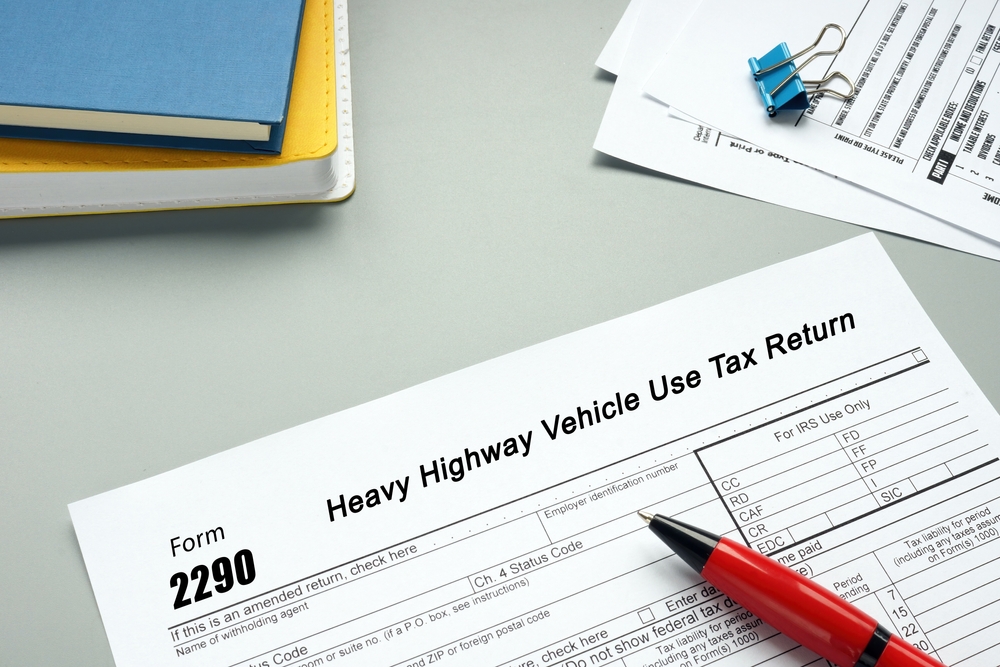
Category: 2290 IRS

A Trucker’s Guide to IRS Schedule 1

Individual reviews IRS Schedule 1 and Form 2290 documents at a desk.

If you operate a heavy vehicle with a taxable gross weight of 55,000 pounds or more, there’s one document you can’t afford to overlook: IRS Schedule 1. This crucial form isn’t just another piece of paperwork, it’s your official proof that you’ve filed Form 2290, the Heavy Vehicle Use Tax return, and paid any taxes due to the IRS.

Whether you’re an owner-operator, fleet manager, or handle compliance for a trucking business, understanding what Schedule 1 is and why it matters is essential to keeping your operations legal and on the road.

Truck driver submitting paperwork related to Form 2290 and IRS Schedule 1.

What is IRS Schedule 1?

IRS Schedule 1 is the stamped confirmation page you receive after filing Form 2290 with the IRS. It includes important details such as:

  • Your Employer Identification Number
  • The Vehicle Identification Numbers for your trucks
  • The tax period
  • And most importantly, the IRS e-file watermark or stamp proving the return was accepted

This document is required by law and is a key part of staying compliant with federal tax regulations for heavy highway vehicles.

Why Schedule 1 Matters for Truckers

For most truckers, the most immediate reason Schedule 1 is important is this: You can’t register your vehicle with the DMV without it.

Whether you’re renewing your tags, updating your registration, or purchasing a new truck, state DMVs require a current, IRS-stamped Schedule 1 to process your request. Without it, you could face delays in registration, fines, or even be pulled off the road.

Beyond registration, having an accurate and up-to-date Schedule 1 helps you:

  • Avoid IRS penalties for non-compliance
  • Prove tax payment during audits
  • Maintain accurate business and fleet records
  • Ensure you’re fully covered for insurance and leasing purposes

IRS Schedule 1 is a critical piece of your compliance puzzle. And the good news? Getting it doesn’t have to be complicated, especially if you e-file with an IRS-authorized provider like ExpressTruckTax, where most filers receive their Schedule 1 in minutes, not days.

Who Needs IRS Schedule 1?

If you’re involved in the operation, ownership, or management of heavy highway vehicles, IRS Schedule 1 is not optional, it’s essential. Whether you’re behind the wheel or managing a fleet from behind a desk, here’s who must file Form 2290 and keep a valid Schedule 1 on hand:

Owner-Operators

If you own and operate your own truck with a gross weight of 55,000 pounds or more, you’re legally required to file Form 2290 and obtain a Schedule 1. This form proves to the IRS, and the DMV, that you’ve paid the necessary Heavy Vehicle Use Tax for the year. Without it, you can’t:

  • Register or renew your vehicle registration
  • Get license plates
  • Stay compliant with federal regulations

Even if your truck is paid off and you’re the sole operator, you still need to file annually and have an up-to-date Schedule 1.

Fleet Managers

Managing a fleet of trucks? Whether it’s a handful of vehicles or thousands, each qualifying vehicle needs to be reported on Form 2290, and each must be covered by a valid Schedule 1. Fleet managers are typically responsible for:

  • Bulk filing Form 2290 for multiple vehicles
  • Ensuring each VIN is listed correctly
  • Distributing copies of Schedule 1 for registration and compliance
  • Filing 2290 Amendments if vehicle weights change or mileage limits are exceeded

Fleet compliance hinges on accurate and timely Schedule 1 filings.

Leasing Companies

If your company leases heavy vehicles under long-term contracts, the responsibility to file Form 2290 and secure Schedule 1 usually falls on you, not the lessee. The IRS defines long-term leases as contracts lasting 30 days or more, and in such cases, the leasing company is considered the owner for HVUT purposes. You’ll need to:

  • File Form 2290 using your company’s EIN
  • Provide Schedule 1 to your lessees so they can register the vehicles

Failing to do so could delay customer registrations or result in compliance penalties.

Agricultural vs. Non-Agricultural Vehicles

All heavy vehicles used on public highways are subject to HVUT, but the rules differ slightly depending on use:

  • Agricultural Vehicles:
    • Defined by the IRS as vehicles used primarily for farming
    • Must file Form 2290 if gross weight is 55,000 lbs+
    • Enjoy a higher mileage exemption limit of 7,500 miles annually (compared to 5,000 for regular vehicles)
    • Still require a Schedule 1, even if taxes aren’t owed due to mileage suspension
  • Non-Agricultural Vehicles:
    • Includes trucks used for freight, construction, towing, and other commercial uses
    • Must file Form 2290 and pay HVUT if mileage exceeds 5,000 annually
    • Schedule 1 is always required, whether tax is owed or not

Regardless of tax liability, if your vehicle meets the weight threshold, you must file and keep Schedule 1 as proof.

Anyone Registering a Heavy Vehicle with the DMV

This is the most universal requirement:

If you’re trying to register a heavy highway vehicle, your state DMV will require a valid, IRS-stamped Schedule 1.

This includes:

  • New vehicle purchases
  • Tag renewals
  • Title transfers
  • IRP applications

No stamped Schedule 1? No tags, no registration, no road time.

Analysis of IRS Schedule 1 and Form 2290 on laptop with truck model.

When Do You Need to File Form 2290 to Get Schedule 1?

Understanding the deadlines for filing Form 2290 is key to avoiding penalties and ensuring you get your IRS-stamped Schedule 1 in time for vehicle registration and compliance. The IRS has strict filing timelines based on when a vehicle is first used on public highways, and missing them can result in costly fines and delays.

Here’s what you need to know:

HVUT Tax Year Runs from July 1 to June 30

The Heavy Vehicle Use Tax (HVUT) operates on a tax year that begins July 1 and ends the following June 30. This is not the same as the calendar year or standard tax year used for income taxes.

If your vehicle is active on the road at the start of the HVUT tax year (July 1), you’re expected to file Form 2290 and obtain your Schedule 1 for that vehicle as part of your annual compliance.

Deadline: August 31 for Vehicles on the Road as of July 1

For vehicles that were already in use on or before July 1, the filing deadline is August 31 of that same year. This is the most common due date for most truckers and fleets.

For example:

  • If your truck was on the road July 1, 2025
  • You must file by August 31, 2025
  • Your Schedule 1 will cover the tax period from July 1, 2025, to June 30, 2026

Failing to file by August 31 can lead to IRS penalties, interest, and delays in renewing your vehicle registration.

Pro-Rated Deadlines for New Vehicles (Based on First Use Month)

If you add a new vehicle to your fleet or put a truck on the road mid-year, your Form 2290 filing deadline is pro-rated and based on the First Used Month of the vehicle.

The IRS requires you to:

  • File Form 2290 by the last day of the month following the vehicle’s first use
  • Only pay HVUT taxes for the months remaining in the tax year

Example: If your truck’s first use on public highways was in October, you must:

  • File Form 2290 by November 30
  • Pay a prorated HVUT amount covering October to June

This ensures you’re not overpaying tax, but you’re still compliant and can receive a valid Schedule 1.

ExpressTruckTax automatically calculates your pro-rated tax and due date based on the First Used Month you enter.

Penalties for Late Filing or Missing Schedule 1

The IRS takes HVUT compliance seriously. Failing to file Form 2290 or obtain your stamped Schedule 1 on time can result in:

Late Filing Penalties

  • 4.5% of the total tax due, assessed monthly (up to 5 months)

Late Payment Interest

  • 0.5% per month of the unpaid tax
  • Additional interest charges may apply

Business Consequences

  • Inability to register or renew vehicle registration at the DMV
  • Delays in putting new vehicles on the road
  • Risk of fines during DOT audits

Pro Tip: If you file through ExpressTruckTax, you’ll receive instant email notifications and alerts about upcoming deadlines, helping you stay ahead of penalties and stay compliant year-round.

Trucker manages IRS Schedule 1 and Form 2290 documentation via mobile devices.

How to Get IRS Schedule 1 Quickly

When it comes to getting your IRS Schedule 1, speed and accuracy matter. Whether you’re registering a new truck, renewing your tags, or undergoing a DOT audit, waiting days, or even weeks, for paperwork can put your operation on hold.

The fastest and most reliable way to receive your Schedule 1 is by filing Form 2290 electronically with an IRS-authorized e-file provider like ExpressTruckTax.

A. Filing Form 2290 Electronically

E-filing has quickly become the standard for HVUT compliance, especially for fleet owners and tax professionals managing multiple vehicles.

E-filing Required for 25 or More Vehicles

The IRS requires electronic filing if you’re reporting 25 or more vehicles on Form 2290. Even for fewer vehicles, e-filing is recommended because it eliminates:

  • Mail delays
  • Manual IRS processing time
  • Paper-based errors

It’s faster, safer, and gives you proof of compliance in minutes, not weeks.

Fastest Way to Receive Schedule 1 (Usually Within Minutes)

When you e-file, your return is transmitted directly to the IRS through a secure system. Once approved, you’ll receive your IRS-stamped Schedule 1 within a few minutes in most cases.

This allows you to:

  • Immediately register your vehicle with the DMV
  • Forward proof to leasing companies or insurers
  • Keep your trucks moving without delay

E-filing vs. Paper Filing: A Timeframe Comparison

Filing MethodProcessing TimeSchedule 1 DeliveryRisks
E-filingA few minutes to 24 hoursInstant (email, fax, or download)Very low
Paper Filing (by mail)4–6 weeks (or longer)Mailed copyDelays, lost mail, manual errors

E-filing is clearly the better option, especially if you’re under a tight deadline.

B. Using ExpressTruckTax

As the #1 IRS-authorized e-file provider for Form 2290, ExpressTruckTax offers truckers a fast, secure, and stress-free way to get their IRS Schedule 1. Whether you’re a first-time filer or managing thousands of trucks, our system is built to save time and reduce errors.

3-Step Easy Filing Process

  1. Enter Business & Vehicle Details – Just your EIN, VIN, and gross vehicle weight.
  2. Choose a Payment Method – EFTPS, EFW, debit/credit card, or check/money order.
  3. Transmit Electronically – Review your return, submit, and receive your Schedule 1 in minutes.

The process is intuitive and can be completed in less than 10 minutes.

Guaranteed Schedule 1 or Your Money Back

We’re so confident in our system that we offer a Schedule 1 Guarantee:

If you don’t receive your IRS-stamped Schedule 1, we’ll refund your filing fee.

This peace of mind makes ExpressTruckTax the trusted solution for over 5 million filings.

Instant Delivery Options

Once your return is accepted, you’ll get your Schedule 1 via:

  • Email (automatically sent)
  • Fax (optional)
  • Download from your ExpressTruckTax dashboard at any time

You can also resend or reprint it as often as you need, at no extra cost.

Mobile App Convenience

Need to file from the road? Use the ExpressTruckTax mobile app to:

  • File a return in minutes
  • Upload VINs
  • Pay your HVUT
  • Access past filings
  • Get instant push notifications when your Schedule 1 is ready

Perfect for owner-operators and fleet managers who need flexibility and speed.

IRS-Authorized, Secure, and Error-Checked

ExpressTruckTax is:

  • An IRS-authorized e-file provider
  • SSL-encrypted and Comodo Hacker Safe certified
  • Built with smart error checks to reduce VIN mistakes and rejections

Our direct IRS integration ensures fast processing and real-time filing updates.

Businessman hands document related to IRS Schedule 1 and Form 2290.

Schedule 1 for Tax Professionals & Fleet Managers

While individual owner-operators often file for just one or two vehicles, tax professionals and fleet managers deal with dozens, hundreds, or even thousands of trucks, and that means handling just as many IRS Schedule 1s. Managing HVUT compliance at scale requires specialized tools to ensure speed, accuracy, and accountability.

That’s where ExpressTruckTax excels, offering powerful features built specifically for high-volume filers who need to stay organized, compliant, and audit-ready.

Multi-Client Dashboards for Tax Professionals

For CPAs, enrolled agents, and tax preparers handling 2290 filings for multiple clients, ExpressTruckTax provides a centralized dashboard to:

  • Add and manage unlimited clients
  • File 2290s for each business under one login
  • View filing history and access IRS Schedule 1s instantly
  • Track which clients are due, filed, or pending
  • Store and retrieve documents for future returns or audits

You can also manage multiple EINs, keep client information securely stored, and download Schedule 1s any time for DMV or registration purposes.

Bonus: You can brand the portal with your firm’s logo and offer a seamless, professional experience to your clients.

Bulk Filing Capabilities, Upload Up to 40,000 VINs

For large fleets, entering vehicle data manually just isn’t an option. ExpressTruckTax offers robust bulk upload tools that allow you to:

  • Import thousands of vehicles at once using Excel or CSV templates
  • Instantly check for errors, duplicate VINs, or formatting issues
  • Group vehicles by weight categories for efficient tax calculations
  • Save and reuse vehicle lists year after year

This is ideal for:

  • Fleets with 25+ vehicles (mandatory e-filing threshold)
  • Leasing companies with frequent vehicle changes
  • DOT compliance teams that need speed and precision

Plus, every return includes built-in error-checks to prevent rejections due to typos or invalid VINs.

Direct Integrations with State DMVs

ExpressTruckTax is an official partner with multiple state Departments of Motor Vehicles, streamlining the process of Schedule 1 verification.

This offers major benefits for tax professionals and fleet managers:

  • Faster vehicle registrations
  • Reduced DMV rejections due to incorrect or missing Schedule 1s
  • Real-time confirmation of IRS filings
  • Enhanced fraud prevention through EIN and VIN validation tools

DMV staff can verify e-filed Schedule 1s directly, reducing paperwork delays and errors during registration or renewal.

Schedule 1 Management for Compliance & IRS Audits

Fleet operators and tax professionals often face compliance audits, where proving HVUT payment and proper documentation is critical. With ExpressTruckTax, you can:

  • Download IRS-stamped Schedule 1s on demand for any filing
  • Maintain organized digital records for all EINs and vehicles
  • Generate detailed reports on tax payments and filing status
  • Re-send or reprint documents any time, no paper trail needed

Having a centralized system to store and retrieve these forms can save hours of manual work and protect your business during an audit.

ExpressTruckTax Simplifies Large-Scale Schedule 1 Management

Whether you’re filing for one client or 40,000 trucks, ExpressTruckTax gives you:

  • A unified dashboard
  • Time-saving bulk upload tools
  • DMV-ready compliance support
  • Unlimited access to critical documents

You get the power and reliability to handle HVUT filing season without bottlenecks, rejections, or late penalties, keeping your clients and your fleet on the road.
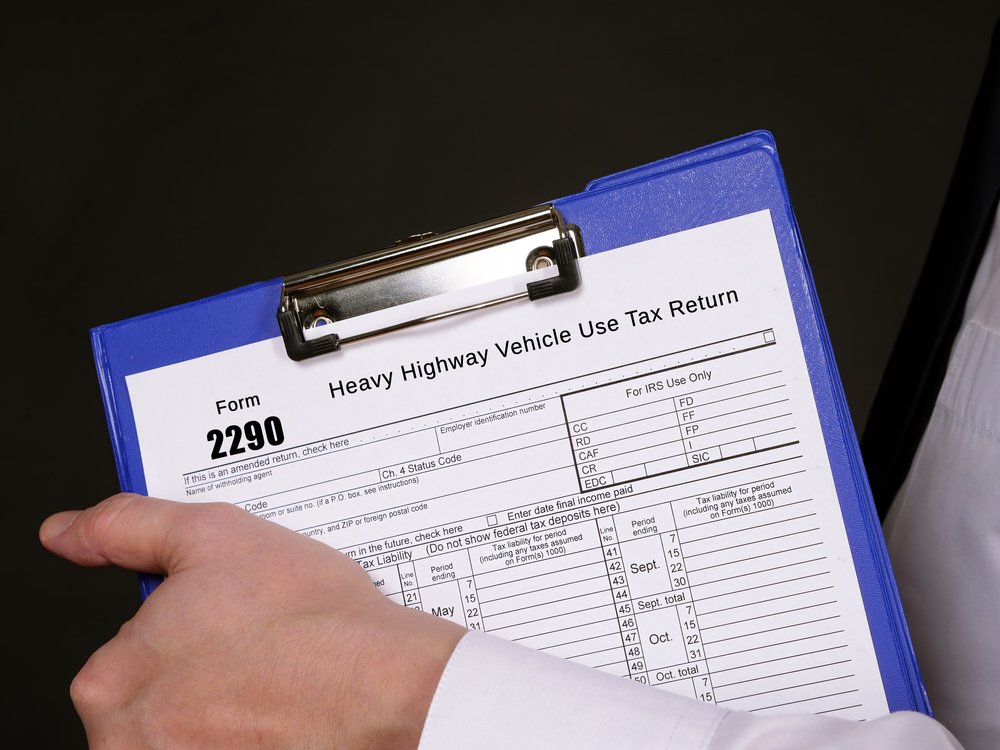

How to File IRS Form 2290 Online: A Beginner’s Step-by-Step Guide

Close-up view of IRS Form 2290 for online filing guidance

The IRS Form 2290, also called the Heavy Highway Vehicle Use Tax Return, is a critical tax requirement for individuals and businesses operating heavy vehicles. If your truck has a gross weight of 55,000 pounds or more and operates on public highways, you are required to file this form with the Internal Revenue Service (IRS). The revenue collected from this tax funds the maintenance and development of the nation’s highways, ensuring smoother transportation and better infrastructure for all.

This guide walks you through the e-filing process for IRS Form 2290 with ExpressTruckTax, the leading IRS-authorized e-file provider.

Step 1: Create Your Account with ExpressTruckTax

Getting started with ExpressTruckTax is fast, secure, and designed with the busy trucking professional in mind. Follow these simple steps to set up your account and begin the e-filing process for Form 2290:

  1. Visit the ExpressTruckTax Website
    Navigate to ExpressTruckTax.com and select the Register option.
  2. Enter Your Business Information
    Provide your business’s legal name and Employer Identification Number (EIN). Accurate EIN details are required for successful IRS processing.
  3. Add Contact Information
    Include your name, phone number, and email address. These details help us keep you informed about your filing status and assist you as needed.
  4. Create a Secure Password
    Choose a strong password to protect your account and ensure that your data remains confidential.
  5. Review and Agree to Terms
    Carefully review the terms of service and privacy policy, then confirm your agreement to finalize the setup process.

With your account created, you are ready to begin filing your IRS Form 2290.

Step 2: Entering Your Information on Form 2290

The next step in filing your Form 2290 with ExpressTruckTax is entering the necessary information about your business and vehicles, along with calculating the tax owed. To ensure a smooth filing experience, have your business and vehicle details ready and follow these steps:

Business Details

  1. Legal Business Name
    Enter the exact legal name of your business as it appears on official documents. Ensure consistency to avoid processing issues.
  2. Employer Identification Number (EIN)
    Input your EIN accurately. Note that mismatches between your EIN and IRS records can lead to form rejection. Double-check for accuracy.
  3. Business Address
    Provide the address associated with your business. Make sure this matches the address on file with the IRS to prevent delays.

Vehicle Information

  1. Vehicle Identification Number (VIN)
    Enter the VIN for each vehicle you’re filing for. Verify its accuracy to avoid unnecessary corrections.
  2. Taxable Gross Weight
    Indicate the taxable gross weight of each vehicle. This weight determines the tax rate, so ensure the details are correct.
  3. Vehicle Use Category
    Specify how each vehicle is used, such as:
    • Agricultural Use
    • Logging
    • Other (Standard Use)

Tax Calculations

  1. Determine Tax Owed
    Use the built-in tax calculator provided by ExpressTruckTax to accurately compute the tax owed for each vehicle based on its weight category and usage type.
  2. Claim Applicable Credits
    If eligible, claim credits for vehicles that were:
    • Sold, destroyed, or stolen.
    • Used for fewer miles than the IRS threshold for taxable use (e.g., 5,000 miles for most vehicles or 7,500 miles for agricultural vehicles).

Review for Accuracy

Once all details have been entered, review the information thoroughly before submission. Errors in this section can lead to delays, rejections, or additional charges.

With accurate information entered, you’re one step closer to completing your Form 2290 filing! ExpressTruckTax’s intuitive tools and built-in accuracy checks minimize errors, ensuring your Schedule 1 is processed quickly and correctly.

Financial management for trucking tax illustrated with truck, money, and calculator

Step 3: Review, Confirm, and Calculate Your Tax

Before calculating and submitting your IRS Form 2290, it’s essential to carefully review all the information you’ve entered. This step ensures the accuracy of your filing and helps you avoid potential IRS rejections, penalties, or delays.

Key Areas to Review

  1. Business Information
    • Confirm that your business’s legal name and Employer Identification Number (EIN) match the records on file with the IRS.
    • Verify that the business address is correct and up-to-date.
  2. Contact Information
    • Ensure your personal contact details (name, phone number, and email) are accurate to facilitate smooth communication.
  3. Vehicle Identification Numbers (VINs)
    • Double-check each VIN for accuracy, as even small errors can lead to complications or corrections later.
  4. Taxable Gross Weight
    • Reconfirm the taxable gross weight for each vehicle to ensure the correct tax bracket is applied.

Simplified Tax Calculation with ExpressTruckTax

ExpressTruckTax provides a suite of tools to streamline and automate your tax calculation. These tools ensure an accurate computation of the amount owed while accounting for any special circumstances:

  • Automatic Tax Rate Application
    The system automatically determines the correct tax rate based on the gross weight of your vehicles and usage category.
  • Credit Integration for Adjustments
    Credits for previously paid taxes on vehicles that have been sold, destroyed, or stolen are factored in seamlessly.
  • Partial-Year Tax Computation
    If a vehicle was first used in a month other than July, the system calculates the prorated tax owed based on the specific month of first use.

Taking the time to review your details and use ExpressTruckTax’s automated tools can save you significant time and effort. An accurate submission reduces the risk of rejection or penalties and minimizes the likelihood of needing to file amendments.

By confirming your details and utilizing the built-in tax calculator, you’ll be prepared to confidently submit your Form 2290 with the assurance that everything has been accurately calculated and properly filed.

Step 4: Finalizing and Submitting Your IRS Form 2290 Online

The final step in e-filing your IRS Form 2290 is selecting a payment method and submitting your completed form. ExpressTruckTax offers several secure payment options to accommodate your preferences, ensuring a smooth process from start to finish.

Choose Your Payment Method

ExpressTruckTax supports the following IRS-approved payment options:

  1. Electronic Funds Withdrawal (EFW)
    • Authorize a direct debit from your designated bank account.
  2. Electronic Federal Tax Payment System (EFTPS)
    • Pay online through the IRS EFTPS portal. If you’re not already enrolled, you can register at EFTPS.gov.
  3. Check or Money Order
    • Mail a check or money order directly to the IRS along with the appropriate voucher. Be sure to include your EIN and payment details to avoid processing delays.

Each method is secure and reliable. Make sure your selected payment method is prepared in advance to prevent delays in processing or IRS penalties.

Submitting Your Form 2290

After choosing a payment method, it’s time to finalize and submit your return through the ExpressTruckTax platform. Follow these steps:

  1. Final Review
    • Carefully check your Form 2290 one last time to confirm that all information is accurate and complete. ExpressTruckTax’s built-in error-checking feature ensures your return meets IRS requirements.
  2. Transmit Your Form
    • Use the ExpressTruckTax platform to electronically file your Form 2290 directly with the IRS.
  3. Receive Confirmation
    • After submission, you’ll receive an email confirmation with your watermarked Schedule 1 as proof of payment. This IRS-stamped document is sent within minutes for most filings.
  4. Save Your Records
    • Print and store the Schedule 1 for your records. It is an essential document for vehicle registration, renewal, and compliance with state and federal requirements.

Why the IRS-Stamped Schedule 1 is Important

The IRS-stamped Schedule 1 serves as official proof of payment for the Heavy Vehicle Use Tax (HVUT). It’s required when registering your vehicle or renewing its registration, so it’s important to keep this document on file.

Support for Questions or Technical Issues During Filing

At ExpressTruckTax, we are committed to providing reliable assistance throughout the IRS Form 2290 e-filing process. If you have questions or encounter technical issues, our dedicated support team is here to help. Here’s how you can access support:

How to Get Help

  1. Contact Our Support Team
    • Connect with our experienced customer support team via:
      • Phone: Speak directly with a support specialist.
      • Live Chat: Receive real-time assistance from our online support agents.
      • Email: Send your inquiries for prompt, detailed responses.
  2. Explore the Knowledge Base
    • Visit the ExpressTruckTax website to access a comprehensive library of FAQs, guides, and tutorials. These resources address common questions and provide step-by-step instructions to help you navigate the e-filing process.
  3. Technical Assistance
    • For technical difficulties, our team can walk you through troubleshooting steps or escalate the issue to ensure quick resolution. Your concerns will be addressed with efficiency and care.

Ready to Make Filing IRS Form 2290 Easier?

Join thousands of truckers and fleet owners who trust ExpressTruckTax to simplify their HVUT filing. With industry-leading tools, expert support, and fast results, managing your tax obligations has never been more convenient. Click below to create your ExpressTruckTax account and take the first step toward stress-free filing today!

IRS Form 2290 Deadlines: Everything You Need to Know for the 2024–2025 Tax Year

IRS Form 2290 and red pen on a desk, indicating the importance of adhering to the filing deadline for heavy highway vehicle use tax.

Form 2290, the Heavy Highway Vehicle Use Tax Return, is mandatory for vehicles with a gross weight of 55,000 pounds or more. This form tracks heavy vehicle usage on public highways and calculates taxes based on the vehicle’s weight and usage. 

Meeting IRS Form 2290 deadlines is a critical responsibility for owners of heavy highway vehicles. This form, also known as the Heavy Vehicle Use Tax (HVUT) Return, ensures that truckers and fleet operators comply with federal tax requirements while contributing to the upkeep of our nation’s highway infrastructure. Missing deadlines can result in costly penalties and delays in obtaining the IRS-stamped Schedule 1, which is required for vehicle registration. Whether you’re filing for a single truck or an entire fleet, staying informed about Form 2290 due dates and filing requirements is essential to avoid disruptions to your operations.

With a clear understanding of the filing process, deadlines, and requirements, truckers can simplify Form 2290 compliance while saving time and money. In this guide, we’ll explain the key details about IRS Form 2290, including who needs to file, when it’s due, and how to avoid penalties for late submission. From prorated taxes for new vehicles to tips for ensuring error-free filing, this article will help you navigate the filing process with confidence—especially when using ExpressTruckTax’s fast and easy e-filing solution.

When is Form 2290 Due?

The tax year for Form 2290 runs from July 1 to June 30, and the filing deadline depends on when your vehicle is first used:

  • File by the last day of the month following the first month the vehicle is used during the tax year.
  • For example:
    • If a vehicle is first used in July 2024, the Form 2290 must be filed by September 3, 2024 (adjusted for the Labor Day holiday).
    • If the vehicle is first used in October 2024, the filing deadline is December 2, 2024.

Here’s a quick guide to Form 2290 deadlines based on the first-used month:

First Used Month (FUM)Deadline for Form 2290 Filing
July 2024August 31, 2024
August 2024September 30, 2024
September 2024October 31, 2024
October 2024November 30, 2024
November 2024December 31, 2024
December 2024January 31, 2025
January 2025February 28, 2025
February 2025March 31, 2025
March 2025April 30, 2025
April 2025May 31, 2025
May 2025June 30, 2025
June 2025July 31, 2025

If a deadline falls on a weekend or legal holiday, the due date is extended to the next business day.

Avoid Late Filing Penalties

Filing late can result in significant penalties:

  • 4.5% of the total tax due per month, up to 5 months.
  • 0.54% monthly interest on the unpaid tax.
  • 0.5% monthly penalty for late payment of the HVUT.

To avoid these penalties, file your Form 2290 on time. Filing through ExpressTruckTax ensures fast, accurate processing, minimizing errors and delays.

How to File IRS Form 2290

Filing Form 2290 is simple with ExpressTruckTax:

  1. Gather Your Information: Have your EIN, VINs, and vehicle details ready.
  2. File Online: Use our easy e-filing platform to input your information.
  3. Receive Your Schedule 1: Get your IRS-stamped Schedule 1 in minutes!

Our system calculates your taxes accurately and applies any prorated amounts for vehicles purchased during the tax year. For example, if you buy a new truck in October, your Form 2290 deadline will be November 30, and only the prorated tax for the remaining months is due.

Tips for Error-Free Filing of IRS Form 2290

Filing IRS Form 2290 accurately is essential to avoid delays, rejections, or costly penalties. Even small mistakes, like an incorrect VIN or EIN, can cause unnecessary setbacks. Fortunately, with the right tools and preparation, you can ensure an error-free filing experience. In this section, we’ll cover key tips to help you avoid common errors, streamline the filing process, and keep your Form 2290 submission on track. 

Double-check your VINs, EIN, and vehicle information to avoid rejections

Before submitting Form 2290, verify that all entered details are accurate. The Vehicle Identification Number must match exactly as it appears on your vehicle’s registration documents, and your Employer Identification Number should be correct and registered with the IRS. Mismatched or incomplete information is one of the most common reasons for IRS rejections, causing delays and extra work. By thoroughly reviewing these details, you can save time and avoid unnecessary complications.

Use our free VIN correction feature if needed

Mistakes happen, especially when dealing with long VINs, but they don’t have to result in costly amendments. ExpressTruckTax offers a free VIN correction feature for any typos or errors in your original filing. If you spot a mistake in the VIN after submitting your return, simply file a correction with us at no extra cost. This ensures your Schedule 1 will reflect accurate information without requiring a full re-filing or additional IRS penalties.

Keep your Schedule 1 for registration and records

Your IRS-stamped Schedule 1 is a crucial document required for vehicle registration and other regulatory processes. Once your return is accepted, download and save your Schedule 1 immediately. Keep both digital and printed copies for easy access during audits, tax filings, or state DMV registration renewals. ExpressTruckTax also stores your documents securely for seven years, so you can retrieve them anytime with just a few clicks.

Take advantage of ExpressTruckTax’s instant error-check feature to prevent mistakes

Filing with ExpressTruckTax includes access to an instant error-check feature, designed to identify and flag potential errors before submission. This tool ensures your VINs, EIN, and other critical details are validated against IRS requirements in real time, reducing the chance of rejection. By catching mistakes early, you can file with confidence, knowing your return will be accurate and processed smoothly by the IRS.

Why File with ExpressTruckTax?

ExpressTruckTax makes filing IRS Form 2290 fast, accurate, and stress-free. With our user-friendly platform, you can:

  • File anytime, anywhere—including from your smartphone with our mobile app.
  • Get your IRS Schedule 1 instantly.
  • Access bilingual customer support for any questions or assistance.

Staying compliant with IRS Form 2290 doesn’t have to be complicated. By understanding the filing requirements, deadlines, and tools available to you, you can file accurately and on time without the stress. ExpressTruckTax simplifies the entire process, offering features like instant error checks, free VIN corrections, and fast delivery of your Schedule 1. Whether you’re managing a single truck or an entire fleet, our platform is designed to save you time and ensure peace of mind. Don’t let deadlines or errors slow you down—use  ExpressTruckTax to keep your operation running smoothly and your filings IRS-compliant.

IRS Form 2290 Payment Methods

IRS Form 2290 Payment Methods

You can pay for your taxes with 3 different payment methods, but unfortunately, credit card and debit card are not an option.

However, you can pay your ExpressTruckTax Filing Fee with credit (or) debit. But that’s it!

So how can you pay for Form 2290?

Direct Debit or Electronic Funds Withdrawal (EFW):

If you go with EFW for payment, the IRS will initiate an electronic funds withdrawal (direct debit) from your bank, using bank details that you provide.

Of course, you want to make sure that you have enough funds in your account to cover the taxes due.

EFTPS (Electronic Federal Tax Payment System):

Here’s the tricky one – the IRS accepts payments via EFTPS, as well. You need to schedule the EFTPS payment on your own and you are responsible for timely payment of the taxes.

Now, this option isn’t for everybody and most single truck filers won’t have this as an option. To find out more, visit the EFTPS website or call 1-800-555-4477.

For Electronic Federal Tax Payment System (EFTPS) payments to be on time, you must initiate the transaction at least 1 business day before the date the payment is due.

Check (or) Money Order:

You can also send your payment by check or money order, but not by cash. When you pay by check or money order, you need to print the completed payment voucher – 2290-V, page 5 of the completed form 2290.

Make your payment payable to the United States Treasury, and then write your name, address, EIN, “IRS Form 2290” and the date (as entered in Box 3) on your payment. Detach the voucher 2290-V and send it with your payment.

If you have filed electronically, don’t send IRS Form 2290 and Schedule 1 with the payment voucher. Don’t staple your payment to the voucher or IRS Form 2290, either.

Send the payment and voucher 2290-V to:

Internal Revenue Service
P.O. Box 804525,
Cincinnati, OH 45280-4525

Just to reiterate, you cannot pay for your 2290 taxes with a credit or debit card! We accept the payment only for the filing fee.

If you have any questions about payment methods, reach out to our awesome support team at ExpressTruckTax by phone at 704.234.6005.

Related Blog: E-File 2290s at the Right Price!

Express Truck Tax Offers Top Quality Customer Support to e-file IRSForm 2290!

The Customer Service team at Express Truck Tax is always standing by to take any calls, emails or online chats that come their way. No automated responses or long on-hold times. Just high quality customer support. Their support center is US-Based in Rock Hill, South Carolina and they make sure to treat all callers with a true southern hospitality.
For anyone who needs to file a Form 2290 for their Heavy Vehicle Use Taxes (HVUT) Express Truck Tax is the best way to go! They offer the best prices and the best support out there. But don’t just take our word for it. Here are a few words from our customers over the past week:
“I was skeptical of using an online provider for this, but after I spoke with the folks at Express Truck Tax, I was able to complete this Form in just a few minutes!”
-Bradley G.
New Mexico
“No More waiting at the IRS office for me! Even for the minor fee, Express Truck Tax is totally worth it”
-Harold W.
Iowa
“When it comes to computers, I am pretty much illiterate, but Express Truck Tax really made it easy for me to File my 2290 and get my Stamped Schedule 1 in minutes.”
-Ruth D.
North Carolina
“I used another provider last year, and I was shocked to find that Express Truck Tax offered better prices, customer service and the system was even easier to use. Using ExpressTruckTax.com was a no brainer.”
-Max R.
Oklahoma
“As a tax preparer, I used to prepare the Form 2290 by hand and paper files it with the IRS for all my clients. ExpressTruckTax.com has saved me so much time. I couldn’t do without it!”
-Joel L.
Kentucky
Don’t waste any more time! Get your Form 2290 Filed today and join the thousands of others who have received their Schedule 1 in minutes! HVUT is due on November 30. You can always contact Express Truck Tax for any Truck Tax questions!