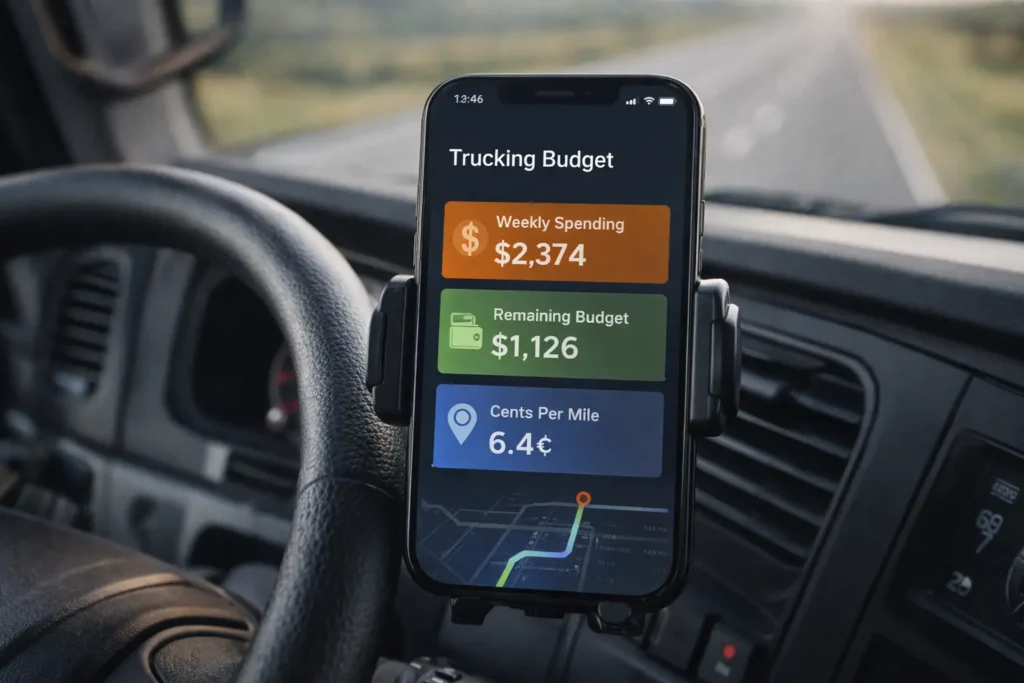
Transitioning from the driver’s seat of a company truck to owning your own rig is a significant professional milestone. However, it also introduces a completely new set of challenges. As an owner-operator, you are no longer just managing your hours of service and safe delivery; you are running a complex small business. The tension many new owner-operators face is that while the gross revenue checks look substantial, the sheer volume of operating expenses can quickly consume those earnings. High top-line revenue is meaningless if your net profit margins are razor-thin or non-existent.
With fuel prices fluctuating wildly and maintenance costs reaching record highs, intuition is no longer enough to run a profitable trucking company. The industry’s average cost of operating a truck reached $2.26 per mile in 2024, with non-fuel operating costs hitting a record high of nearly $1.78 per mile [1]. To survive and thrive, you need a structured, data-driven financial plan. This guide provides actionable truck driver budget tips designed to transform how you view your finances. We will explore how to build a budget that not only tracks where your money goes but also dictates how you price your freight, when you perform maintenance, and how you build a resilient cash reserve.

Why a Structured Financial Plan is the Foundation of Owner-Operator Success
Many owner-operators view budgeting as a restrictive chore, something that limits their freedom on the open road. In reality, a well-structured budget is the ultimate tool for financial independence. It provides clarity on exactly what it costs to move your truck every single mile, allowing you to make informed, strategic decisions rather than emotional or reactive ones. When you know your numbers, you dictate the terms of your business.
A budget serves as the foundation for load pricing. Without knowing your exact operating costs, accepting a load from a broker is essentially a gamble. You might be running a lane that technically pays well, but if your specific expenses for that route exceed the revenue, you are effectively paying the shipper to haul their freight.
A structured financial plan eliminates this guesswork. It establishes your break-even point, ensuring that every mile driven contributes to your bottom line rather than draining your reserves. Furthermore, a budget prepares you for the inevitable downturns in the spot market or unexpected mechanical failures, transforming potential business-ending catastrophes into manageable operational expenses.
The Owner-Operator Budget Checklist: Essential Components to Track
Before you can optimize your spending, you must accurately categorize it. The first step in establishing a functional budget is separating your costs into two distinct buckets: fixed expenses and variable expenses. This division is critical because it dictates how you manage your cash flow and how you calculate your minimum required revenue.
Fixed costs are the bills that arrive every month, regardless of whether your truck moves one mile or ten thousand miles. These are your baseline obligations just to keep the doors of your business open. Conversely, variable costs fluctuate directly with your mileage and operational activity. The more you drive, the higher these expenses climb. Understanding the interplay between these two categories is essential for setting accurate freight rates.
| Expense Category | Description | Common Examples |
|---|---|---|
| Fixed Expenses | Costs that remain constant regardless of mileage. These must be paid even if the truck sits idle. | Truck/trailer loan or lease payments, primary liability and physical damage insurance, base plates, heavy vehicle use tax (HVUT), accounting software subscriptions, parking fees. |
| Variable Expenses | Costs that increase or decrease based on how many miles the truck is driven. | Diesel fuel, diesel exhaust fluid (DEF), preventive maintenance, tire replacement, tolls, scale fees, broker factoring fees, driver per diem. |
| Reserves & Taxes | Funds set aside from every settlement to cover future obligations and emergencies. | Quarterly estimated income taxes, IFTA true-ups, emergency maintenance fund, future equipment replacement savings. |
Step-by-Step: How to Set Up a Budget for an Owner-Operator
Building a budget from scratch can feel overwhelming, but it becomes manageable when broken down into a systematic process. The goal is to create a living document that reflects the reality of your specific operation, not a generic industry average. By following a structured approach, you can build a financial model that provides accurate, actionable data for your daily operations.

Step 1: Project Your Mileage and Revenue Streams
The foundation of your budget is a realistic projection of your operational capacity. Begin by estimating your expected weekly and monthly loaded miles, factoring in your preferred lanes and seasonal volume fluctuations. Next, identify all potential revenue sources. While contracted rates or spot market loads will form the bulk of your income, you must also account for fuel surcharges, detention pay, layover compensation, and lumper reimbursements. Accurate revenue projections provide the baseline against which you will measure your expenses.
Step 2: Lock Down Your Fixed Expenses
Gather your financial documents and list every recurring monthly obligation. Start with the largest items: your truck financing or lease payment and your commercial insurance premiums. For context, insurance costs for small fleets hit a record $0.102 per mile in 2024, representing a significant portion of fixed overhead [1]. Add in your monthly costs for ELD subscriptions, dedicated parking, and prorated annual expenses like registration and permits. Divide the total monthly fixed costs by your projected monthly mileage to determine your fixed cost per mile.
Step 3: Estimate Variable Costs Per Mile
Variable costs require meticulous tracking, as they represent the largest drain on your revenue. Fuel is typically the most significant variable expense, followed closely by maintenance. Industry data indicates that maintenance costs average around 14 cents per mile, or roughly $1,234 per month for a typical operation [2]. Calculate your expected fuel costs based on your truck’s average miles per gallon (MPG) and current diesel prices in your operating lanes. Factor in a per-mile accrual for tires, routine servicing, and anticipated tolls.
Step 4: Build Your Reserve and Tax Buckets
A budget that only covers immediate expenses is a recipe for failure. Profitable owner-operators treat their future obligations as current expenses. Establish dedicated reserve accounts for major mechanical repairs and eventual equipment replacement. More importantly, you must account for taxes. Self-employment taxes, federal and state income taxes, and quarterly IFTA filings can severely impact your cash flow if ignored. Best practice dictates setting aside a predetermined percentage of every gross settlement into a separate tax account to avoid devastating surprises at the end of the quarter.

The Most Effective Ways to Control Trucking Expenses
Once your budget is established and your baseline costs are known, the focus shifts to optimization. The most effective ways to control trucking expenses start with measuring your cost per mile accurately and then aggressively attacking the highest-variance line items: fuel consumption, maintenance frequency, and deadhead miles. Small, incremental improvements in these areas yield massive cumulative gains in your net profit.
Fuel management is the most immediate area where owner-operators can reclaim profit. While you cannot control the pump price of diesel, you have absolute control over how efficiently your truck burns it. Reducing idle time is paramount; an idling truck burns roughly one gallon of fuel per hour while producing zero revenue. Maintaining a steady, moderate highway speed significantly improves MPG. Industry benchmarking shows that every single mile-per-gallon improvement can translate to $8,000 or more in annual profit savings for a full-time owner-operator [1]. Additionally, strategic fuel purchasing—buying fuel in states with lower base taxes and utilizing negotiated fuel card discounts—further depresses your variable costs.
Maintenance strategy is the second critical pillar of expense control. The approach must shift from reactive repairs to proactive prevention. Deferring maintenance to save money in the short term inevitably leads to catastrophic breakdowns, expensive roadside service calls, and lost revenue from missed loads. Implementing a strict preventive maintenance schedule based on mileage and engine hours is essential. Regular oil analysis, diligent tire pressure monitoring, and data-driven component replacement keep the truck rolling and revenue flowing. Furthermore, minimizing deadhead miles—driving empty between loads—is crucial. Every empty mile incurs full variable costs without generating a single cent of revenue, devastating your overall profitability. Smarter routing, pre-booking loads, and utilizing load boards efficiently are vital strategies to keep the trailer loaded and earning.
Recommended Expense Control Solutions for the Trucking Industry
Recommended expense control solutions for the trucking industry include preventive maintenance programs, fuel savings tools, and software that centralizes dispatch, expenses, and IFTA reporting. Behavioral changes are vital, but scaling your profitability requires structural and technological solutions that automate expense tracking and identify inefficiencies. These tools move your operation from manual tracking to proactive management.
The foundation of expense control lies in preventive maintenance plans and checklists with service intervals dictated by miles and engine hours. This systematic approach reduces unexpected breakdowns, the single largest threat to your cash flow. Utilizing fuel card programs that offer robust reporting, alerts, and fraud controls provides real-time visibility into your largest variable expense. Furthermore, telematics and driver behavior insights derived from Electronic Logging Devices (ELDs) can dramatically reduce idle time and harsh acceleration, directly impacting your bottom line.
Integrating transportation management systems (TMS) and accounting software ensures real-time expense categorization. This integration eliminates the end-of-month scramble to reconcile receipts and provides a clear picture of your financial health. Routing and load-planning tools are essential for reducing empty miles and optimizing backhauls, ensuring you are paid for every mile driven. Finally, investing in safety and compliance training lowers the frequency of violations, which directly impacts your insurance premiums and protects your operating authority.
Mastering Cash Flow for Trucking Companies
Managing cash flow for trucking companies means aligning settlements and accounts receivable timing with fixed obligations like truck payments, insurance, and taxes, so there’s always enough cash on hand between loads. A business can be profitable on paper but still fail if it runs out of cash to cover day-to-day operating costs. The fundamental challenge in trucking is that major expenses are due immediately, while shippers and brokers typically operate on extended payment terms of 30 to 90 days.
This timing gap necessitates a robust cash flow management strategy. Mapping cash inflows and outflows on a monthly calendar prevents timing gaps that force you into high-interest debt or disadvantageous factoring agreements. Establishing separate accounts for operating expenses, maintenance reserves, taxes, and owner pay ensures that funds are available for their intended purpose when needed. Setting a target Days Sales Outstanding (DSO) and avoiding chronically slow-paying brokers are critical steps in accelerating cash collections.
While negotiating faster pay terms is ideal, you must understand the true cost of any financing or quick pay option. Factoring can provide immediate liquidity, but the associated fees directly reduce your net profit margin. Building a one-to-two-month emergency fund covering all fixed costs provides the ultimate buffer against market volatility and delayed settlements, allowing you to operate from a position of strength rather than desperation.
The Non-Negotiable Calculations Every Owner-Operator Must Know
To effectively utilize your budget, you must master the key performance indicators (KPIs) that dictate your profitability. These calculations transform raw financial data into actionable insights, guiding your load selection and pricing strategies.
Cost per Mile (CPM): This is the foundational metric of your business. It represents the total cost required to operate your truck for one mile. Calculate CPM by dividing your total operating costs (fixed plus variable) by your total miles driven (loaded and empty). If your total monthly costs are $15,000 and you drive 10,000 miles, your CPM is $1.50.
Revenue per Mile (RPM): This metric measures your earning efficiency. Calculate RPM by dividing your total gross revenue by your total loaded miles. If you earn $20,000 driving 8,000 loaded miles, your RPM is $2.50.
Break-even CPM: This calculation determines the absolute minimum rate you can accept for a load without losing money. It is the sum of your fixed costs per mile plus your average variable costs per mile. Knowing your break-even CPM is essential for negotiating with brokers and rejecting unprofitable freight.
Operating Ratio (OR): This metric provides a holistic view of your operational efficiency. Calculate OR by dividing your total operating costs by your total revenue. An OR below 100 indicates profitability; the lower the ratio, the higher your profit margin.

Common Financial Pitfalls and How to Avoid Them
Even with a structured budget, new owner-operators frequently encounter financial pitfalls that can jeopardize their business. The most common mistake is ignoring small, daily costs. Idling your truck excessively, paying out-of-network ATM fees, or absorbing unnecessary tolls may seem insignificant individually, but they accumulate rapidly over thousands of miles, reducing your profit margin.
Deferring maintenance is another critical error. Delaying an oil change or ignoring a worn tire to save a few dollars inevitably leads to catastrophic failures, expensive roadside repairs, and significant lost revenue from downtime. Similarly, pricing loads without knowing your current CPM and break-even point is a recipe for disaster.
Accepting freight based on intuition or market averages rather than your specific operational costs guarantees that you will eventually haul unprofitable loads. Finally, failing to reserve funds for taxes, major repairs, and eventual equipment replacement ensures that you will be caught unprepared when these inevitable expenses arise.
Conclusion
A successful owner-operator business is built on a foundation of rigorous financial discipline. A structured budget is not merely a record of past expenses; it is a strategic tool that dictates your pricing, protects your cash flow, and ensures your long-term profitability. By separating fixed and variable costs, aggressively managing your highest-variance expenses, and mastering the essential calculations of CPM and RPM, you transition from a driver to a strategic business owner.
The difference between surviving and thriving in the trucking industry lies in your ability to make data-driven decisions. Your budget provides that data. Begin today by tracking every expense, calculating your true cost per mile, and establishing your reserve accounts. The financial health of your trucking business depends on the financial plan you build today.
FAQs: How to Build a Budget as an Owner-Operator
How do I create a budget as an owner-operator? Start by listing all your fixed monthly costs (truck payment, insurance) and variable costs (fuel, maintenance). Project your monthly mileage and revenue, then calculate your cost per mile to ensure your expected income exceeds your total expenses.
What is a good cost per mile for an owner-operator? A “good” cost per mile varies significantly based on equipment age, freight type, and fuel prices, but industry averages in 2024 hovered around $2.26 per mile [1]. The most important factor is that your revenue per mile consistently exceeds your specific cost per mile.
How much should I set aside for maintenance each mile? Industry data suggests maintenance costs average around 14 cents per mile [2]. However, older trucks require a higher reserve; setting aside 10-15% of your gross revenue for a dedicated maintenance fund is a prudent strategy.
How do I calculate break-even cost per mile? Add your total fixed costs for a specific period (e.g., a month) to your total variable costs for that same period, then divide the sum by the total miles driven (both loaded and empty). This figure is the absolute minimum rate you must charge to cover your expenses.
What percentage of revenue should go to fuel? Fuel is typically the largest variable expense, often consuming 20-30% of gross revenue depending on current diesel prices and your truck’s fuel efficiency. Improving your MPG through better driving habits is the most effective way to lower this percentage.
How do I plan for quarterly taxes and IFTA? The safest approach is to set aside a predetermined percentage (typically 20-30%) of your net profit from every settlement into a separate, dedicated tax savings account. This ensures you have the funds available when quarterly estimated taxes and IFTA filings are due.
How do deadhead miles affect my cost per mile? Deadhead (empty) miles incur full variable costs (fuel, wear and tear) without generating any revenue, significantly increasing your overall cost per mile and reducing your profit margin. Minimizing deadhead through smart routing and pre-booking is critical for profitability.
References
[1] ATRI. (2025). An Analysis of the Operational Costs of Trucking: 2025 Update. [2] ATBS. (2025). Owner-Operator Benchmarking Data.