Category: Trucking Business

How Do I Start a Trucking Business With the Right Tax Foundation?

Professional standing by a truck with a tablet, planning a trucking business

Starting a trucking business is an exciting venture that offers independence and the potential for significant income. However, when you start a trucking business, managing taxes and compliance is just as critical as maintaining your equipment and securing profitable freight. Many new owner-operators focus heavily on the operational side, buying a truck, getting insurance, and finding loads, but overlook the complex web of federal and state tax obligations. Missing a tax filing or failing to maintain proper records can quickly sideline your registration, trigger audits, or drain your cash flow.

This comprehensive guide is designed specifically for new owner-operators and small fleet startups. We will focus on the essential tax obligations you will face in your first year, including the Heavy Vehicle Use Tax, the International Fuel Tax Agreement, federal income tax, and quarterly estimated payments. By establishing a solid foundation before you haul your first load, you can protect your margins and build a sustainable business. We have also included a practical compliance checklist to serve as your companion resource throughout the year.

What Are the Essential Business and Tax Setup Steps in the First 30 to 60 Days?

Before you hit the road, you must establish the legal and financial framework of your new trucking company. These initial decisions will dictate how your profits are taxed and how much administrative work you will need to handle.

Choose a Legal and Tax Structure

One of the first decisions you must make is choosing a business structure. The most common options for owner-operators are Sole Proprietorship, Limited Liability Company, S Corporation, and C Corporation.

  • Sole Proprietorship: This is the simplest structure, but it offers no personal liability protection. Your business profits are reported on your personal tax return and are fully subject to self-employment tax.
  • LLC: An LLC provides personal liability protection, separating your personal assets from your business liabilities. By default, a single-member LLC is taxed like a sole proprietorship, but it offers flexibility in how you choose to be taxed later.
  • S Corp: An LLC can elect to be taxed as an S Corp. This structure can provide significant tax savings for profitable trucking businesses because it allows you to split your income into a reasonable salary (subject to payroll taxes) and distributions (not subject to self-employment tax). However, it requires more complex payroll administration.
  • C Corp: A C Corp is a separate taxable entity. It pays corporate income tax, and owners are taxed again on dividends (double taxation). This is generally less common for single owner-operators.

When choosing a structure, consider your liability risks, the complexity of payroll administration, and your long-term growth plans.

Get Your EIN and Open Business Accounts

Once your entity is formed, obtain an Employer Identification Number from the IRS. This is essentially a social security number for your business and is required for opening bank accounts and filing certain taxes.

It is absolutely crucial to open separate business checking and savings accounts. Commingling personal and business funds is a fast track to an audit and can pierce the corporate veil of your LLC. Additionally, establish a dedicated tax reserve account. Every time you receive a settlement, transfer a percentage (e.g., 20-25%) into this account to cover your quarterly estimated taxes, HVUT, and other liabilities.

Register for IFTA and IRP if Operating Interstate

If you plan to operate across state lines with a vehicle weighing over 26,000 pounds or having three or more axles, you must register for the International Fuel Tax Agreement and the International Registration Plan.

  • IFTA: Simplifies the reporting of fuel use taxes by allowing you to report to your base jurisdiction, which then distributes the taxes to the states where you traveled.
  • IRP: Allows you to pay apportioned registration fees based on the miles driven in each jurisdiction.

You will register for both through your base jurisdiction (usually your home state).

Set Up Your Accounting Framework

A solid accounting system is your best defense against tax season stress. Create a Chart of Accounts tailored specifically to trucking. Key categories should include:

  • Fuel
  • Repairs and Maintenance
  • Permits and Licenses
  • Tolls
  • Insurance
  • Depreciation
  • Driver Pay (if applicable)

Decide whether you will use cash or accrual accounting (most owner-operators use cash basis) and establish a strict monthly close routine to reconcile your accounts.

Accounting MethodDescriptionBest For
Cash BasisRecords income when received and expenses when paid.Most single owner-operators; simpler tracking.
Accrual BasisRecords income when earned and expenses when incurred, regardless of cash flow.Growing fleets; provides a better picture of long-term profitability.

How Are Federal Income and Self-Employment Taxes Handled for Owner-Operators?

Transitioning from a company driver (receiving a W-2) to an owner-operator means taking full responsibility for your income and self-employment taxes. Understanding how these taxes work is critical to staying current in your first year.

How Profits Are Taxed by Entity Type

If you operate as a Sole Proprietor or a single-member LLC, your trucking business profits are reported on Schedule C of your personal Form 1040. The net profit is subject to ordinary income tax. If you operate as a partnership or an S Corp, the business itself does not pay federal income tax. Instead, the profits “pass-through” to the owners’ personal tax returns. A C Corp files its own corporate tax return and pays taxes at the corporate rate.

Self-Employment Tax and Payroll Interactions

As an independent contractor, you are responsible for both the employer and employee portions of Social Security and Medicare taxes, collectively known as the self-employment tax (currently 15.3%). If you operate as a Sole Proprietor or a standard LLC, this tax applies to your entire net profit.

If you elect S Corp taxation, the rules change. You must pay yourself a “reasonable salary” through a formal payroll system. This salary is subject to standard payroll taxes. The remaining profit can be taken as an owner’s draw or distribution, which is not subject to self-employment tax. This strategy can save thousands of dollars annually, but it requires strict compliance with payroll reporting.

Quarterly Estimated Taxes

Because no one is withholding taxes from your settlements, the IRS requires you to make quarterly estimated tax payments if you expect to owe $1,000 or more when your return is filed.

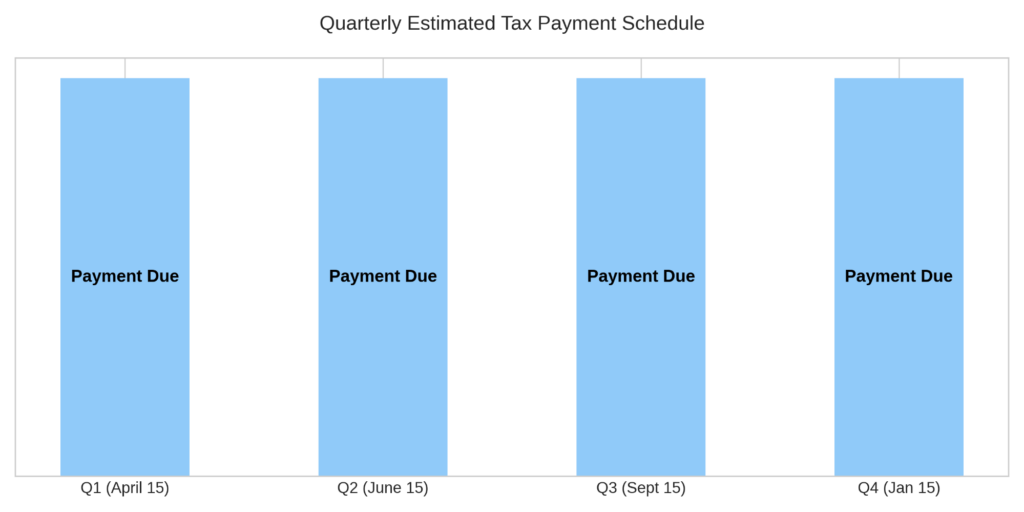
The due dates for these payments are typically:

  • April 15
  • June 15
  • September 15
  • January 15 (of the following year)

To avoid underpayment penalties, you can use the “safe harbor” rule: pay 100% of the tax shown on your previous year’s return (or 110% if your adjusted gross income was over $150,000). Alternatively, you can use a simple projection method by analyzing your year-to-date net profit and estimating your annualized income.

State Income and Franchise Taxes

Do not forget about state taxes. Depending on where your business is registered and where you operate, you may owe state income taxes or franchise taxes. Even if you incorporate in a tax-friendly state like Nevada or Wyoming, you generally still have to pay taxes in the state where you actually live and conduct business.

Person at desk reviewing documents for trucking business financial planning

What Is the Heavy Vehicle Use Tax and How Do I File Form 2290?

The Heavy Vehicle Use Tax is an annual federal tax assessed on heavy vehicles operating on public highways. Failing to file and pay this tax will prevent you from renewing your vehicle registration or IRP plates.

Who Owes HVUT and When Is It Due?

You owe HVUT if you operate a highway motor vehicle with a taxable gross weight of 55,000 pounds or more. The tax year runs from July 1 to June 30. The annual filing deadline is August 31 for vehicles in use during July.

If you purchase a new or used truck later in the year, the tax is prorated based on the month of first use. The deadline is the last day of the month following the month of first use. For example, if you buy a truck and put it on the road in October, your Form 2290 is due by November 30.HVUT Rates by Weight

Suspended Vehicles and Special Cases

If you expect to drive your vehicle fewer than 5,000 miles (or 7,500 miles for agricultural vehicles) during the tax year, you can claim a suspension of the tax. You still must file Form 2290, but you will not owe a payment. If you later exceed the mileage limit, the tax becomes due. Special rules also apply if the taxable weight of your vehicle changes, or if the vehicle is sold or destroyed during the year.

What You Need to File Form 2290

To file your Form 2290, you will need:

  • Your Employer Identification Number
  • The Vehicle Identification Number of each truck
  • The taxable gross weight of each vehicle
  • The month of first use
  • A payment method

Penalties and Common Mistakes

Late filing of Form 2290 incurs a penalty of 4.5% of the total tax due, assessed monthly for up to five months, plus a late payment penalty of 0.5% per month and interest charges.

Common mistakes include:

  • Entering an incorrect VIN (which will cause your registration renewal to be rejected).
  • Using a Social Security Number instead of an EIN.
  • Failing to retain the stamped Schedule 1, which serves as your official proof of payment for the DMV.

How Do Fuel and Distance Taxes Like IFTA and IRP Work?

Ongoing fuel and distance reporting can be a significant administrative burden for new carriers. Understanding these requirements is essential to avoid costly audits and penalties.

IFTA Basics

The International Fuel Tax Agreement simplifies fuel tax reporting for interstate carriers. Instead of obtaining fuel permits for every state you enter, you file one quarterly return with your base jurisdiction.

You must report the total miles driven and the total gallons of fuel purchased in each participating jurisdiction. The IFTA system calculates whether you owe additional tax (if you drove extensively in a high-tax state but bought fuel in a low-tax state) or if you are owed a credit.

IFTA Deadlines:

  • Q1 (Jan-Mar): April 30
  • Q2 (Apr-Jun): July 31
  • Q3 (Jul-Sep): October 31
  • Q4 (Oct-Dec): January 31

IRP Apportionment

The International Registration Plan is an agreement that allows you to pay apportioned registration fees based on the percentage of miles you drive in each jurisdiction. When you first register, you will estimate your mileage. In subsequent years, your renewal fees will be based on your actual reported mileage from the previous reporting period. This requires meticulous mileage tracking to ensure you are not overpaying.

Weight-Distance Taxes in Certain States

In addition to IFTA, a few states impose separate weight-distance or highway use taxes. These taxes are typically based on the vehicle’s weight and the miles driven within that specific state. States with notable weight-distance taxes include:

  • New York (HUT)
  • Kentucky (KYU)
  • New Mexico (WDT)
  • Oregon (WMT)

If you operate in these states, you must obtain the necessary permits and file separate periodic returns.

Record Requirements and Audits

IFTA and IRP audits are common and rigorous. You must maintain detailed records to support your returns. This includes:

  • Individual vehicle mileage records (trip sheets or ELD exports) showing routes, state lines crossed, and odometer readings.
  • Original fuel receipts showing the date, location, gallons purchased, fuel type, and vehicle unit number.

Ensure your ELD mileage reconciles perfectly with your fuel receipts and your quarterly filings.

Inside view of truck cab with person reviewing business documents

What Are the Tax Implications of Paying Drivers or Hiring Help?

If your business grows and you decide to add drivers or hire administrative help, you must navigate complex worker classification and payroll tax rules.

Worker Classification: Employees vs. 1099 Contractors

Misclassifying workers is one of the most significant risks in the trucking industry. The IRS and Department of Labor strictly scrutinize whether a driver is a W-2 employee or a 1099 independent contractor.

  • Employee (W-2): You control how, when, and where the work is done. You provide the equipment (the truck) and cover the operating expenses.
  • Independent Contractor (1099): The worker controls their schedule, uses their own equipment (or leases it under a true lease), and bears the risk of profit or loss.

If you own the truck and dictate the driver’s schedule, they are almost certainly an employee.

Payroll Taxes and Filings for Employees

If you hire W-2 employees, you must withhold federal and state income taxes, as well as the employee’s share of FICA (Social Security and Medicare). You are also responsible for paying the employer’s share of FICA, federal unemployment tax, and state unemployment insurance. You must issue W-2 forms to your employees by January 31 of the following year.

Reporting for Contractors

If you legitimately hire independent contractors (e.g., owner-operators leased to your authority), you must collect a Form W-9 from them before they start work. If you pay them $600 or more during the year, you must issue them a Form 1099-NEC by January 31. Failure to collect a W-9 may require you to perform backup withholding on their payments.

Per Diem for Drivers

Per diem is a tax deduction for meals and incidental expenses incurred while traveling away from home overnight for business. The transportation industry has special, higher per diem rates. Currently, you can deduct 80% of the standard per diem rate for days spent over the road. To claim this deduction, you must keep contemporaneous logs showing the dates, locations, and business purpose of the travel.

How Can I Maximize Deductions, Depreciation, and Understand My Cost Per Mile?

To run a profitable trucking business, you must aggressively track every legitimate business expense and understand how those expenses impact your cost per mile.

Everyday Operating Deductions

As an owner-operator, almost everything related to operating your truck is deductible. Key deductions include:

  • Fuel and DEF
  • Repairs, maintenance, and parts
  • Insurance premiums
  • Tolls, scales, and parking fees
  • Permits and licenses
  • Factoring fees and bank charges
  • Communications
  • Interest on your truck loan

Depreciation of Tractors and Trailers

Depreciation allows you to recover the cost of large assets, like your truck and trailer, over time. Tractors are typically depreciated over 3 years, and trailers over 5 years, using the MACRS (Modified Accelerated Cost Recovery System) schedule.

Alternatively, you may be eligible to use Section 179 expensing or Bonus Depreciation to deduct a large portion (or all) of the purchase price in the first year. Note that Bonus Depreciation rules are currently phasing down, so consult with a tax professional to determine the most advantageous strategy for your specific tax situation.

Tracking Cost Per Mile

Understanding your cost per mile is the foundation of profitable freight pricing. To calculate it, divide your total expenses (fixed + variable) by the total miles driven.
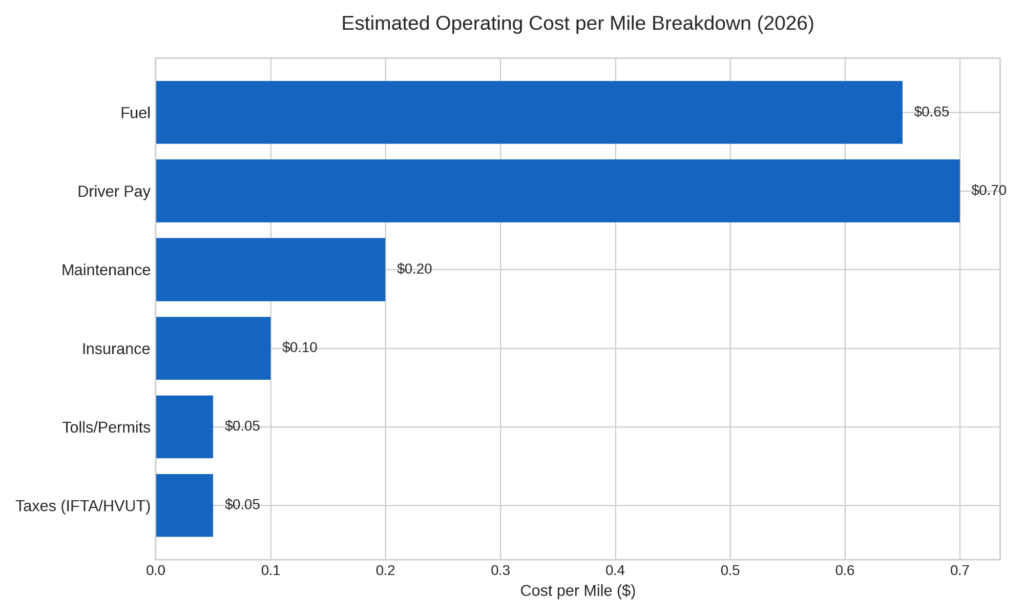
By tying your expenses and tax savings to your pricing decisions, you can ensure that every load you haul contributes to your bottom line and covers your tax liabilities.

How Do I Build a Recordkeeping System That Survives an Audit?

Good recordkeeping is not just about tax preparation; it is about protecting your business in the event of an audit. Translating complex rules into a daily and monthly routine is essential.

What to Keep and for How Long

Different agencies have different retention requirements:

  • IRS Income Tax Records: Generally, keep returns and supporting documents for at least 3 years (or up to 7 years in certain circumstances).
  • IFTA and IRP Records: Keep mileage logs, trip sheets, and fuel receipts for at least 4 years.
  • HVUT Records: Retain your stamped Schedule 1 and proof of payment for at least 3 years.

Linking ELD, Fuel, and Maintenance Data

Your records must tell a consistent story. An auditor will look to see if your ELD mileage matches the miles reported on your IFTA returns. They will check if the fuel gallons claimed on IFTA match your actual fuel receipts. Ensure that Bills of Lading, trip sheets, and maintenance records all align with the dates and locations of your reported travel.

A Monthly Close Checklist

Implement a strict monthly routine to keep your books clean:

  1. Reconcile your bank and credit card statements.
  2. Reconcile your fuel card statements and verify all receipts are saved.
  3. Review Accounts Payable (bills to pay) and Accounts Receivable (unpaid invoices).
  4. Record any depreciation or adjusting entries.
  5. Transfer the calculated percentage of income to your tax reserve account.
  6. Identify and track down any missing receipts or BOLs.

We highly recommend using a digital storage system with consistent file naming conventions (e.g., 2026_04_Fuel_Receipts.pdf).

What Does an Annual and Quarterly Compliance Calendar Look Like?

To prevent missed deadlines and late fees, you need a consolidated timeline of your obligations.

Quarterly Cadence

  • Estimated Income Tax: Due April 15, June 15, September 15, and January 15.
  • IFTA Returns: Due the last day of the month following the end of the quarter (April 30, July 31, October 31, January 31).
  • State Filings: Check your state for specific quarterly weight-distance or sales tax deadlines.

Annual Cycle

  • January: Issue W-2s and 1099s by January 31. Q4 IFTA and Q4 Estimated Taxes due.
  • March/April: Business and personal income tax returns due (dates vary by entity type).
  • July/August: New HVUT tax year begins July 1. Form 2290 due August 31.
  • Varies: IRP renewal (deadlines vary by state and registration date).

Practical Workflow

Create a 12-month calendar and set digital reminders 30 days before every major due date. Assign specific tasks to yourself, your spouse, or your back-office provider, and review the calendar at the start of every month.

Frequently Asked Questions (FAQ): How Do I Start a Trucking Business

What taxes do I pay when starting a trucking business?

When starting a trucking business, you are responsible for federal and state income taxes, self-employment taxes (Social Security and Medicare), the Heavy Vehicle Use Tax, IFTA fuel taxes, and potentially state-specific weight-distance taxes. If you hire employees, you will also owe payroll taxes.

Do I need IFTA if I only run in one state?

No, if you operate exclusively within the borders of a single state (intrastate commerce), you do not need to register for IFTA. You simply pay the fuel tax at the pump in your home state.

When is HVUT due for a newly purchased truck?

For a newly purchased truck, the HVUT Form 2290 is due by the last day of the month following the month you first use the vehicle on public highways. For example, if you start driving the truck in October, the tax is due November 30.

How are owner-operators taxed compared with S corps?

A standard owner-operator (Sole Proprietor or LLC) pays self-employment tax on their entire net business profit. An owner-operator who elects S Corp status pays themselves a reasonable salary (subject to payroll taxes) and takes the remaining profit as a distribution, which is not subject to self-employment tax, potentially saving money.

What records are required for an IFTA audit?

For an IFTA audit, you must provide individual vehicle mileage records (like ELD exports or detailed trip sheets) showing routes and state lines crossed, along with original fuel receipts showing the date, location, gallons, fuel type, and truck unit number.

Can I claim per diem and actual meal receipts at the same time?

No, you must choose one method for the entire tax year. You can either claim the standard transportation industry per diem rate for days away from home overnight, or you can deduct your actual, receipted meal expenses. Most drivers find the per diem method simpler and more beneficial.

Understanding the Latest EPA Changes: What Trucking Businesses Need to Know

Understanding the Latest EPA Changes

The Environmental Protection Agency (EPA) is a federal agency tasked with protecting human health and the environment. One of its most critical responsibilities is setting and enforcing emissions standards for various industries, including transportation. For decades, the EPA has played a central role in shaping how vehicles, especially heavy-duty trucks, are designed, manufactured, and operated, all in an effort to reduce air pollution and combat climate change.

In recent years, the EPA has introduced a series of increasingly strict emissions regulations targeting the trucking industry. These EPA changes are part of a broader initiative to cut harmful pollutants such as nitrogen oxides (NOx), particulate matter, and greenhouse gases (GHGs) from commercial vehicles. The latest rules impact everything from engine standards to vehicle design and are set to influence both new truck purchases and ongoing fleet management strategies.

For trucking businesses, staying up to date with these regulatory changes is not optional, it’s essential. Non-compliance can lead to penalties, downtime, increased costs, and potential disruptions to operations. Moreover, understanding how these EPA changes intersect with tax obligations like the Heavy Vehicle Use Tax (HVUT) and Form 2290 filings can help businesses avoid costly mistakes and stay fully compliant with both IRS and environmental regulations.

Overview of the Latest EPA Changes

The EPA’s latest round of emissions regulations represents one of the most ambitious updates to commercial vehicle standards in decades. These changes are part of the agency’s broader strategy to reduce pollution from the transportation sector, one of the largest contributors to greenhouse gas emissions in the United States.

Clean Trucks Plan and Phase 3 GHG Standards

The cornerstone of these updates is the Clean Trucks Plan, a multi-phase initiative launched by the EPA to reduce emissions from heavy-duty vehicles over time. Most recently, the EPA finalized the Phase 3 Greenhouse Gas (GHG) Standards, which apply to model years 2027 through 2032. These rules build upon previous GHG phases and are designed to drive further innovation in cleaner engine technology and alternative fuel solutions.

The Phase 3 standards, announced in 2023 and set to take effect beginning with model year 2027, tighten the limits on CO₂ emissions from newly manufactured trucks. In addition, the EPA has also implemented tougher requirements under the Heavy-Duty NOx (nitrogen oxides) rule, which targets pollutants that contribute to smog and respiratory issues.

Key Targets and Goals

These new EPA regulations are centered on three primary goals:

  1. Significant Reduction in Nitrogen Oxides (NOx) and Greenhouse Gases (GHGs)
    • The rules aim to cut NOx emissions by up to 80% compared to current standards.
    • They also push for a stronger annual reduction in GHGs, helping to curb the transportation sector’s environmental impact.
  2. Stricter Engine Standards for Model Years 2027 and Beyond
    • Engine manufacturers will be required to meet new durability and emissions performance standards.
    • Compliance will require improved aftertreatment systems, longer-lasting components, and more robust emissions monitoring technologies.
  3. Increased Focus on Zero-Emission Vehicles (ZEVs)
    • While not mandatory, the new rules are designed to incentivize the adoption of ZEVs, including battery-electric and hydrogen fuel cell trucks.
    • Fleets investing in zero-emission technologies may qualify for state or federal incentives while future-proofing against even tighter regulations.

Affected Vehicle Categories

The EPA’s latest changes affect a wide range of commercial vehicles, including but not limited to:

  • Heavy-Duty Trucks – Class 7 and 8 tractors used in long-haul operations.
  • Vocational Vehicles – Dump trucks, cement mixers, refuse trucks, and delivery vans.
  • Transit and School Buses – Encouraging cleaner options for public transportation.
  • Medium-Duty Trucks – Often used in urban delivery and utility sectors.

These updates will impact OEMs, fleet operators, leasing companies, and owner-operators alike, especially as compliance becomes more tied to vehicle design, maintenance, and emissions monitoring.

As these changes begin to roll out, understanding how they affect your operations and planning accordingly, will be critical for long-term success in the trucking industry.

Timeline & Implementation Phases

Understanding when the new EPA changes take effect is just as important as understanding what they are. The EPA’s Clean Trucks Plan and Phase 3 GHG standards are being rolled out in stages, with critical milestones in 2025, 2027, and 2030. These phased implementation dates are designed to give manufacturers and fleets time to adapt, while still pushing the industry toward cleaner, more sustainable technologies.

2025: Early Technology Preparation and Compliance Shifts Begin

  • Although most new emission standards take effect in 2027, 2025 is a key year for preparation.
  • Truck and engine manufacturers are expected to begin phasing in compliant technologies, including upgrades to emission control systems.
  • Fleets should begin assessing their vehicles for retirement or retrofitting in preparation for upcoming rules.
  • States like California may begin enforcing their own, more aggressive timelines based on California Air Resources Board (CARB) regulations, prompting earlier adoption in some areas.

2027: Major Federal Regulations Take Effect

  • Model year 2027 is the official start date for the EPA’s new Phase 3 GHG standards and Heavy-Duty NOx rules.
  • Manufacturers will be required to meet stricter NOx and GHG emissions limits, triggering design changes in engines and aftertreatment systems.
  • Fleet operators purchasing new vehicles in or after 2027 will likely see:
    • Higher upfront vehicle costs.
    • Improved fuel efficiency.
    • Extended emissions system warranties.
  • Compliance tracking will intensify, requiring more detailed recordkeeping and potentially new tools for monitoring emissions performance.
  • Trucking businesses should prepare now by planning vehicle replacement schedules and updating compliance protocols.

2030: Continued Tightening and Transition Toward Zero Emissions

  • The 2030 target is part of a long-term EPA roadmap aimed at accelerating the shift toward zero-emission vehicles (ZEVs).
  • While not a regulatory mandate yet, by 2030:
    • A significant portion of newly sold trucks may be battery-electric or hydrogen-powered.
    • More states may adopt ZEV sales targets, especially those aligned with CARB standards.
    • Additional incentives and funding opportunities for clean vehicle adoption are expected.
  • Fleet managers will need to explore infrastructure planning for charging stations, fueling hubs, and ZEV-compatible maintenance practices.

State vs. Federal Adoption: EPA vs. CARB Standards

  • While the EPA sets national regulations, individual states, most notably California, can adopt stricter standards through the California Air Resources Board (CARB).
  • CARB regulations often go into effect earlier than EPA rules and can serve as a model for other states.
  • Currently, more than a dozen states have adopted or are considering adopting CARB standards, including:
    • New York
    • New Jersey
    • Washington
    • Oregon
    • Massachusetts
  • This creates a dual-compliance landscape where fleets operating across multiple states may need to meet both federal and state-specific standards.
  • Trucking businesses should stay updated on which states have adopted CARB regulations to avoid compliance gaps.

As deadlines approach, early action will give fleets more flexibility, cost savings, and a competitive advantage in adapting to the evolving emissions landscape.

How EPA Changes Tie into HVUT and Form 2290 Filings

While the EPA’s emissions regulations are environmental in nature, they have a direct impact on your tax obligations, particularly when it comes to the Heavy Vehicle Use Tax (HVUT) and IRS Form 2290. Any modifications you make to stay compliant with the EPA’s new rules, such as upgrading engine components, retrofitting equipment, or purchasing newer, heavier vehicles, could change your taxable vehicle classification and, by extension, your HVUT liability.

How Vehicle Changes Can Affect HVUT Liability

EPA compliance often requires significant vehicle modifications or replacements. For instance:

  • Adding aftertreatment systems or battery packs may increase the vehicle’s gross weight.
  • Replacing older trucks with newer, emissions-compliant models may shift a vehicle into a higher weight category (e.g., from 55,000 lbs to 75,000 lbs or more).
  • If you originally filed your vehicle as “suspended” (i.e., driving under 5,000 miles annually), increased usage due to more efficient engines or route changes may exceed that mileage limit.

All of these factors must be reflected in your IRS Form 2290 filing to avoid penalties, rejected returns, or issues with DMV registration.

The Importance of Filing a 2290 Amendment

If your truck’s:

  • Taxable gross weight increases due to upgrades or changes in vehicle classification, or
  • Mileage exceeds the 5,000-mile limit (7,500 for agricultural vehicles) for a vehicle initially reported as suspended,

You are required to file a Form 2290 Amendment with the IRS immediately. This ensures that your tax liability is accurately reported and that your Schedule 1 remains valid for registration and compliance purposes.

Failing to update your filing can result in:

  • IRS penalties and interest
  • Delays in vehicle registration or renewal
  • Invalid Schedule 1 for fleet audits or DOT inspections

How ExpressTruckTax Helps You Stay Compliant

ExpressTruckTax is designed specifically to support fleets, owner-operators, and tax professionals in navigating changes like these with ease. Here’s how we simplify HVUT compliance as EPA rules evolve:

Free VIN Corrections

  • If your VIN was entered incorrectly on your original filing (especially common when updating fleet info during EPA-related upgrades), we allow free VIN corrections, as long as the return was originally filed through ExpressTruckTax.

Streamlined 2290 Amendments for Weight or Mileage Changes

  • Our platform walks you step-by-step through filing 2290 Amendments, whether you’re updating:
    • A gross weight increase due to equipment modifications, or
    • A change from suspended status to taxable because mileage exceeded 5,000.
  • You can file amendments anytime during the tax period and receive an updated stamped Schedule 1 instantly.

Accurate Recordkeeping and IRS Filing Support

  • ExpressTruckTax maintains organized digital records for all your 2290 filings, amendments, and Schedule 1s.
  • Our platform performs built-in error checks to reduce rejections and ensure compliance, especially when you’re updating vehicle weights or statuses related to EPA modifications.
  • We also offer support for bulk uploads, helping large fleets manage multiple vehicle changes efficiently.

As EPA changes begin affecting more fleets, it’s critical to ensure that your IRS tax filings reflect the reality of your vehicles. Whether you’re adding weight, changing usage, or updating your fleet to meet emissions standards, ExpressTruckTax ensures your 2290 filings stay accurate, compliant, and stress-free.

The trucking industry is entering a pivotal era of change. With the latest EPA regulations rolling out in phases through 2030, businesses that depend on heavy-duty vehicles must begin preparing now. These new standards are not just about emissions, they represent a shift in how fleets are built, maintained, taxed, and managed.

Adapting early to EPA changes gives your business a significant advantage. By understanding the regulations, auditing your fleet, and updating vehicle and tax information proactively, you can avoid costly penalties, prevent disruptions to operations, and maintain a competitive edge in an increasingly sustainability-focused industry.

Just as important as regulatory readiness is tax compliance. Changes in vehicle weight, emissions systems, or usage often lead to changes in your HVUT liability and failure to reflect those changes in your Form 2290 filings can result in serious IRS consequences.

This is where ExpressTruckTax comes in.

We provide a reliable, IRS-authorized platform to:

  • Accurately file and amend Form 2290 for all vehicle changes.
  • Instantly receive your IRS-stamped Schedule 1, essential for registration and compliance.
  • Make free VIN corrections, handle weight increases, and manage mileage exceedance amendments with ease.
  • Store all documentation securely and access it anytime, from anywhere.

Take Action Now:

  • Review your fleet for upcoming EPA-related changes.
  • Plan your vehicle upgrades and stay ahead of emissions deadlines.
  • Log into ExpressTruckTax to update or amend your 2290 filings.
  • Reach out to our bilingual, U.S.-based support team for help with any filing questions or compliance concerns.

The road ahead may bring new challenges, but with trusted tools like ExpressTruckTax, you’ll be ready to navigate every mile of it with confidence.

How to Start a Trucking Business

How to Start a Trucking Business

The trucking industry serves as the backbone of the U.S. economy, ensuring the seamless movement of goods across states and fueling commerce in nearly every sector. From retail and manufacturing to agriculture and construction, businesses rely on the trucking industry to keep supply chains running efficiently.

In recent years, the demand for trucking services has skyrocketed due to the rise of e-commerce, increased consumer spending, and supply chain diversification. According to the American Trucking Associations (ATA), over 72% of all freight in the U.S. is transported by trucks, highlighting the crucial role of trucking companies in economic growth. Additionally, with an aging workforce and ongoing driver shortages, there are ample opportunities for new entrants to establish themselves in the industry.

Starting a trucking business is not just about driving; it’s about entrepreneurship, financial independence, and long-term stability. Whether you’re an owner-operator looking to expand or an investor seeking a profitable venture, launching a trucking company offers numerous advantages, including high earning potential, flexibility in operations, and the ability to scale over time.

Moreover, government programs and financing options make it easier for aspiring trucking entrepreneurs to acquire vehicles, obtain necessary permits, and manage compliance requirements. With the right business strategy, dedication, and industry knowledge, starting a trucking business can be a highly rewarding venture, offering both personal and financial growth.

Developing Your Trucking Business Plan

Starting a Trucking Business

A well-structured business plan is the foundation of any successful trucking business. It serves as a roadmap that outlines your business goals, operational strategies, financial projections, and market positioning. Not only does it help you stay on track, but it also plays a crucial role in securing funding from banks, investors, or financial institutions. A strong business plan demonstrates your commitment, planning capabilities, and understanding of the industry, making it a key tool for long-term success.

Key Components of a Robust Trucking Business Plan

1. Executive Summary

The executive summary provides an overview of your business, its mission, and its vision. This section should briefly outline your business objectives, the type of trucking services you plan to offer, and your competitive advantage. Investors and lenders often read this section first, so it should be compelling and concise.

2. Company Description

This section provides detailed information about your business, including:

  • Business name, structure (LLC, sole proprietorship, corporation, etc.), and ownership details.
  • Location and operational scope (local, regional, or national).
  • The specific trucking services you will offer (freight hauling, refrigerated transport, specialized trucking, etc.).

3. Market Analysis

Understanding the trucking industry and your target market is essential for long-term success. Your market analysis should cover:

  • Industry trends and growth opportunities.
  • Competitor analysis (who your competitors are and what differentiates you).
  • Target customers (retailers, manufacturers, logistics companies, etc.).
  • Pricing strategies and market demand for your services.

4. Business Structure & Management

Clearly define your company’s legal structure and management team. If you plan to operate as an owner-operator, this section should outline your role in day-to-day operations. If you have a team, list key personnel, their roles, and how they will contribute to the business’s success.

5. Services and Equipment

Describe the type of trucking services you will provide, along with details about your equipment:

  • Types of trucks and trailers required (dry vans, flatbeds, refrigerated trucks, etc.).
  • Fleet acquisition strategy (buying vs. leasing).
  • Maintenance and safety protocols for vehicles.

6. Financial Plan & Funding Requirements

A well-thought-out financial plan is essential for securing funding and managing cash flow. This section should include:

  • Startup costs (trucks, insurance, licensing, permits, fuel, etc.).
  • Operating costs (maintenance, salaries, fuel expenses, tolls, etc.).
  • Revenue projections and break-even analysis.
  • Funding sources (personal investment, bank loans, grants, or investors).

7. Compliance and Legal Considerations

Trucking businesses must comply with federal and state regulations. This section should cover:

  • Business registration and licenses (DOT number, MC number, IRP, IFTA, etc.).
  • Insurance requirements (liability insurance, cargo insurance, workers’ compensation).
  • Safety and compliance with FMCSA (Federal Motor Carrier Safety Administration) regulations.

8. Marketing and Customer Acquisition Strategy

Your trucking business needs a strategy to attract clients and generate revenue. A marketing plan should include:

  • Online presence (website, social media, and online directories).
  • Networking with freight brokers, logistics companies, and direct clients.
  • Leveraging load boards and freight marketplaces.
  • Referral programs and partnerships with existing businesses.

Why a Business Plan is Essential

A trucking business plan is more than just a document—it’s a tool that helps you:

  • Stay focused and organized as you grow your business.
  • Secure financing by demonstrating financial viability.
  • Plan for potential risks and industry challenges.
  • Establish realistic goals and track progress over time.

A well-developed business plan sets the stage for a strong and sustainable trucking business. With clear objectives, strategic planning, and financial management, you’ll be well-positioned to navigate the industry and achieve long-term success.

How to Start a Trucking Business

Acquiring a Commercial Driver’s License (CDL)

If you’re planning to start a trucking business with one truck, obtaining a Commercial Driver’s License is one of the most critical steps. A CDL is a mandatory requirement for operating large commercial vehicles and ensures that you have the necessary skills and knowledge to drive safely and comply with federal and state regulations. Whether you plan to operate as an owner-operator or hire drivers in the future, understanding the CDL process is essential for launching your trucking business successfully.

Why a CDL is Important for Your Trucking Business

A CDL is required for operating commercial motor vehicles (CMVs) that exceed 26,000 pounds in gross vehicle weight (GVW) or transport hazardous materials. Here’s why obtaining a CDL is crucial:

  • Legally Required – The Federal Motor Carrier Safety Administration (FMCSA) mandates that all truck drivers hold a CDL to ensure road safety.
  • Ensures Compliance – Without a CDL, you won’t be able to operate your truck legally, which can result in fines, penalties, or even business closure.
  • Enhances Credibility – Having a CDL adds professionalism to your trucking business and builds trust with customers and freight brokers.
  • More Control Over Operations – If you own the truck and drive it yourself, you have direct control over your business operations and profitability.

CDL Requirements and Steps to Obtain One

The process of obtaining a CDL involves several steps, including education, testing, and compliance with state and federal requirements. Here’s a step-by-step guide:

1. Meet the Basic Eligibility Criteria

Before applying for a CDL, you must meet certain basic requirements, which include:

  • Being at least 18 years old for intrastate driving (within one state) or 21 years old for interstate trucking (across state lines).
  • Holding a valid regular driver’s license.
  • Having a clean driving record (serious traffic violations can disqualify you).
  • Passing a Department of Transportation (DOT) medical exam to ensure you meet health and vision standards.

2. Choose the Right CDL Class

CDLs are categorized into three main classes, depending on the type of truck and cargo you plan to transport:

  • Class A CDL – Required for operating vehicles with a gross combination weight rating (GCWR) of 26,001 pounds or more, including tractor-trailers, flatbeds, and tankers.
  • Class B CDL – For single vehicles (not towing trailers) with a GVWR of 26,001 pounds or more, such as dump trucks and straight trucks.
  • Class C CDL – Needed for vehicles transporting hazardous materials or 16 or more passengers, such as buses and HazMat trucks.

For most trucking business owners operating semi-trucks, a Class A CDL is required.

3. Enroll in a CDL Training Program

While self-study is possible, enrolling in a CDL training school is highly recommended. Training programs provide:

  • Hands-on driving experience with commercial trucks.
  • Classroom instruction on federal and state trucking laws.
  • Preparation for written exams and skills tests.
  • Networking opportunities with trucking professionals.

Many trucking companies and financial institutions also offer CDL training assistance programs that cover tuition costs in exchange for employment commitments.

4. Obtain a Commercial Learner’s Permit (CLP)

Before taking the CDL road test, you must first get a Commercial Learner’s Permit (CLP), which allows you to practice driving a commercial truck under supervision. To get a CLP, you must:

  • Pass a written knowledge test at your state’s DMV.
  • Submit your DOT medical certificate.
  • Pay the required permit fee (varies by state).
  • Hold the CLP for at least 14 days before taking the CDL skills test.

5. Take the CDL Skills Test

Once you have gained enough practice with your CLP, you can take the CDL skills test, which consists of three parts:

  • Pre-Trip Inspection – Demonstrate knowledge of vehicle safety checks.
  • Basic Control Skills Test – Show proficiency in maneuvering, backing up, and turning the truck.
  • Road Test – Drive on public roads while being evaluated by a CDL examiner.

If you pass all three sections, you will receive your CDL license, allowing you to legally operate a commercial truck.

6. Obtain Additional Endorsements (Optional but Beneficial)

CDL endorsements allow you to expand your trucking business by hauling specialized freight. Common endorsements include:

  • HazMat (H) – Required for transporting hazardous materials.
  • Tanker (N) – For hauling liquid cargo in tank trucks.
  • Doubles/Triples (T) – Allows driving multiple trailers.
  • Combination HazMat & Tanker (X) – For hauling hazardous liquids.

Endorsements can increase your earning potential and open more business opportunities.

Starting Small: The Advantage of Operating with One Truck

If you’re starting your trucking business with a single truck, obtaining your own CDL can be a strategic move. By driving yourself, you:

  • Save money on hiring drivers.
  • Gain firsthand experience in trucking operations.
  • Build credibility before expanding your fleet.
  • Increase profit margins by keeping labor costs low.

Many successful trucking entrepreneurs begin as owner-operators before scaling their business into a full-fledged fleet operation.

Acquiring a CDL is a crucial step in launching your trucking business, especially if you’re starting small with one truck. It not only ensures compliance with regulations but also provides the flexibility and independence to run your business effectively. By understanding the CDL process and obtaining the right endorsements, you set yourself up for a successful and profitable trucking career.

How to Start a Trucking Business

Laying the Foundation of Your Trucking Company

Starting a trucking business requires more than just buying a truck and hitting the road. You need to establish a strong business infrastructure to ensure smooth operations, legal compliance, and long-term profitability. This section outlines the essential steps to lay the foundation for your trucking company.

1. Choose the Right Business Structure

One of the first steps in starting your trucking business is deciding on a legal structure. The structure you choose affects your taxes, liability, and ability to secure financing. Here are the most common options:

  • Sole Proprietorship – Simple to set up, but the owner is personally liable for all business debts.
  • Limited Liability Company (LLC) – A popular choice for trucking businesses as it provides liability protection while maintaining tax flexibility.
  • Corporation (S-Corp or C-Corp) – More complex, but suitable for those planning to scale their fleet and seek investors.

For most owner-operators, an LLC is the best option because it offers personal liability protection while keeping paperwork and tax requirements manageable.

Action Step: Register your business entity with your state’s Secretary of State office.

2. Obtain an Employer Identification Number (EIN)

An EIN (also known as a Federal Tax ID Number) is required for tax filing, opening a business bank account, and hiring employees.

How to Get an EIN:

  • Apply online for free through the IRS website.
  • Receive your EIN instantly upon successful application.

3. Secure Necessary Licenses and Permits

Before operating legally, your trucking company must obtain specific licenses and permits:

  • USDOT Number – Required by the Federal Motor Carrier Safety Administration (FMCSA) to track your business operations and safety compliance.
  • Motor Carrier (MC) Number – Needed if you plan to operate as a for-hire carrier across state lines.
  • International Registration Plan (IRP) and International Fuel Tax Agreement (IFTA) – Essential for interstate trucking, allowing you to pay fuel taxes across multiple states.
  • Unified Carrier Registration (UCR) – Required for companies operating in interstate commerce.
  • BOC-3 Filing – A process agent must be designated for legal filings in every state where you operate.

Action Step: Apply for the required licenses and registrations through FMCSA and your state’s transportation department.

4. Open a Business Bank Account

Separating personal and business finances is critical for managing income and expenses efficiently. A business bank account:

  • Helps with financial organization and tax filing.
  • Protects personal assets from business liabilities.
  • Makes it easier to apply for loans and financing.

Action Step: Choose a bank that offers business checking accounts with low fees and online banking options.

5. Obtain Trucking Insurance

Insurance is one of the most significant expenses in a trucking business but is required to operate legally. Common types of trucking insurance include:

  • Primary Liability Insurance – Covers damage caused to others in an accident.
  • Physical Damage Insurance – Protects your truck from damage, theft, and natural disasters.
  • Cargo Insurance – Covers damage or loss of freight being transported.
  • Workers’ Compensation Insurance – If you plan to hire drivers, this covers medical expenses in case of job-related injuries.

Action Step: Compare quotes from multiple insurers to get the best coverage at the lowest price.

6. Acquire Your First Truck (Buy vs. Lease)

One of the biggest decisions you’ll make is how to acquire your truck:

Buying a Truck

  • Higher upfront cost but provides full ownership.
  • No monthly lease payments, making it cheaper in the long run.
  • Ideal for long-term investment and higher profit margins.

Leasing a Truck

  • Lower upfront cost, making it easier to start.
  • Comes with maintenance and warranty coverage in many cases.
  • Ideal if you lack the capital to buy a truck outright.

Action Step: Determine your budget and financing options before making a purchase decision.

7. Implement an Accounting & Tax Management System

Proper financial management is key to the success of your trucking company. You need to track:

  • Income and expenses for tax filing.
  • Fuel costs and IFTA taxes.
  • Truck maintenance and operational costs.

Using accounting software like QuickBooks or hiring a trucking accountant can help you stay organized and avoid costly IRS penalties.

Action Step: Set up a bookkeeping system and consult a tax professional to manage HVUT (Heavy Vehicle Use Tax) and quarterly tax filings.

8. Develop a Business Branding & Marketing Strategy

Even with a well-structured trucking business, you won’t be profitable without clients. Marketing is crucial for attracting shippers, brokers, and direct customers.

  • Create a Professional Website – Showcase your services, contact information, and service areas.
  • Leverage Load Boards – Platforms like DAT Load Board or Truckstop.com help find loads quickly.
  • Network with Freight Brokers – Establish relationships to secure consistent freight contracts.
  • Use Social Media & Advertising – Platforms like Facebook, LinkedIn, and Google Ads can help promote your trucking business.

Action Step: Build a strong online presence and start networking with potential customers.

9. Hire Drivers (If Scaling Beyond One Truck)

If your goal is to expand your fleet, hiring qualified truck drivers will be a major step. Look for:

  • CDL-certified drivers with clean driving records.
  • Experience handling the type of freight you transport.
  • Drivers who meet FMCSA’s drug and alcohol testing requirements.

Consider offering competitive pay and benefits to attract and retain top drivers.

Laying the foundation for your trucking company requires careful planning and execution. From business registration and licensing to acquiring trucks and setting up financial management, every step is crucial to ensuring a smooth launch and sustainable growth.

Ready to Roll out Your Trucking Business?

ExpressTruckTax is here to ensure your road to financial independence and entrepreneurial success is as smooth as possible. With our specialized HVUT e-filing system, you’ll save time, maintain accuracy, and keep your focus on what you do best: driving your business forward.

Whether you’re an owner-operator, fleet owner, or tax preparer, our user-friendly platform simplifies the e-filing of forms and amendments, while offering secure payment solutions that keep you in good standing with the IRS. Embrace the freedom of the open road with the confidence that your tax compliance is handled expertly.

Take the first step towards building your trucking empire. Visit ExpressTruckTax.com today and experience the ease of managing your Heavy Vehicle Use Tax efficiently and effectively. Let’s get your trucks moving and your business thriving with ExpressTruckTax – your trusted partner in the journey to trucking success.

We Can’t Wait To See You At The Mid-America Trucking Show: Fifty Years And Counting!

The Mid-American Trucking Show or MATS for short is happening March 24-26th, 2022 in Louisville, Kentucky. This year marks the show’s 50th anniversary. Founded in 1972 to make trucking shows more accessible to the eastern part of the United States, the show has since grown to be the largest trucking show in the world. 

With over one million square feet of exhibits, over a thousand exhibitors, and over forty special events, the show’s over seventy-two thousand attendees are sure to have a great time! The event features live entertainment, many special guests, and talks covering current industry-related topics. There will be an opening celebration, a concert featuring Clay Walker, a Veterans in Trucking event, a truck and tractor pulling event, a PKY Truck Championship, over thirty acres of free parking, and much more!

Everyone who plans to attend the show will surely have a great time. We will be there too and can’t wait to meet you and network with you! We know this time of year can be stressful with the end of this tax year approaching fast and the Heavy Vehicle Use Tax (HVUT) 22-23 tax year pre-filing season right around the corner. If you are a truck driver and are responsible for filing your Form 2290 for the HVUT, the deadline is coming up and ExpressTruckTax has your back. File soon so you can go to the show not having to worry about accruing any more penalties for late filing! It’s easy! What are you waiting for? File with ExpressTruckTax today!

Filing Your 2290: Which Business Type is Right for You?


Tax season is fast approaching and so is the deadline to file your Form 2290. These forms often ask questions that might seem confusing at first. One of the questions you’re asked when you sign up to file is which business type you are filing under? What is a business type and how do you know which one is right for your trucking business? 

Below, you will find a helpful guide explaining more about each type to determine which is the best fit for you.

Sole Proprietor or Single Member LLC

To sum it up, a sole proprietor is the single owner of a business.

S-Corporation of LLC as S-Corp

S-Corporations are corporations that elect to pass corporate income, losses, deductions, and credits through their shareholders for federal tax purposes. This allows S-corporations to avoid double taxation on the corporate income.

C-Corporation or LLC as C-Corp

C-Corporation, Under United States federal income tax law, is any corporation that is taxed separately from its owners. Unlike C-Corporations, S-Corporations are not taxed separately.

Partnership or LLC as Partnership

A partnership is where two or more people own the business.

Estates

Estates are all of the money and property owned by a particular person, especially at death.

Trusts and Fiduciaries

A trust is a relationship when one person holds the title to the property. A fiduciary is a person or organization that acts on behalf of another person. 

Exempt Organization

In order for an organization to be considered exempt, it must be a charitable organization, private foundation, or other similar organization that is exempt from federal income tax.

What Happens if You Choose the Wrong Business Type?

Don’t worry it happens, we all make mistakes. You can simply click your name in the upper-righthand corner and then click the drop-down arrow. You will then click on “My Account” which will lead you to a page with multiple options. From there select the option titled “Manage Businesses” by clicking on the pencil icon. 

When you see the name of the business you want to change, click on the pencil icon to the right of it and it will take you to the page that will allow you to change the business type. 

Then under business type select the dropdown and from there you can select the business type that best describes your trucking business.

If you have any questions please call 704.234.6005. 

File your 2290 Today!

Webinar: Year-End Reporting Tips For Your Trucking Business

This year has flown by! It’s already October, which means the end of the year is almost here!

That also means it’s time to file all of your year-end reports and paperwork. There’s a lot of paperwork that goes into running a trucking business, it can be hard to manage sometimes.

Luckily, we have some friends who can help with that!

ExpressTruckTax is partnering with our sister product, PayWow, to bring you all the tips and tricks you need to know to master your year-end filing!

Gavin, our in-house Paywow expert, will be your guide through this webinar, as he discusses how to make the year-end simpler and easier to manage, just in time for the new year! He will be covering how to prepare for the year-end, tips to reduce taxes, the best practices to use when payroll reporting, and much more!

The experts at Paywow and ExpressTruckTax will be hosting this free live webinar on:

Tuesday, October 19th, 2021 @ 5 pm (EST)

To register for this webinar so you can make year-end reporting for your trucking company a breeze, click the button below to reserve your spot! 

We look forward to seeing you there!

Need More Time to File Your Trucking Business Tax Returns?

If you are a trucking business owner who needs to file Forms 1120 and/or 1041, your tax filing deadline is April 15 at midnight! However, if you need more time to file your trucking business taxes there is a solution!

With our sister-product ExpressExtension, you can request an automatic deadline extension of up to 6 months! Here’s how it works.

Form 1120 & 1041 – An Overview

Let’s start with which businesses qualify for a business tax filing deadline extension. Anyone who needs to file Form 1120 or 1041 by April 15 may request an extension with Form 7004. 

Form 1120 was designed for Corporations to report their income, gains, losses, deductions, credits and to figure their income tax liability.

Form 1041, on the other hand, is intended for estates and trusts to report their income etc. Trucking businesses typically are not estates or trusts.

What information is needed to file Form 7004?

Filing Form 7004 is fairly simple as far as tax forms are concerned. You will simply need your business name, business address, and tax-ID/EIN. Plus, ExpressExtension provides simple and concise interview-style prompts to help ensure your return is filled out correctly.

How to claim a tax filing deadline extension with Form 7004?

IRS Form 7004 allows business owners to request additional time to file their business tax forms. You don’t even have to give a reason for needing the extension! With ExpressExtension all you have to do is follow the simple instructions that they provide!

The whole process can be completed in a matter of minutes so that you can get back to driving and worry about your taxes later! Plus, the form can be completed from any device, from anywhere you find yourself. Once the IRS has processed your form, you will be notified via email of your status. 

Once the IRS has approved your return, you will have 6 more months to file your taxes! You will still need to pay your estimated tax amount by April 15, however.

File Your Tax Filing Extension Today!

Create your ExpressExtension account today and get 6 months additional months to file your trucking business taxes! 

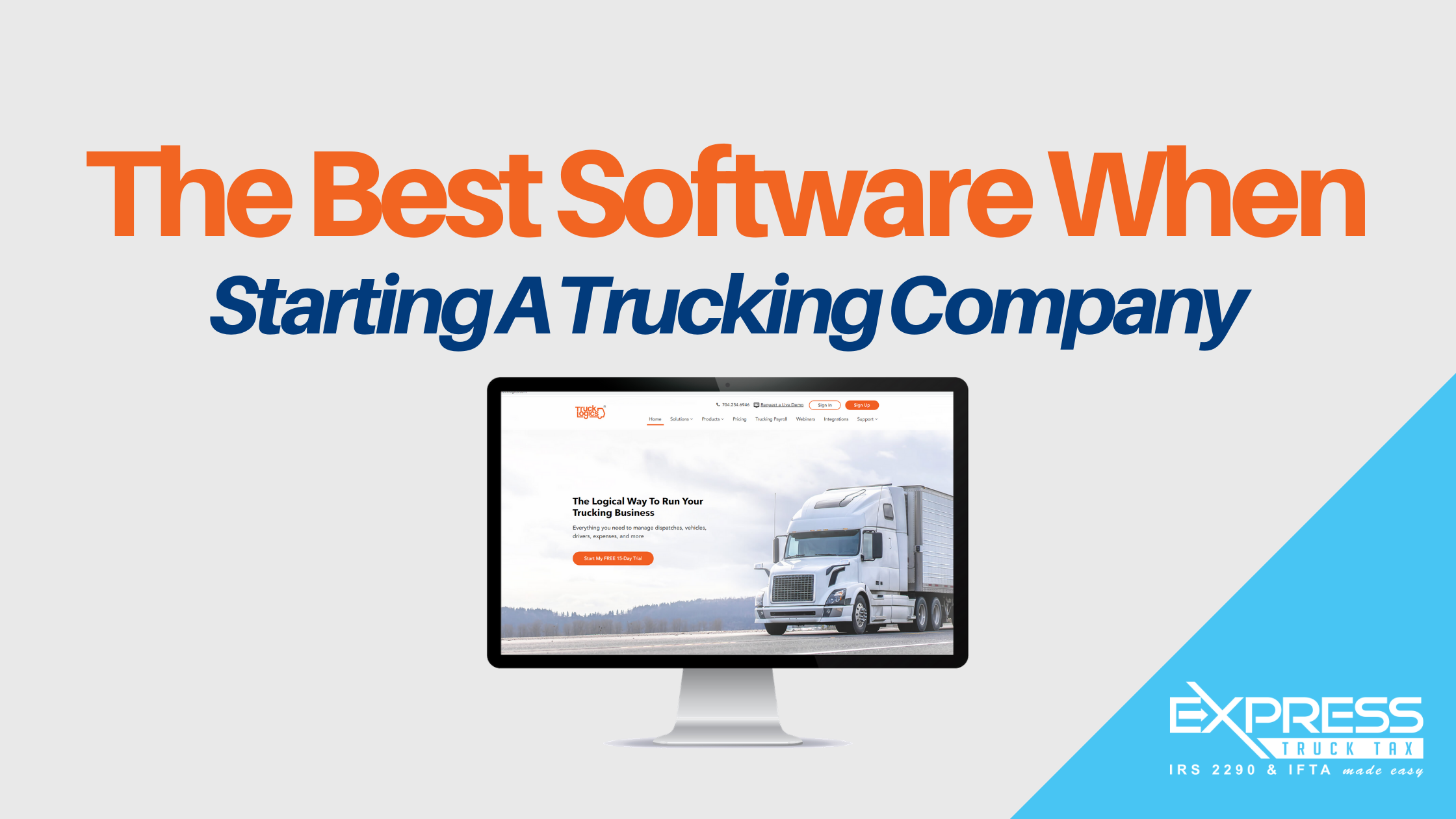
Starting a Trucking Company? This is The Software For You

Getting your authority? Building your own fleet? Either way, you’re going to have a lot more responsibility soon.

You’re going to need a comprehensive trucking business management software to keep track of loads, dispatches, invoices, expenses, and so much more.Thankfully, our sister product TruckLogics business management software has solutions for everything you could possibly need. Let’s talk about how TruckLogics can help you start a trucking company.

Starting a Trucking Company with TruckLogics:

Loads & Truck Dispatches

When you’re starting a trucking business, it needs to be flexible and mobile, able to go with you anywhere.With TruckLogics, you can organize all your loads and truck dispatches in one central location. And then with the TruckLogics mobile app, you can access and edit this information from anywhere.

Shipper, consignee, truck, trailer, driver, and payment information can all be recorded when you create a load. Additionally, with our ProMiles integration, you can estimate mileage for per-mile fees and truck and trailer service intervals.

Then, you can assign each load to a specific driver who will receive an automated notification of an assigned truck dispatch. Right from the TruckLogics mobile app, each driver can send updated check calls and communicate with dispatch while on the road.

Invoices

Once the truck dispatch is completed, TruckLogics can generate an accurate, professional-looking invoice for your trucking business to send to your clients. It can be printed, emailed, or faxed.

Running LTL loads that you need to split up into multiple invoices for multiple clients? Not a problem. TruckLogics can do that too! They can even handle brokers and agents for your trucking business.

Truckers starting a trucking business with TruckLogicsExpenses

One big issue you will face when starting a trucking business is how to keep track of expenses while on the road.

TruckLogics gives you the ability to notate expenses like fuel-ups and food purchases from the mobile app. You can even upload photos of your receipts to access later.If you want to get serious about your bottom line, you can run automatically generated profit and loss reports like cost per mile and revenue per mile. All this will help you stay in the black.

IFTA

One of the best parts about tracking everything in TruckLogics is that when the quarterly IFTA deadline rolls around, they will generate a report for you to file with.
As long as you have tracked mileage and fuel-ups for each truck, TruckLogics will do all the hard calculations for you.

Try TruckLogics Free

Get a 15-day free trial of TruckLogics. There’s no obligation and no payment information required to give it a test drive!

Trucking Business Owners, Have You Filed Form 941 For The 4th Quarter of 2020?

You just paid your Heavy Vehicle Use (HVUT) 2290 tax with the help of ExpressTruckTax, so you can finally relax, right? Filing was super easy! However, more deadlines are waiting just around the corner.

It seems like taxes never end, especially if you’re a small business owner because you have another tax deadline on the horizon! The 4th quarter Form 941 deadline is on February 1!

Wait, what is Form 941?

Form 941 is the Quarterly Federal Tax Return and it’s basically a report that’s used to disclose employment taxes for those who own and operate a business with employees. This means that anyone or any business, like a trucking business owner for example, that pays wages to an employee must file Form 941 on a quarterly basis. That’s right, four times a year, just like IFTA.

As an employer, you are responsible for withholding Medicare tax, social security tax, and federal income tax from your employee’s paychecks. You’re also responsible for sending these taxes to the IRS. Form 941 is used to report the amount of taxes you withhold from your employee’s paychecks for the quarter and to pay the employer’s portion of Medicare and social security taxes to the IRS.

How to E-file Form 941

Luckily for you, we have an IRS-authorized sister, TaxBandits, which will help you file Form 941 online in a matter of minutes.

It’s simple, create your free TaxBandits account and follow the guided interview style filing process to instantly complete your Form 941 online. TaxBandits tells you what information is required and exactly where it needs to go so you can finish your 941 form and transmit it directly to the IRS in no time!

Plus, their customer support team is here to help. If you need any assistance please contact the dedicated, US-based TaxBandits support team. Give them a call Monday – Friday from 9 AM to 6 PM at 704.684.4751. They also offer live chat and you can take advantage of our 24/7 email support at support@taxbandits.com.

How to Save Money with Self-Service Payroll

Congratulations – You’re growing! Hiring contractors means paying trucking contractors.

If you’re not a payroll expert, it may be tough to know just where to start. That’s okay!

Here’s everything you need to know about finding the perfect self-service payroll solution for paying your trucking contractors.

Paying Contractors

EES Payroll

EES stands for “employee self-service”, with EE being a two-letter abbreviation for “employee”.

EES refers to technology that allows employees with an EES payroll login to handle many administrative needs on their own.

For instance, EES payroll services allow employees to have full access over payroll, letting small businesses manage payroll from afar, without a single sheet of paper!

Make life easier for both you and your employees by outsourcing certain time-consuming aspects of business, like payroll tax service, to your employees. Plus, you’ll save tons of money!

With an EES payroll login, your employees will have 24/7 access to pay stubs and other payroll information that they might need for taxes, loans, and more.

In addition, EES payroll systems are secure, so sensitive information will stay safe on the payroll tax service platform.

EES Portal

An EES portal is the interactive portion of an EES system.

An EES portal allows your employees to access payroll features from their own devices.

Each employee will have their own payroll login information to an individual account. The self-service portal for employees is a huge time saver for you, allowing employees to do more payroll and HR tasks on their own.

For instance, they can view and print payroll information, access payroll history, and more.

Small business payroll is often overlooked by other, more pressing business needs. Make sure that your employees are paid on time and correctly with the help of an online payroll tax service.

Plus, stay tax compliant by keeping an accurate record of employee information.

Payroll Services

Now, all that’s left is to find a self-service payroll system that does it all!

PayWow is your small business payroll solution, created to help you grow.

With PayWow, it’s easy to pay contractors and manage 1099 filings. In fact, you can pay your contractors with just a few clicks, and generate and file 1099’s automatically.

The best part is that it’s completely paperless! Keep track of everything you need without shuffling through the file cabinets.

You can even track your contractors through the PayWow dashboard, letting them record their work hours. Utilize this feature to integrate time & attendance data when paying contractors!
Get started with PayWow’s features today and streamline your payroll services.