Author: Marcela De Vivo

How Can You Prepare for and Pass Roadside Inspections in 2026: A Trucker’s Guide

pass Roadside Inspections

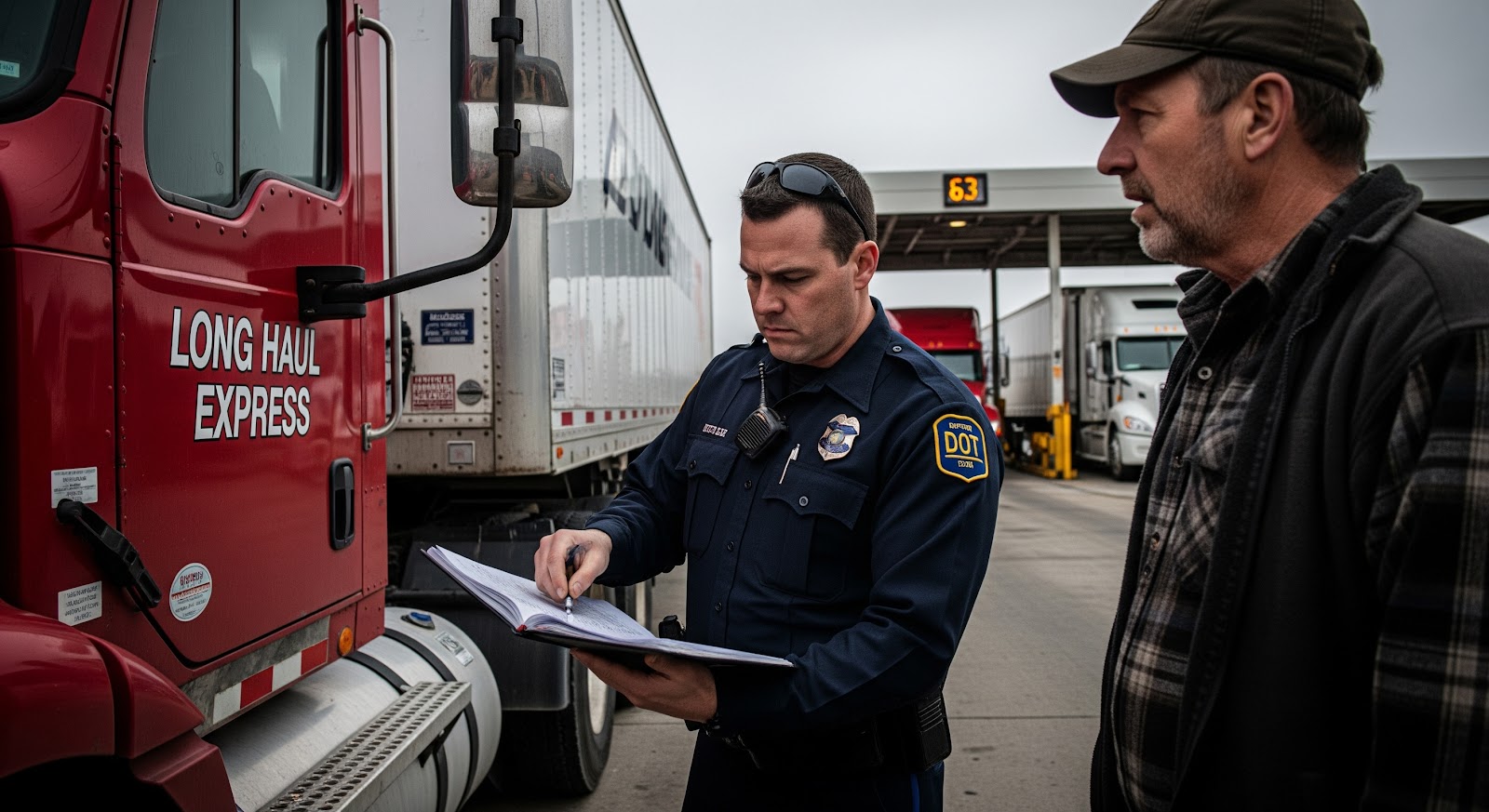
For every trucker on the road, roadside inspections are an inevitable part of the job, but being prepared for them can mean the difference between a smooth haul and costly downtime. These inspections are carried out by Department of Transportation or FMCSA-certified officers to ensure both drivers and vehicles meet federal and state safety regulations. They can happen anywhere, anytime, at weigh stations, rest areas, or random stops on the highway.

With increasing adoption of Electronic Logging Devices, telematics, and real-time diagnostic tools, enforcement is becoming more data-driven. Inspectors are now relying more on digital records and automated pre-screening systems, reducing the time it takes to identify issues, but also increasing scrutiny on things like Hours of Service, vehicle maintenance records, and tax documentation such as the IRS 2290 Schedule 1.

Let’s walk through everything you need to know to prepare for and pass a roadside inspection in 2026, from vehicle checklists and driver documentation to behavioral tips and the latest tech tools. Whether you’re an owner-operator or managing a fleet, this proactive approach will help you stay compliant, avoid penalties, and keep your wheels rolling.

Understanding Roadside Inspections

What Are Roadside Inspections?

Roadside inspections are official examinations of commercial motor vehicles conducted by Department of Transportation officers or Federal Motor Carrier Safety Administration certified inspectors. These inspections are intended to evaluate both the mechanical condition of the vehicle and the legal compliance of the driver. They can be conducted at fixed weigh stations, rest stops, or on the side of the road during random or targeted enforcement efforts.

The goal of a roadside inspection is not to disrupt your trip, it’s to ensure that your vehicle is safe to operate, your documents are up-to-date, and you are in full compliance with federal and state laws. Inspections also play a major role in reducing crashes, minimizing mechanical breakdowns, and improving the overall safety of our highways.

Inspectors will typically review:

  • The vehicle’s mechanical components such as brakes, tires, lights, and coupling devices.
  • The driver’s credentials, including CDL, medical certificate, and Hours of Service logs.
  • Required documentation, such as registration, insurance, and the IRS Form 2290 Schedule 1 to prove that your Heavy Vehicle Use Tax has been paid.

Any violations found during the inspection can lead to citations, out-of-service orders, or impact your company’s CSA scores.

Levels of Inspections (FMCSA)

The FMCSA outlines six levels of inspections, each varying in scope and depth. Knowing the differences can help you better prepare and understand what an inspector may be looking for:

Level I: North American Standard Inspection

This is the most thorough and comprehensive inspection. It includes a complete check of both the driver and the vehicle:

  • Driver’s license, medical examiner’s certificate, HOS logs, and documentation.
  • Vehicle inspection including brakes, tires, lighting, steering, suspension, and cargo securement.
  • Inspectors may crawl under the vehicle to check components.

Tip: If you pass a Level I inspection with no violations, you may receive a CVSA decal that signals compliance to other officers.

Level II: Walk-Around Inspection

Similar to Level I, but the inspector does not go underneath the vehicle. They will check:

  • Driver credentials and documentation.
  • Vehicle components that are visible during a walk-around (e.g., tires, lights, reflectors, cargo tie-downs).

It’s still detailed, but faster than a Level I.

Level III: Driver-Only Inspection

Focuses entirely on the driver’s compliance:

  • CDL and medical card.
  • HOS (Hours of Service) logs from your ELD.
  • Proof of insurance.
  • Vehicle registration and required tax forms like Form 2290 Schedule 1.

This level is often used to verify documentation without checking the physical vehicle.

Level IV: Special Inspection

This is a one-time, targeted inspection, typically conducted for research, compliance studies, or after a known issue or accident. It can focus on a specific issue (e.g., brakes, emissions, or logbook falsification).

Level V: Vehicle-Only Inspection

This inspection involves only the vehicle, without the driver being present. Often done at terminals or during compliance reviews. It includes all the mechanical checks of a Level I inspection.

Level VI: Enhanced NAS Inspection for Radioactive Shipments

This level applies to CMVs transporting radioactive materials. It involves stricter protocols, documentation, and inspection procedures under the U.S. Department of Energy guidelines. It’s rarely encountered unless you’re in that specialized field.

Understanding these levels can help truckers and fleet managers tailor their pre-trip inspections and recordkeeping to match what might be expected during a stop. Preparation is key, especially as roadside inspections continue to integrate digital data systems and automated screening technologies in the years ahead.

What’s New in 2026?

Here’s what truckers and fleet operators can expect to see more of in 2026:

1. Greater Focus on ELD Data and Telematics

Electronic Logging Devices, once a new requirement, are now fully integrated across the industry, and enforcement is catching up. In 2026, expect:

  • Tighter scrutiny of HOS (Hours of Service) violations via ELD downloads at inspection sites.
  • Automated flagging of form and manner errors, unassigned driving time, and violations.
  • Real-time access to driver logs during inspections, reducing inspection time but increasing accountability.
  • Potential expansion of telematics data (e.g., speed, harsh braking, diagnostics) being used to assess overall compliance or safety risk during an inspection.

Tip: Make sure your ELD is up-to-date and your logs are clean, complete, and properly annotated.

2. Automated Inspections via Weigh Station Pre-Clearance Systems

With programs like Weigh Station Bypass (Formerly Drivewyze) and PrePass expanding, more weigh stations are equipped to perform automated Level VIII electronic inspections, often without the truck even stopping. In 2026:

  • More states may adopt weigh-in-motion (WIM) and transponder-based inspections, using your safety score and telematics to decide whether to bypass or flag your truck.
  • Vehicles with poor CSA scores, out-of-date documents (like Schedule 1), or inconsistent telematics data may be automatically flagged for inspection.
  • Integration of license plate readers, USDOT number scans, and VIN checks at pre-clearance points.

These “invisible inspections” mean you may be assessed without even realizing it.

3. Enhanced CVSA Criteria Updates (If Announced)

The CVSA North American Standard Inspection Program often updates its out-of-service criteria annually. While the full 2026 updates are yet to be released, likely areas of change include:

  • Stricter enforcement around electronic documentation (e.g., digital registration, insurance, tax forms).
  • Updated standards for automated safety systems like lane-departure warnings or auto-braking (especially on newer trucks).
  • Greater focus on driver fitness, including recent changes to medical certification and drug/alcohol clearinghouse compliance.

Staying informed of CVSA updates is crucial, especially before International Roadcheck or targeted enforcement events.

4. Integration with Fleet Management Systems and AI-Based Scoring

Fleet operators using telematics and fleet management software may see more integration between inspection data and their internal platforms. By 2026:

  • Some fleets may automatically receive inspection summaries, CSA score updates, and compliance risks via their telematics dashboard.
  • AI may be used to predict violations or maintenance risks, allowing proactive interventions.
  • Expect an increase in “predictive safety scores” that insurers, shippers, or regulators may use to assess your compliance, even before an inspection happens.

This trend rewards well-maintained vehicles, digital recordkeeping, and proactive safety culture.

Bonus: Expanded Role of Digital Tax Documentation

In 2026, inspectors may rely even more heavily on digitally verified documents, including:

  • IRS Form 2290 Schedule 1 to confirm HVUT payment.
  • Electronic IFTA permits, IRP registration, and digital cab cards.

Having a mobile-friendly, instantly accessible copy of these documents can speed up inspections and avoid unnecessary delays.

2026 roadside inspections will be faster, smarter, and more reliant on data than ever before. Staying ahead means embracing technology, keeping records clean and current, and understanding how automated systems interpret your compliance.

Pre-Trip Preparation: What to Check

The best way to pass a roadside inspection in 2026 is to prepare before you even hit the road. A thorough pre-trip inspection, backed by up-to-date documentation, minimizes the risk of violations and can save you from costly fines, delays, and out-of-service orders.

This section outlines exactly what drivers and fleet managers should check before each trip, broken down into vehicle and driver responsibilities.

A. Vehicle Checklist

Performing a detailed inspection of your truck and trailer before every haul is not just good practice, it’s also a federal requirement under FMCSA regulations. Inspectors are trained to look for the most common violations, many of which you can spot and fix yourself.

Here’s what you should always check:

Brakes

  • Look for worn brake pads, air leaks in brake lines, and proper slack adjuster travel.
  • Make sure the brake warning system functions correctly.
  • Brakes are one of the most cited violations during roadside inspections.

Tires

  • Check for proper tread depth (minimum 4/32” on front tires and 2/32” on others).
  • Ensure tires are properly inflated, free of cuts, bulges, or exposed cords.
  • Inspect for matching tire sizes and condition on dual wheels.

Lights

  • Test all headlights, brake lights, turn signals, marker lights, and reflectors.
  • Replace any burned-out bulbs immediately.
  • Ensure lenses are clean and visible.

Windshield Wipers & Mirrors

  • Confirm wipers are in good working order with adequate fluid in the reservoir.
  • Check for cracked or obstructed side and rearview mirrors.

Fluid Levels & Leaks

  • Check oil, coolant, transmission fluid, windshield washer fluid, and power steering.
  • Inspect under the truck for any active fluid leaks.

Emergency Equipment

  • Ensure you have:
    • A fire extinguisher (properly charged and mounted),
    • At least three reflective triangles,
    • Extra fuses (if required).

Air System & Leaks

  • Listen for air leaks during your walkaround.
  • Test the low air pressure warning system and verify proper air pressure build-up.

Cargo Securement

  • Verify all cargo is properly tied down using the appropriate straps, chains, or binders.
  • Inspect load locks, bulkheads, and dunnage for security.
  • Flatbed drivers should inspect all tie-down points and tarps.

Trailer Condition

  • Inspect trailer flooring, doors, lights, and tires.
  • Confirm kingpin latch and fifth wheel connection are secure.

Tip: Document any issues in your DVIR (Driver Vehicle Inspection Report) and don’t move the truck until they’re resolved.

B. Driver Checklist

Even if your truck is in perfect shape, you can still fail a roadside inspection due to missing or expired documents. Keep the following items organized and easily accessible, whether in print or digitally stored on a tablet or secure cloud folder.

Valid CDL (Commercial Driver’s License)

  • Ensure your license is not expired or suspended.
  • Check the correct endorsements (e.g., hazmat, tank, doubles/triples).

Medical Certificate

  • Your medical card must be current and properly filed with your state.
  • Keep a copy with you at all times.

Hours of Service Logs (via ELD)

  • Ensure your Electronic Logging Device is functioning properly and up to date.
  • Review for any unassigned drive time, log gaps, or form and manner errors.
  • Know how to operate the ELD and transfer logs to an inspector when asked.

Driver Vehicle Inspection Reports (DVIR)

  • Have current and previous DVIRs available.
  • Show that defects were noted and corrected (or not present).

Proof of Insurance

  • Maintain an updated copy of your insurance card or policy documentation.
  • Make sure the policy matches the vehicle you’re operating.

Vehicle Registration and Permits

  • Verify that all registration documents are current.
  • Include IFTA, IRP cab card, and any state-specific permits.

2290 Schedule 1 (HVUT Proof of Payment)

  • This is your IRS-stamped proof that you’ve paid the Heavy Vehicle Use Tax.
  • Required for vehicles with a taxable gross weight of 55,000 pounds or more.
  • Missing or outdated Schedule 1 can lead to roadside inspection delays, citations, or refusal to register your vehicle at the DMV.
  • If you need to file or renew, you can do it instantly through ExpressTruckTax and receive your stamped Schedule 1 in minutes.

Tip: Keep all your documents in a binder or digital folder labeled by category so you can provide them quickly and confidently during an inspection.

Daily pre-trip inspections are not optional, they are your first line of defense against violations and out-of-service orders. When combined with clean, accessible documentation, they help you build a reputation for safety, compliance, and professionalism.

Conclusion

Roadside inspections are a fact of life for every trucker, but they don’t have to be stressful or disruptive. The key to passing them consistently lies in two things: preparation and attitude.

A well-prepared truck, organized documents, and a calm, respectful demeanor go a long way in making your inspection smooth and uneventful. By doing thorough pre-trip checks, staying current with your driver and vehicle documentation, and addressing small issues before they turn into violations, you not only stay in compliance, you protect your CSA score, your livelihood, and your reputation as a professional.

Fleet Preventative Maintenance: The Key to Lower Downtime and Higher Profit

Fleet Preventative Maintenance

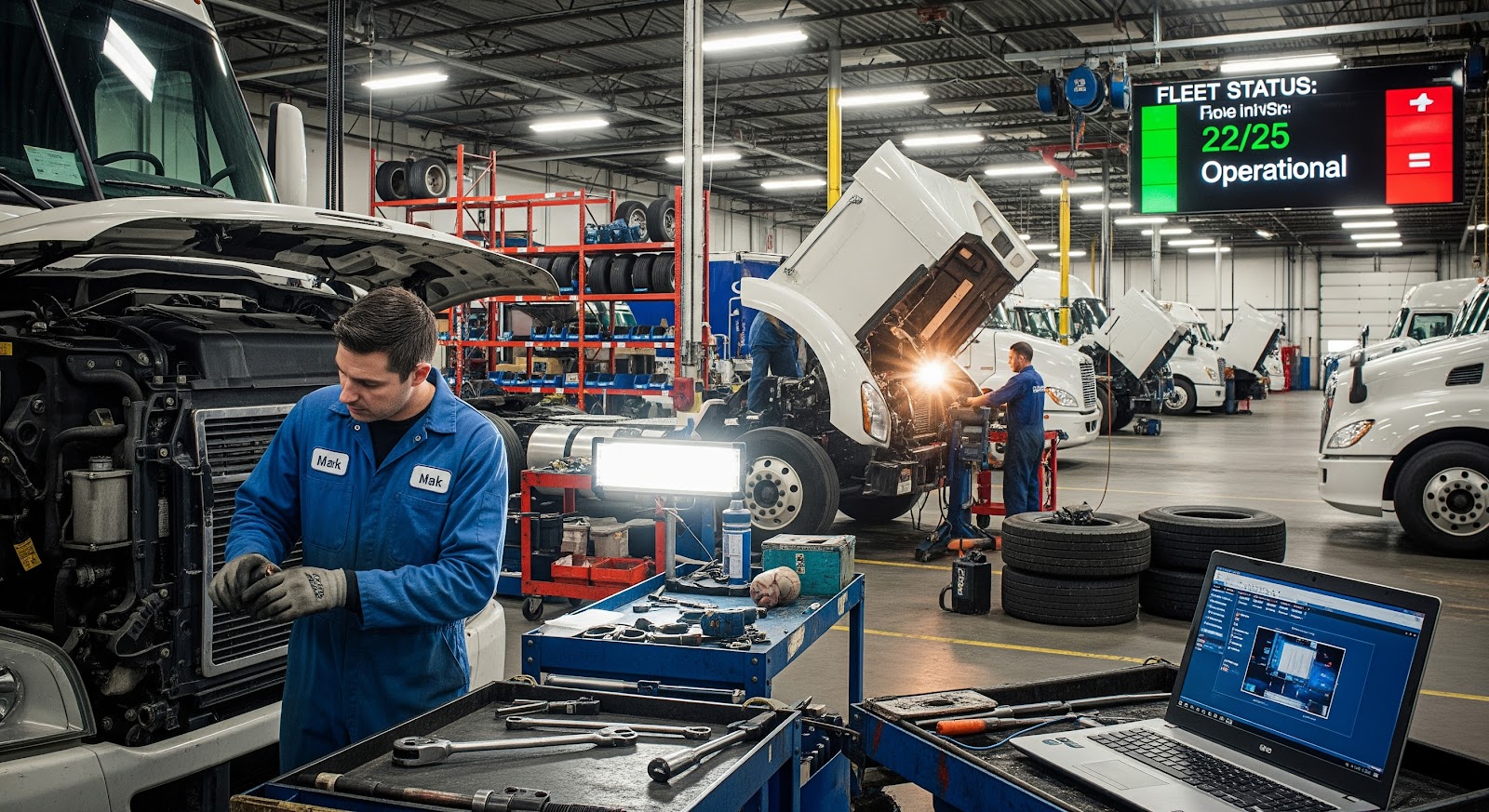
Fleet preventative maintenance (PM) refers to a proactive approach to servicing and inspecting your vehicles on a regular schedule, rather than waiting for something to go wrong. This includes routine tasks like oil changes, brake inspections, tire rotations, fluid checks, and system diagnostics to catch issues before they become major problems.

According to the American Trucking Associations (ATA), a single day of unplanned vehicle downtime can cost between $448 and $760 per truck, not including lost revenue from delayed deliveries or missed customer commitments. Multiply that by several trucks and several days, and it becomes clear: skipping or delaying routine maintenance can devastate your bottom line.

In contrast, fleets that implement consistent preventative maintenance programs report 20–30% lower repair costs and significantly higher vehicle uptime. In an industry where margins are already tight, that kind of difference can mean the survival, or failure, of a business.

What is Fleet Preventative Maintenance?

Fleet preventative maintenance (PM) is a proactive strategy that involves regular inspections, servicing, and minor repairs to keep vehicles running safely and efficiently. Rather than waiting for a component to fail and dealing with costly emergency repairs, preventative maintenance is all about addressing wear and tear before it leads to a breakdown.

This approach is vital for commercial fleets, where each vehicle represents a revenue-generating asset. When one truck is sidelined due to a mechanical failure, the entire operation can suffer, from missed delivery deadlines to penalties for non-compliance.

Key Components of Fleet Preventative Maintenance

A thorough preventative maintenance program typically includes:

  • Oil and Fluid Checks: Regularly inspecting and changing engine oil, transmission fluid, brake fluid, coolant, and other essential fluids helps prevent engine wear, overheating, and system failures. Contaminated or low fluids can lead to catastrophic engine damage if ignored.
  • Tire Inspections and Replacements: Tires are not just a safety concern, they directly impact fuel efficiency and performance. Preventative maintenance includes checking tread depth, inflation pressure, and signs of uneven wear. Worn or improperly inflated tires can lead to blowouts, reduced control, or poor mileage.
  • Brake System Evaluations: Brake pads, rotors, drums, and fluid should be inspected regularly to ensure the system is responsive and safe, especially for heavy vehicles hauling thousands of pounds. Ignoring brake issues can result in costly accidents and DOT violations.
  • Electrical and Lighting Checks: This includes headlights, brake lights, turn signals, and the vehicle’s internal electrical systems. A malfunctioning light might seem minor, but it can lead to failed roadside inspections, tickets, or even accidents.
  • Scheduled Engine Diagnostics: Using onboard diagnostics (OBD) tools or telematics, fleet managers can catch error codes and engine performance issues early. These scans help identify problems with sensors, fuel injection, emissions systems, and more, before they affect performance or trigger warning lights on the road.

Maintenance Intervals: Timing is Everything

Fleet preventative maintenance can follow several scheduling models, depending on the fleet’s size, vehicle types, and usage:

  • Mileage-Based Intervals: Maintenance tasks are scheduled after a set number of miles driven (e.g., oil change every 10,000 miles).
  • Time-Based Intervals: Certain services are performed every few months, regardless of mileage, ideal for seasonal or infrequently used vehicles.
  • Usage-Based Intervals: Leveraging telematics or engine hour data, this method schedules maintenance based on actual workload, which is particularly useful for vocational or off-road vehicles.

No matter which method is used, consistency is key. The more accurately a fleet tracks its PM schedule, the fewer surprises it will face in the long run.

How Preventative Maintenance Increases Profitability

Preventative maintenance doesn’t just protect your trucks, it protects your profit margins. For fleet owners, every unexpected breakdown or safety violation chips away at revenue and puts additional strain on operations. A well-structured preventative maintenance (PM) program turns vehicle upkeep into a strategic advantage, not just a line item on your budget.

Here’s how it directly contributes to a healthier bottom line:

1. Reduces Unplanned Repair Costs

Unexpected repairs are almost always more expensive than routine maintenance. Emergency tow fees, after-hours labor, and costly part replacements add up quickly. Worse, unplanned downtime can lead to missed deliveries and unhappy customers.

By addressing issues early, like replacing worn brake pads before they damage rotors, PM helps avoid large-scale mechanical failures and expensive repair bills. In many cases, spending $150 on a routine inspection could save you thousands in emergency repairs.

2. Extends Vehicle Lifespan (Delays Costly Replacements)

When vehicles are properly maintained, they simply last longer. Consistent oil changes, fluid checks, and engine diagnostics reduce wear and tear on critical components, allowing your trucks to remain in service for hundreds of thousands more miles.

This means you can defer major capital expenditures, like buying new trucks, by getting more productive years out of your current assets.

3. Improves Fuel Efficiency and Safety

Neglected maintenance can seriously impact fuel efficiency. For example, under-inflated tires can reduce fuel economy by 0.2% for every 1 PSI below optimal pressure. Dirty air filters, misaligned wheels, and poor lubrication also reduce fuel performance.

Additionally, well-maintained vehicles are safer on the road, reducing the risk of accidents, liability, and downtime from insurance claims or investigations.

4. Enhances Resale Value of Vehicles

A documented preventative maintenance history significantly increases the resale value of your fleet vehicles. Buyers and dealers are more likely to pay top dollar for trucks that come with proven service records, reducing your depreciation losses when upgrading or selling equipment.

5. Helps Stay Compliant with DOT/FMCSA Requirements

Preventative maintenance isn’t just good practice, it’s part of staying legally compliant. The Federal Motor Carrier Safety Administration (FMCSA) requires regular inspections and maintenance records.

Failure to maintain vehicles can result in:

  • Out-of-service orders during inspections
  • Fines and penalties
  • DOT audit issues

A proactive PM plan helps ensure your fleet passes roadside checks and avoids costly violations that could hurt your CSA score or insurance rates.

6. Supports Better Form 2290 and HVUT Management

Many fleet owners overlook how preventative maintenance ties into Form 2290 and Heavy Vehicle Use Tax (HVUT) compliance. Here’s how it helps:

  • Weight Management: PM helps prevent unexpected modifications that increase a vehicle’s taxable weight, avoiding the need to file an amended 2290 for weight increases.
  • Mileage Tracking: Proper maintenance keeps odometers and diagnostics accurate, helping ensure suspended vehicles stay within the 5,000-mile (or 7,500 for agricultural) threshold.
  • Fewer Mistakes: Organized fleets with detailed PM logs are less likely to submit incorrect VINs or vehicle categories on their filings, minimizing IRS rejections and delays.

When combined with ExpressTruckTax’s tools, like VIN correction and 2290 amendment filing, a solid PM strategy makes staying compliant and profitable that much easier.

Building an Effective Fleet Preventative Maintenance Plan

Implementing preventative maintenance across a fleet isn’t just about checking off a few items on a list, it’s about creating a repeatable system that supports long-term vehicle health, regulatory compliance, and profitability. Whether you’re managing five trucks or 500, a well-structured plan ensures nothing slips through the cracks.

Here’s how to build a preventative maintenance (PM) plan that works:

1. Set a Regular Schedule Based on OEM Recommendations and Fleet Usage

The foundation of any good PM plan is a consistent maintenance schedule. Start by consulting each vehicle’s Original Equipment Manufacturer (OEM) guidelines, which outline recommended service intervals for oil changes, tire rotations, fluid checks, and more.

Then, adjust based on your real-world fleet usage:

  • High-mileage trucks may need more frequent inspections.
  • Seasonal vehicles may need special checks before and after periods of inactivity.
  • Heavily loaded or off-road vehicles could require shorter service intervals due to added stress.

Tip: Avoid a one-size-fits-all plan, customize PM schedules for each vehicle class or use case.

2. Use a Digital PM Tracking System

Manual tracking with spreadsheets or paperwork doesn’t scale well and often leads to missed service dates. Instead, use a digital fleet maintenance platform or app to automate scheduling and recordkeeping.

Platforms like Fleetworthy or other fleet management systems offer:

  • Automated reminders for upcoming services
  • Real-time diagnostics from telematics devices
  • Centralized service history for each vehicle
  • Integration with compliance and reporting tools

Digital PM tools also help you generate audit-ready reports for DOT inspections and tax records, making the entire process more efficient and transparent.

3. Keep Detailed Service Records for Each Vehicle

Accurate and complete documentation is critical, not just for maintenance, but for compliance, resale, and audit protection. Every vehicle in your fleet should have a digital (or securely stored physical) file that includes:

  • Dates and types of service performed
  • Parts replaced
  • Odometer or engine hours at the time of service
  • Shop or technician details
  • Any inspection notes or follow-up items

These records help track trends, forecast future maintenance needs, and serve as proof of compliance during FMCSA or IRS audits.

4. Train Drivers to Report Early Signs of Issues

Your drivers are the first line of defense when it comes to vehicle health. Training them to identify and report small issues early, like warning lights, unusual noises, vibrations, or brake performance, can prevent minor problems from escalating into major breakdowns.

Include PM awareness in your onboarding and regular driver safety meetings. Provide drivers with:

  • Pre-trip and post-trip inspection checklists
  • A simple way to submit issues (via app or dispatch log)
  • Encouragement to report concerns early without fear of penalty

When drivers feel involved and empowered, your entire fleet becomes more responsive and proactive.

5. Establish Roles and Responsibilities

A strong preventative maintenance plan requires clear ownership. Everyone involved should know:

  • Who schedules maintenance appointments
  • Who performs or approves inspections
  • Who logs service records
  • Who monitors overdue maintenance alerts
  • Who ensures tax compliance for mileage or weight-related changes

If your team is small, these roles may overlap. For larger fleets, consider assigning:

  • A fleet maintenance coordinator or shop manager
  • A driver supervisor for issue escalation
  • A compliance manager to oversee inspections and tax filings

Having defined responsibilities keeps your plan running smoothly and ensures accountability at every level.By taking a systematic approach to preventative maintenance, fleet managers can improve reliability, reduce costs, and stay ahead of compliance requirements like Form 2290. The right plan doesn’t just prevent problems, it creates a smarter, stronger fleet.

DOT Rules and Regulations: Key Guidelines All Truck Drivers Should Know

DOT Rules and Regulations

The Department of Transportation (DOT) plays a critical role in maintaining safety and efficiency across the nation’s transportation systems, especially in the trucking industry, where safety, compliance, and accountability are non-negotiable. Through agencies like the Federal Motor Carrier Safety Administration (FMCSA), the DOT establishes and enforces a wide range of rules and regulations designed specifically to govern commercial vehicle operations on U.S. roads.

For commercial truck drivers, these DOT rules and regulations are more than just red tape, they’re the foundation of professional driving. Whether you’re an owner-operator hauling loads cross-country or a fleet driver working regional routes, knowing and following DOT guidelines is essential to staying legal, safe, and on the road. From hours of service rules to vehicle inspections, drug and alcohol testing, and proper documentation, there are many compliance standards that drivers must follow daily.

Failing to comply with DOT regulations doesn’t just lead to fines, it can result in roadside shutdowns, suspended licenses, and even jeopardize your career. That’s why it’s crucial for every commercial driver to understand the most important DOT requirements and how they apply to your everyday operations.

What Are DOT Rules and Regulations?

DOT rules and regulations refer to the set of federal safety, operational, and compliance standards established by the U.S. Department of Transportation (DOT) to oversee commercial motor vehicles (CMVs) and the people who operate them. These regulations are designed to promote road safety, reduce accidents, protect drivers and the public, and ensure that transportation systems run efficiently across state and national lines.

At the heart of these efforts is the Federal Motor Carrier Safety Administration (FMCSA), a division of the DOT that specifically governs the commercial trucking and bus industries. The FMCSA is responsible for writing, updating, and enforcing rules that cover a broad range of trucking-related topics, such as:

  • Driver qualifications
  • Hours of service limits
  • Drug and alcohol testing
  • Vehicle maintenance and inspection standards
  • Cargo securement
  • Recordkeeping and documentation
  • Safety ratings and compliance reviews

These regulations aren’t optional, they are legally binding and must be followed by nearly everyone involved in commercial trucking operations. Here’s who is typically required to comply:

Who Must Follow DOT Regulations?

  • CDL (Commercial Driver’s License) Holders – Any individual operating a vehicle over 26,000 pounds, transporting hazardous materials, or carrying more than 16 passengers must comply.
  • Interstate Carriers – Companies or drivers transporting goods or passengers across state lines must follow all FMCSA and DOT rules.
  • Intrastate Carriers – Even drivers who operate within a single state may be subject to DOT rules, depending on their vehicle’s size, cargo type, or state-specific laws.
  • Owner-Operators – Independent drivers running under their own authority must ensure full DOT compliance, including maintaining a DOT number, medical certification, and proper documentation.
  • Fleet Operators and Motor Carriers – Trucking companies are responsible for ensuring all their drivers, vehicles, and operations meet DOT standards.
  • Leasing Companies and Logistics Providers – Any business that owns or manages commercial vehicles must also comply with applicable DOT regulations.

DOT rules are constantly evolving to adapt to new technology, road safety data, and industry trends. That’s why it’s essential for drivers and carriers to stay updated on changes, maintain proper documentation, and prioritize compliance in daily operations.

Key DOT Regulations Every Truck Driver Should Know

To stay compliant, avoid costly penalties, and keep your career on track, it’s critical for every commercial truck driver to understand and follow these core DOT regulations. These guidelines are enforced by the Federal Motor Carrier Safety Administration (FMCSA) and apply to nearly all commercial motor vehicles operating in the U.S.

1. Hours of Service Rules

The Hours of Service (HOS) regulations are among the most critical rules enforced by the Federal Motor Carrier Safety Administration (FMCSA). These regulations are designed to prevent driver fatigue, a leading cause of accidents involving commercial vehicles by limiting how long drivers can be behind the wheel without adequate rest.

At their core, HOS rules are about balancing productivity with safety. They establish clear guidelines for driving time, on-duty hours, required breaks, and rest periods, ensuring drivers have enough time to recover before returning to the road.

Let’s break down the key HOS regulations every driver must follow:

11-Hour Driving Limit

After taking 10 consecutive hours off-duty, a driver is allowed to drive for up to 11 hours within a 14-hour on-duty window. This means that even though a driver may be on the clock for 14 hours, only 11 of those can be spent driving. The remaining time can be used for fueling, loading, inspections, or other non-driving tasks.

14-Hour Workday Rule

The 14-hour rule sets a firm limit on the total time a driver can be on duty after starting a shift. Once the clock starts, it does not pause, even for breaks or non-driving tasks. After 14 hours, a driver must go off-duty, regardless of how much actual driving was done during that period. This rule is crucial for ensuring drivers don’t remain active and alert for excessive hours, which can lead to diminished focus and slower reaction times.

30-Minute Break Requirement

To help manage fatigue during long drives, drivers must take a 30-minute off-duty break after 8 cumulative hours of driving time. This break can be taken in any form of off-duty status, including sleeper berth time, and gives drivers a chance to rest, eat, or refresh before continuing their route.

60/70-Hour Duty Limit

In addition to daily limits, HOS rules also set weekly caps. A driver may not exceed 60 hours on duty over 7 consecutive days (if the carrier operates 7 days a week) or 70 hours over 8 consecutive days (if the carrier operates 8 days a week). Once these limits are reached, drivers must go off-duty until they have enough rest time to bring their weekly total back below the threshold.

34-Hour Restart Rule

To reset the 60/70-hour clock, drivers can take at least 34 consecutive hours off-duty. This is known as the 34-hour restart and is typically used at the end of a workweek or during extended layovers. This rule ensures that drivers get enough rest before starting a new duty cycle, enhancing long-term safety.

Electronic Logging Device (ELD) Mandate

To enforce HOS compliance, the FMCSA requires the use of Electronic Logging Devices (ELDs) for most commercial drivers. These devices automatically record driving time, engine hours, vehicle movement, and other critical data. By replacing outdated paper logs, ELDs reduce the risk of logbook falsification and make it easier for both drivers and carriers to track hours accurately.

ELDs have become a cornerstone of modern fleet safety and compliance. Not only do they help carriers avoid penalties during roadside inspections and audits, but they also create a transparent record of driver activity, protecting both drivers and employers from liability.

2. DOT Drug and Alcohol Testing

The DOT drug and alcohol testing program is a cornerstone of commercial motor vehicle safety. Because truck drivers perform safety‑sensitive functions, the Department of Transportation enforces strict rules to ensure that drivers are not impaired while operating heavy vehicles. These regulations are designed to protect not only drivers, but also the motoring public and the companies responsible for commercial transportation.

Under DOT regulations, drug and alcohol testing is not optional. Any CDL driver operating a commercial motor vehicle subject to DOT oversight must participate in a federally mandated testing program administered by their employer or motor carrier. Failure to comply with testing requirements can result in immediate removal from service, fines, loss of CDL privileges, and long-term career consequences.

Types of Required DOT Drug and Alcohol Testing

DOT regulations require testing at specific times throughout a driver’s employment to ensure ongoing compliance and safety:

  • Pre‑Employment Testing: Before a driver can operate a CMV, they must pass a DOT‑regulated drug test. A driver cannot be dispatched or placed behind the wheel until a negative test result is received.
  • Random Testing: Random tests are conducted throughout the year without advance notice. Drivers are selected through a neutral, computer‑generated process, and must report for testing immediately when notified. Random testing acts as a strong deterrent against drug and alcohol use while on duty.
  • Post‑Accident Testing: Certain accidents require post‑accident testing, particularly when there is a fatality, a citation, or a vehicle is towed or someone is injured. These tests help determine whether substance use may have contributed to the incident.
  • Reasonable Suspicion Testing: If a trained supervisor observes behavior that suggests impairment, such as slurred speech, unsteady movement, or erratic behavior, the driver may be required to undergo immediate testing. Proper documentation by the supervisor is required.
  • Return‑to‑Duty and Follow‑Up Testing: Drivers who violate DOT drug or alcohol regulations must complete the return‑to‑duty process, which includes evaluation by a Substance Abuse Professional (SAP), a negative test result, and a series of follow‑up tests over a defined period. These follow‑up tests are unannounced and closely monitored.

Who Is Tested and How Often?

All CDL drivers operating DOT‑regulated commercial vehicles are subject to drug and alcohol testing. Motor carriers are responsible for maintaining a compliant testing program and ensuring all eligible drivers are enrolled.

The FMCSA sets minimum annual testing rates, which carriers must meet:

  • Drug Testing: At least 50% of drivers must be randomly tested each year
  • Alcohol Testing: At least 10% of drivers must be randomly tested each year

These percentages are reviewed annually and can change based on industry data and violation rates. Carriers that fail to meet testing requirements risk audits, fines, and enforcement actions.

3. CDL Medical Requirements

To ensure safety on the road, the Department of Transportation (DOT) requires all commercial drivers to meet specific medical qualifications. Operating a heavy vehicle demands physical stamina, mental clarity, and fast reaction times, so passing a DOT medical exam is essential for maintaining a Commercial Driver’s License (CDL).

The DOT physical exam is not just a formality, it’s a federally mandated health screening designed to confirm that a driver is physically and mentally capable of handling the challenges of long-haul driving, extended hours, and emergency situations on the road.

What Does the DOT Medical Exam Include?

The exam, performed by a certified medical examiner listed on the National Registry (required by FMCSA), is documented using Form MCSA-5875 and evaluates several key health areas:

  • Vision and Hearing – Drivers must meet minimum standards for visual acuity (at least 20/40 vision in each eye, with or without correction) and be able to hear a forced whisper from at least 5 feet away.
  • Blood Pressure and Cardiovascular Health – High blood pressure must be controlled. The examiner checks for signs of heart disease or other cardiovascular risks.
  • Neurological Function – Any history of seizures, brain injuries, or disorders like epilepsy is closely evaluated.
  • Musculoskeletal Fitness – The exam also ensures that drivers have the physical ability to operate a truck, including climbing in and out, securing loads, and maintaining control during emergency maneuvers.
  • Urinalysis – While not a drug test, the urinalysis checks for underlying medical issues such as diabetes or kidney problems.

Medical Certificate Validity

If a driver passes the exam, the medical examiner will issue a Medical Examiner’s Certificate (DOT Medical Card). This certificate is typically valid for up to 24 months. However, if the examiner identifies a medical condition that needs monitoring, such as high blood pressure or early-stage diabetes, the certificate may be issued for a shorter duration, like 3, 6, or 12 months.

It’s the driver’s responsibility to keep their certificate current and provide a copy to their state’s CDL office. Driving with an expired medical certificate can result in CDL disqualification and fines.

Disqualifying Conditions and FMCSA Exemptions

Certain medical conditions may disqualify a driver from obtaining or renewing their medical certificate, including:

  • Uncontrolled diabetes (especially insulin-dependent without FMCSA exemption)
  • Epilepsy or a history of seizures
  • Certain heart conditions
  • Use of prohibited medications, such as narcotics or sedatives that impair alertness

However, the FMCSA does allow for medical exemptions or waivers in specific cases. Drivers with conditions that are well-managed may apply for an exemption, often requiring supporting documentation and additional medical evaluations.

4. Vehicle Maintenance and Inspections

Maintaining commercial vehicles in safe, roadworthy condition is not just best practice, it’s a federal requirement under DOT regulations. Poor vehicle maintenance is a leading cause of roadside breakdowns, accidents, and violations that can sideline your operations and cost you money.

Both drivers and motor carriers have shared responsibility for ensuring every vehicle is thoroughly inspected, regularly serviced, and properly documented. Failing to meet these standards can result in out-of-service orders, fines, and serious safety risks.

Pre-Trip and Post-Trip Inspections

Every driver is required by the DOT to perform both pre-trip and post-trip inspections to identify any mechanical issues before and after operating a commercial motor vehicle.

  • Pre-trip inspections must be completed before a driver begins their shift. These inspections include checks on brakes, tires, steering components, lights, reflectors, mirrors, horn, windshield wipers, emergency equipment, and more. The goal is to identify any defect that could affect the safe operation of the vehicle.
  • Post-trip inspections are done at the end of the driving day, with any defects or maintenance concerns documented in a Driver Vehicle Inspection Report (DVIR).

Not only are these inspections a legal requirement, they are critical to preventing breakdowns or accidents while on the road. Drivers must report any safety defects that could affect vehicle performance, and carriers are responsible for correcting them before the vehicle is dispatched again.

Maintenance Logs and Recordkeeping

Motor carriers are required to maintain detailed maintenance records for every vehicle they operate. These records must include:

  • Inspection reports
  • Repair logs
  • Maintenance history
  • Parts replacements and service dates

These records must be retained for at least 30 days (often longer depending on state and federal guidelines) and must be made available during audits, DOT inspections, or compliance reviews.

Having an organized and up-to-date maintenance file not only helps demonstrate compliance, it also protects carriers from liability in the event of an accident or equipment failure.

Out-of-Service Criteria

If a commercial vehicle is found to have serious mechanical defects, it can be immediately placed out of service by DOT or enforcement officials. This means the truck cannot be operated until the issues are resolved and documented as repaired.

Common out-of-service violations include:

  • Brake system failures or leaks
  • Steering defects
  • Inoperable lights or signals
  • Worn tires or tire separation
  • Missing or damaged safety equipment

An out-of-service order is more than an inconvenience, it can delay deliveries, damage a company’s safety rating, and even trigger additional inspections or audits.

5. Driver Qualification File (DQF)

In the eyes of the DOT and FMCSA, driver safety begins with documentation. That’s why every motor carrier, whether you’re a large fleet operator or a single-truck owner-operator, must maintain a Driver Qualification File (DQF) for each CDL driver they employ or lease.

The DQF is more than just a personnel file. It’s a federally mandated record that proves each driver is legally qualified, medically fit, and properly licensed to operate a commercial motor vehicle (CMV). It plays a crucial role during DOT audits, roadside inspections, and compliance reviews.

Failing to maintain a complete and current DQF can result in serious penalties and may jeopardize your company’s DOT safety rating.

What Must Be Included in the DQF?

Each Driver Qualification File must include specific documents that demonstrate the driver’s qualifications and safety history. These required items include:

  • Copy of a Valid CDL: The driver must have a current Commercial Driver’s License appropriate for the vehicle type they operate.
  • DOT Medical Examiner’s Certificate: Proof that the driver has passed a DOT physical exam and is medically certified to drive.
  • Motor Vehicle Record (MVR) – Last 3 Years: Carriers must obtain the driver’s MVR from each state where the driver held a license in the past three years. This verifies driving history, license status, and any violations.
  • Previous Employer Safety Performance History: A record of the driver’s performance, violations, or accidents from prior employers over the last three years. This is required for evaluating a driver’s safety track record.
  • Annual Certificate of Violations and Annual Review: Each year, drivers must report any traffic convictions, and the carrier must review and sign off on their driving record.
  • Road Test Certificate or CDL Equivalent: Carriers must certify that each driver has passed a road test, or that their CDL serves as an equivalent proof of road competency.

DQF Compliance Tips

  • The DQF must be kept up to date at all times. When a driver renews a license or medical card, those updates must be reflected in the file.
  • Files must be easily accessible in the event of a DOT audit, and carriers must be able to produce them upon request.
  • Even terminated drivers’ DQFs must be retained for at least three years after employment ends.

6. DOT Number and Operating Authority

Before any commercial truck hits the road legally in the U.S., the company or individual operating it must have the proper federal registration and operating authority. This means securing a DOT Number, and in many cases, an MC Number, two critical identifiers that establish your legal right to operate in interstate commerce.

Understanding the difference between these two numbers and knowing whether you need one or both, is essential for maintaining DOT compliance and avoiding costly violations.

What Is a DOT Number and Who Needs One?

A DOT Number is issued by the Federal Motor Carrier Safety Administration (FMCSA) and acts as a unique identifier for a trucking company or owner-operator. It’s used by federal and state agencies to track safety records, compliance history, crash investigations, inspections, and more.

You are required to obtain a DOT Number if:

  • You operate commercial vehicles weighing over 10,000 lbs (GVWR or GCWR) in interstate commerce
  • You transport hazardous materials that require placards
  • You operate as an intrastate carrier in a state that requires DOT Numbers for in-state operations (e.g., Texas, California, Pennsylvania)

In short: If you’re using a truck for business and crossing state lines or hauling certain types of cargo, you probably need a DOT Number.

Once issued, your DOT Number must be clearly displayed on both sides of your commercial vehicle, along with your business name. It should be visible, legible, and in contrasting colors.

When Is an MC Number Required?

In addition to a DOT Number, many carriers also need an MC Number (Motor Carrier Number), which grants operating authority to transport regulated goods or passengers-for-hire across state lines.

You are required to have an MC Number if you:

  • Engage in for-hire transportation (you’re paid to move goods or passengers)
  • Cross state lines while transporting regulated commodities or passengers
  • Operate as a broker or freight forwarder arranging transportation on behalf of others

Your MC Number is what legally allows you to conduct business in interstate commerce as a for-hire carrier. Without it, you may face severe penalties, including being ordered off the road.

How to Apply and Stay Compliant

Registering for both a DOT and MC Number is done through the FMCSA’s Unified Registration System (URS). The application process requires key business information, including:

  • Legal business name and structure
  • Principal place of business
  • Employer Identification Number (EIN)
  • Details about your operation (e.g., cargo types, number of vehicles)
  • Proof of insurance coverage and BOC-3 process agent filing (for MC authority)

Once registered, here’s how to stay compliant:

  • Display your DOT Number (and MC Number, if required) on your vehicle
  • Maintain current insurance levels based on the type of cargo you haul
  • Keep business information up to date in the FMCSA system
  • Participate in the biennial MCS-150 update, even if your information hasn’t changed

7. Weight Limits and Load Securement

When it comes to trucking safety and compliance, what you haul and how much it weighs, matters just as much as how you drive. The Department of Transportation (DOT) and the Federal Motor Carrier Safety Administration (FMCSA) enforce strict weight limits and cargo securement rules to protect roadways, ensure vehicle stability, and prevent dangerous load shifts or accidents.

Whether you’re hauling freight across state lines or operating within one region, staying within legal weight limits and properly securing your cargo is essential for both road safety and regulatory compliance.

Weight Limit Regulations

The FMCSA has established maximum weight limits for commercial motor vehicles, and exceeding them can result in steep fines, out-of-service orders, and even damage to your vehicle. These limits are especially important at weigh stations and roadside inspections, where enforcement is frequent and strict.

Here are the standard federal weight limits:

  • Single Axle: 20,000 lbs
  • Tandem Axle: 34,000 lbs
  • Gross Vehicle Weight (GVWR): 80,000 lbs total (for most vehicles without a special permit)

In some cases, special overweight permits may be issued for loads that exceed these limits, such as oversized equipment or certain types of construction materials. However, operating without a valid permit when required can lead to serious legal and financial consequences.

Drivers must always be aware of both their vehicle’s gross weight and the distribution of weight across axles, as improper balancing can affect braking, steering, and overall control.

Cargo Securement Requirements

It’s not enough to just load a trailer, you must also secure the cargo properly to prevent movement, tipping, or ejection during transport. The FMCSA has strict standards for cargo securement, especially for vehicles operating in interstate commerce.

Key cargo securement rules include:

  • Use appropriate tie-downs, straps, chains, and anchor points rated for the load you’re hauling.
  • Cargo must be secured against movement in all directions (forward, backward, sideways, and vertically).
  • Use blocking or bracing as needed to keep the load in place, especially with loose or irregularly shaped items.
  • Inspect securement devices regularly throughout the trip, especially after the first 50 miles and every 150 miles thereafter.

Certain cargo types have specific securement guidelines, including:

  • Logs and lumber
  • Metal coils
  • Heavy machinery and equipment
  • Vehicles and shipping containers
  • Pipes or concrete products

Failing to follow securement regulations doesn’t just pose a danger, it can result in severe fines, points on your CSA (Compliance, Safety, Accountability) score, and even cause accidents that lead to injury or loss of cargo.

How ExpressTruckTax Helps with DOT Compliance

While the DOT and FMCSA enforce a wide range of regulations, one of the most commonly overlooked, but critical, areas of compliance for truckers is proper tax filing, documentation, and vehicle identification. That’s where ExpressTruckTax plays a crucial role in helping drivers, owner-operators, and fleet managers stay compliant and on the road legally.

Here’s how ExpressTruckTax supports your DOT compliance efforts:

VIN Checker and Free VIN Corrections

Incorrect or invalid Vehicle Identification Numbers (VINs) are one of the top reasons filings are rejected by the IRS, and can even lead to issues during DOT inspections or DMV registration.

  • VIN Checker Tool: Instantly detect common errors like transposed numbers, invalid characters, or mistyped internal codes that may be mistakenly used as VINs.
  • Free VIN Corrections: If you filed your Form 2290 through ExpressTruckTax and need to fix a VIN, we offer free corrections, with no hidden fees or delays.
  • This helps prevent problems during roadside inspections, DOT audits, or while renewing your tags at the DMV.

IRS Schedule 1 Filing to Stay Road Legal

One of the key requirements to legally operate a heavy vehicle is a stamped IRS Schedule 1, which serves as proof that your Heavy Vehicle Use Tax (HVUT) has been paid.

  • With ExpressTruckTax, you can e-file Form 2290 and receive your IRS-stamped Schedule 1 within minutes, helping you avoid costly delays at registration offices.
  • Many DMVs require Schedule 1 to renew your registration, so filing through us ensures you always have the documentation DOT inspectors and state agencies need.

Stay Compliant with HVUT Filing Requirements

All heavy vehicles with a taxable gross weight of 55,000 pounds or more must file Form 2290 annually with the IRS. Missing the HVUT filing deadline or underreporting can lead to penalties, interest, or compliance issues.

  • ExpressTruckTax makes HVUT filing simple and fast with an easy 3-step process:
    1. Enter business and vehicle info
    2. Choose payment method
    3. E-file and receive your stamped Schedule 1
  • We also support pro-rated filings for newly acquired vehicles and amendments for weight increases or mileage limit exceedances, both of which are important DOT-related changes that require proper documentation.

By filing with ExpressTruckTax, you’re doing more than just submitting a form, you’re staying compliant, avoiding penalties, and making sure your paperwork is always in order when it counts most. Whether you’re a one-truck owner-operator or managing a nationwide fleet, our platform helps you stay on top of your DOT requirements with confidence.

IFTA Renewal Deadline: What You Need to Know Before the Year Ends

IFTA Renewal Deadline

The International Fuel Tax Agreement is a cooperative agreement among the 48 contiguous U.S. states and 10 Canadian provinces that simplifies the reporting of fuel use by motor carriers operating across multiple jurisdictions.

Each year, IFTA license holders are required to renew their license and decals before December 31 to remain compliant and legally operate in the new year. Failing to meet this deadline can lead to serious consequences such as fines, delayed operations, and potential vehicle registration issues with your state DMV.

Renewing your IFTA license on time isn’t just a box to check, it’s essential for avoiding penalties and ensuring uninterrupted travel across state and provincial lines. Whether you’re an owner-operator or manage a large fleet, preparing now means less stress later and a smooth start to the new year.

What Is IFTA and Why Is Renewal Required?

The International Fuel Tax Agreement is a cooperative agreement among the 48 contiguous U.S. states and 10 Canadian provinces designed to streamline fuel tax reporting for motor carriers that operate in more than one jurisdiction. Instead of filing separate fuel tax reports with each state or province traveled, carriers file a single quarterly report with their base jurisdiction, which then distributes the appropriate tax amounts to the other participating regions.

The main purpose of IFTA is to simplify fuel tax compliance and ensure that fuel taxes are fairly and accurately allocated based on where fuel is used, not just where it was purchased. This benefits both trucking companies and government agencies by reducing administrative burdens and improving tax fairness across jurisdictions.

Who Needs to Renew Their IFTA License?

IFTA renewal is required annually for any carrier that meets the following criteria:

  • Operates a qualified motor vehicle in two or more IFTA member jurisdictions.
  • A qualified motor vehicle is typically one that:
    • Has two axles and a gross vehicle weight or registered weight over 26,000 pounds, or
    • Has three or more axles, regardless of weight, or
    • Is used in combination and the combined weight exceeds 26,000 pounds.

This includes:

  • Owner-operators
  • Trucking companies
  • Fleet managers
  • Long-haul carriers and any other business using heavy vehicles for interstate or interprovincial travel.

Even if your fleet hasn’t changed, your IFTA license and decals must be renewed before the end of each calendar year to continue operating legally in the new year. Without renewal, your vehicles are considered non-compliant, and you may be subject to fines, delays, or roadside enforcement actions.

IFTA Renewal Deadline for 2026

If you’re a motor carrier operating under the International Fuel Tax Agreement, December 31, 2026, is a date you cannot afford to miss. This is the official deadline to renew your IFTA license and order new decals for the 2027 license year, which begins on January 1, 2027.

Renewals must be completed before January 1 in order to legally operate in the new year. If you hit the road on or after January 1 without a valid IFTA license and current year decals, you’re at risk of violating IFTA requirements, which could lead to fines, citations, and delays at roadside inspections or state weigh stations.

The Deadline Is the Same Everywhere But the Process May Vary

While the renewal deadline of December 31 is universal across all IFTA member jurisdictions, each state or province handles the IFTA renewal process differently:

  • Some states allow online renewals through motor carrier portals.
  • Others may require paper forms, mailed documents, or in-person visits.
  • Certain jurisdictions may also require that all prior quarterly IFTA reports be filed and paid before approving a renewal.

That’s why it’s crucial to check with your base jurisdiction early, understand their process, and give yourself plenty of time to complete the renewal and receive your 2027 IFTA decals.

Don’t Wait Until the Last Minute

Waiting until late December can be risky due to:

  • Holiday office closures
  • Shipping delays for decals
  • Increased processing times due to high volume

To avoid unnecessary stress, penalties, or downtime, plan to complete your IFTA renewal well before the deadline. Early action ensures you’ll have your license and decals ready to go on January 1 and keeps your operations running without interruption.

Step-by-Step Guide to Renew Your IFTA License

Renewing your IFTA license each year is a necessary part of staying compliant as an interstate or interprovincial carrier. Whether you’re an owner-operator or managing a fleet, following these simple steps will help you avoid delays, penalties, and enforcement issues when the new year begins.

1. Log In to Your State’s IFTA Portal or Contact the Motor Carrier Office

Each IFTA member jurisdiction manages license renewals through its own motor carrier services division. Most states offer an online portal where you can log in using your carrier account or USDOT/EIN credentials.

  • Find your state’s IFTA renewal portal via your DMV or Department of Revenue website.
  • If your state doesn’t support online filing, call or visit the motor carrier office to request renewal forms.

Tip: Don’t wait until the last week of December, many offices operate with limited hours during the holidays.

2. Submit Your IFTA Renewal Application

Once logged in or in possession of the required paperwork, complete the IFTA renewal application for the upcoming license year. You may need to:

  • Confirm business information (EIN, legal name, address)
  • Verify carrier account status
  • Confirm the number of vehicles that will need decals

Some states may require that all outstanding IFTA quarterly returns be filed and paid before allowing you to submit a renewal application.

3. Pay the Required Renewal Fees

After completing the application, pay the applicable license renewal and decal fees. These fees vary by state and by the number of vehicles you’re renewing for. Accepted payment methods may include:

  • Credit/debit card
  • Electronic check (ACH)
  • Paper check (for mail-in applications)

Be sure to retain your payment confirmation or receipt for your records.

4. Receive and Apply New IFTA Decals to Each Qualified Vehicle

Once your renewal is processed, your state will send you:

  • A new IFTA license valid for the upcoming year
  • A set of IFTA decals (two per qualified vehicle one for each side of the cab)

Apply the new decals before January 1 to ensure your vehicles are visibly compliant. Do not operate in IFTA jurisdictions without updated decals, doing so may result in fines or roadside citations.

Pro Tip: Order extra decals if you anticipate adding or replacing vehicles early in the new year.

5. Keep a Copy of Your IFTA License in Each Vehicle

You are required to keep a current copy of your IFTA license in each vehicle operating under your IFTA account. This proves your authority to travel through IFTA jurisdictions and is frequently checked during inspections.

Failing to carry a copy of your license can lead to enforcement issues even if your renewal was completed on time.

By following these steps proactively, you can ensure a smooth start to the 2026 IFTA license year, avoid costly penalties, and maintain uninterrupted operations.

IFTA Renewal Tips for Owner-Operators and Fleets

Whether you’re a solo owner-operator or managing a fleet of trucks, renewing your IFTA license requires more than just filling out a form. Taking a proactive, organized approach can help you avoid delays, costly mistakes, and potential non-compliance issues. Here are essential tips to make your IFTA renewal process smooth and stress-free:

1. Make Sure All IFTA Filings Are Up to Date Before You Renew

Before your base jurisdiction will approve your IFTA renewal, they’ll check your account for any outstanding quarterly returns or unpaid tax balances.

  • Ensure all previous IFTA quarterly reports have been submitted.
  • Pay any outstanding fuel taxes or interest that may be due.
  • Double-check your Q3 2026 return, which is due October 31, 2026, to ensure it was accepted and paid.

Warning: Many states will block your renewal if even one report is missing or if a balance is owed, leading to delays and potential downtime in January.

2. Keep Accurate Mileage and Fuel Logs All Year Long

IFTA relies on detailed, accurate data, especially when it comes to:

  • Total miles driven per jurisdiction
  • Gallons of fuel purchased and used

If your records are inaccurate, your renewal could be flagged for an audit or result in incorrect tax calculations. Best practices include:

  • Using an electronic logging device or GPS tracking for mileage.
  • Storing fuel receipts and purchase records in one place.
  • Recording odometer readings at every state line.

Consistent record-keeping not only supports your renewal but simplifies quarterly IFTA reporting and reduces audit risk.

3. Order Extra Decals If You Operate Multiple Vehicles

Each qualified vehicle in your fleet must display a current set of IFTA decals, one on each side of the cab. When renewing:

  • Count your active vehicles and order the appropriate number of decals.
  • Order extras if you anticipate adding trucks, replacing equipment, or temporarily removing decals due to repairs or bodywork.

Pro Tip: Ordering extra decals up front prevents unexpected delays if you add trucks early in the year and need them on the road immediately.

4. Use a Tax Compliance Partner or Software to Avoid Errors

Manual IFTA filing and renewal can be complicated, especially when managing multiple jurisdictions or vehicles. Using a trusted tax compliance partner or IFTA filing software can:

  • Help you catch errors before filing
  • Automate calculations for mileage and fuel use
  • Ensure on-time submissions and tax payments
  • Simplify the license renewal process

Taking time to follow these IFTA renewal tips can save you time, money, and potential penalties. A little preparation now ensures a compliant and smooth start to the new license year keeping your wheels turning without interruption.

How to Prepare Your Fleet for a DOT Truck Inspection

Best Way to Reduce Driver Fatigue

A DOT truck inspection is a thorough examination of commercial motor vehicles conducted by the Department of Transportation or its authorized agencies, such as the Federal Motor Carrier Safety Administration. These inspections are designed to ensure that both the driver and the vehicle comply with federal safety regulations. DOT inspections can occur at weigh stations, rest areas, roadside checkpoints, or even on your company premises during audits.

There are multiple levels of DOT inspections, ranging from quick visual checks to full assessments of the vehicle and driver documentation. The most common is the Level I inspection, a comprehensive 37-step procedure that evaluates driver qualifications, vehicle condition, and operational readiness.

For fleet managers, being unprepared for a DOT inspection can be costly. Failing an inspection may result in a truck being placed out of service, leading to delivery delays, lost revenue, and potential FMCSA penalties. Worse, repeated violations can damage your company’s CSA score, impacting insurance rates and business opportunities.

Preparation isn’t optional, it’s essential. A well-prepared fleet can pass inspections efficiently, avoid downtime, maintain compliance, and build a reputation for safety and reliability. In this guide, we’ll walk you through the key steps to get your fleet inspection-ready, minimize risk, and stay on the road.

What Is a DOT Truck Inspection?

A DOT truck inspection is an official safety and compliance check performed on commercial motor vehicles to ensure they meet federal regulations set by the Federal Motor Carrier Safety Administration. These inspections focus on both the driver’s qualifications and the mechanical condition of the vehicle. They are conducted by certified inspectors, which may include FMCSA officers, state police, or highway patrol troopers trained in federal inspection standards.

DOT inspections are part of the government’s effort to maintain safety on U.S. roadways, reduce accidents, and ensure fleets operate responsibly. Every carrier, whether an owner-operator or a large fleet, can be inspected at any time.

Key Triggers for a DOT Truck Inspection

DOT inspections can occur unexpectedly in several scenarios. Common triggers include:

  • Weigh Stations: Trucks may be pulled in automatically through weigh-in-motion systems or directed to stop for review. Inspectors may choose specific vehicles at random or based on safety history.
  • Roadside Stops: Officers may initiate inspections if they observe safety violations such as tire issues, improper load securement, speeding, or erratic driving. Random roadside inspections are also part of routine enforcement.
  • Compliance Audits: Carriers may undergo scheduled or surprise FMCSA audits, where inspectors visit company premises to review maintenance records, driver qualification files, and safety programs.

Because inspections can occur at any time and for many reasons, fleet readiness is essential.

Overview of a Level I DOT Inspection

While DOT inspections come in several forms, the Level I North American Standard Inspection is the most comprehensive and most commonly performed. It is a detailed 37-step process that covers:

1. Driver Documentation

Inspectors verify:

  • Commercial Driver’s License (CDL)
  • Medical Examiner’s Certificate (Med Card)
  • Hours-of-Service (HOS) logs or ELD data
  • Driver Vehicle Inspection Reports (DVIRs)
  • Hazardous materials endorsements (if applicable)
  • Record of duty status and required trip documents

A driver’s professionalism and preparedness greatly influence the inspection outcome.

2. Vehicle Mechanical Condition

Inspectors evaluate critical safety components, including:

  • Brake systems
  • Tires, wheels, and rims
  • Lights and reflectors
  • Steering and suspension
  • Fuel and exhaust systems
  • Windshield wipers, mirrors, and coupling devices
  • Emergency equipment (triangles, fire extinguishers)

Any mechanical issue, no matter how small, can result in citations or even an out-of-service order.

3. Hours of Service Compliance

Inspectors check:

  • ELD functionality
  • Driver log accuracy
  • Compliance with federal driving and rest limits
  • Unassigned or mismatched driving time

HOS violations remain one of the top reasons drivers fail inspections.

A solid understanding of what a DOT inspection entails helps fleet managers prepare proactively and prevent costly downtime, fines, and safety violations.

Key Areas to Prepare in Your Fleet

Preparing for a DOT inspection goes beyond a clean truck and a quick pre-trip check. Fleet managers must take a systematic, fleet-wide approach to ensure every vehicle and driver is ready at any moment. Below are the four most critical areas to focus on:

A. Driver Readiness

Drivers are often the first, and sometimes only, point of contact during a DOT inspection. A well-prepared driver can set the tone for a smooth inspection and help avoid unnecessary delays or citations.

Here’s what every driver must have:

  • Valid CDL License & Medical Card: Drivers must carry an up-to-date Commercial Driver’s License and a valid Medical Examiner’s Certificate (DOT Medical Card). Expired documents are a common cause of violations.
  • Hours-of-Service Logs (ELD-Compliant): Drivers must maintain accurate logs using Electronic Logging Devices as required by the FMCSA. Inspectors will verify the driver’s compliance with maximum driving hours and required rest breaks.
  • Record of Duty Status: Along with ELD data, drivers may be asked to show their current and previous days’ duty status to demonstrate they have been logging hours properly.
  • Knowledge of Inspection Protocols: Training drivers on what to expect during a DOT inspection, what documents to present, how to respond to questions, and how to remain professional, can make a big difference.
  • Mock DOT Inspections: Conduct surprise practice inspections or walkthroughs with your drivers. These simulate real conditions and help reduce anxiety while reinforcing best practices.

B. Vehicle Condition Checks

Regular, documented vehicle inspections are essential, not just to pass a DOT inspection but to ensure driver safety and reduce liability.

Required Driver Inspections

  • Pre-trip inspections: Mandatory before each shift. Drivers should log all findings, even if no issues are discovered.
  • Post-trip inspections: Equally important and often overlooked. These help identify issues that need to be addressed before the next dispatch.

Key Components Inspectors Will Check:

  • Brakes: Look for air leaks, worn pads, or out-of-adjustment slack adjusters.
  • Tires: Ensure proper inflation, tread depth, and no visible damage or exposed cords.
  • Lights & Reflectors: All headlights, brake lights, turn signals, and reflectors must be functional and clean.
  • Windshield Wipers & Mirrors: Must be in good working condition with no cracks or obstructions to visibility.
  • Emergency Equipment: Trucks must carry 3 reflective triangles, a fire extinguisher, and spare fuses (if applicable).
  • Coupling Devices: Check kingpins, fifth wheels, safety chains, and locking mechanisms for wear or damage.

Fleet managers should audit random vehicles weekly to ensure these inspections are being done correctly, not just pencil-whipped.

C. Documentation & Recordkeeping

DOT inspectors often ask to see both physical and digital records to verify compliance. Make sure all required documents are onboard each vehicle or accessible via fleet management systems.

Essential Documents to Keep Onboard or Accessible:

  • Vehicle Registration: Ensure it’s current and matches the VIN on the vehicle.
  • Insurance Documentation: Minimum coverage is required by federal law; keep copies in the truck or ELD system.
  • IFTA Permit: For interstate carriers, the International Fuel Tax Agreement decal and license must be up-to-date.
  • Inspection Reports: Retain Driver Vehicle Inspection Reports for at least 3 months.
  • Maintenance Records: Proof of repairs, part replacements, and preventive maintenance services.
  • Hazardous Material Documentation (if applicable): Ensure all placards, shipping papers, and emergency contact info meet HAZMAT compliance.

Use cloud-based systems where possible so that documents can be updated in real time and retrieved instantly when needed.

D. Maintenance Schedule Compliance

Even if your drivers are doing their part, it means little without a consistent, well-documented preventive maintenance program behind the scenes.

Stay Compliant by:

  • Following FMCSA Maintenance Requirements: Maintain a schedule for oil changes, brake inspections, tire rotations, and safety checks based on mileage and time intervals.
  • Logging All Repairs and Services: Every repair, from a blown headlight to a major engine overhaul, should be documented. This not only helps with compliance but also supports warranty claims and resale value.
  • Using Fleet Maintenance Software: Automate reminders, track inspection due dates, and log repairs digitally. Software solutions help reduce the risk of missing important services or losing track of records.

Pro Tip:

Set up internal checklists and compliance dashboards for drivers, dispatchers, and mechanics to track inspection-readiness at every level of your operation.

Common DOT Inspection Violations (And How to Avoid Them)

DOT inspections are designed to catch safety and compliance issues that could endanger drivers, cargo, or the public. Unfortunately, even a minor oversight can result in violations that lead to out-of-service orders, fines, and CSA score penalties.

Below are four of the most common DOT violations, along with clear steps to help you avoid them across your fleet:

1. Brake System Violations

Why it matters: Braking systems are the #1 reason trucks are placed out of service during roadside inspections. Issues can include air leaks, worn linings, damaged hoses, or out-of-adjustment brake chambers.

How to prevent it:

  • Require drivers to manually test brakes during pre- and post-trip inspections.
  • Use mechanics to perform brake stroke measurements during scheduled maintenance.
  • Check for air leaks, broken springs, and rusted components, especially on trailers.
  • Train drivers to report brake concerns immediately, no matter how small.
  • Use a checklist to inspect slack adjusters, brake pads, rotors, and warning lights.

2. Faulty or Inoperable Lights

Why it matters: DOT inspectors commonly cite trucks for burned-out or misaligned lights. This includes headlights, brake lights, turn signals, license plate lights, and clearance/marker lamps.

How to prevent it:

  • Make light checks a non-negotiable part of pre-trip inspections.
  • Require drivers to verify all lights are functional before pulling away.
  • Carry spare bulbs and fuses in each truck and train drivers to change them safely.
  • Clean lens covers regularly to improve visibility and reduce glare.
  • Use automated maintenance alerts to replace aging bulbs before they fail.

3. Logbook or ELD Violations

Why it matters: Drivers are federally required to track their driving hours and rest breaks using Electronic Logging Devices. DOT officers frequently find violations related to incomplete, falsified, or outdated logs.

How to prevent it:

  • Ensure all drivers are trained on how to use your specific ELD system.
  • Conduct routine logbook audits to catch errors early.
  • Make sure ELDs are properly synced and updated, especially after maintenance or system resets.
  • Keep printed instructions in the truck for inspectors (a federal requirement).
  • Monitor for signs of falsified logs, such as consistent maxing out of allowed hours.

4. Expired or Missing Medical Certificates

Why it matters: Drivers must have a valid Medical Examiner’s Certificate to operate a commercial vehicle. Missing or expired cards result in driver disqualification and immediate out-of-service status.

How to prevent it:

  • Set automated renewal reminders for each driver’s medical card.
  • Require drivers to submit updated certificates well before the expiration date.
  • Keep digital and physical copies of current medical cards accessible at all times.
  • Double-check that medical cards are correctly linked to the driver’s CDL in state and federal systems.

Fleet-Wide Prevention Strategies

  • Conduct monthly internal inspections using the DOT’s own checklists.
  • Build a culture of daily accountability around vehicle condition and compliance.
  • Use fleet management software to flag upcoming expirations and service needs.
  • Offer ongoing training and mock inspections to keep drivers sharp and confident.

By staying proactive and targeting the most common inspection failures, fleet managers can dramatically reduce their risk, protect their CSA score, and keep trucks moving without interruption.

DOT inspections aren’t just another formality, they’re a direct reflection of your fleet’s safety, compliance, and professionalism. Whether you’re managing a fleet of five trucks or five hundred, being unprepared for an inspection can result in costly delays, safety risks, and penalties that damage your company’s reputation and bottom line.

By focusing on key areas, driver readiness, vehicle condition, documentation, and maintenance routines, you put your fleet in the best position to pass any inspection confidently. Remember, DOT inspections are often unannounced, and failing even one component can result in a truck being placed out of service, which means missed deliveries, lost revenue, and increased scrutiny from the FMCSA.

Fleet readiness doesn’t happen overnight. It requires a proactive, culture-driven approach where every team member, from drivers and dispatchers to technicians and compliance officers, takes ownership of safety and compliance. Treat DOT inspection readiness not as a chore, but as an ongoing investment in safety, efficiency, and compliance. The return? Fewer violations, smoother operations, and a fleet that’s always ready for the road ahead.

Best Way to Reduce Driver Fatigue for Long-Haul Truck Drivers

Best Way to Reduce Driver Fatigue

Driver fatigue is one of the most dangerous and underestimated risks in the trucking industry, especially for long-haul drivers who spend hours or even days behind the wheel. Fatigue doesn’t just mean feeling tired; it refers to a state of physical and mental exhaustion that reduces a driver’s ability to safely operate a commercial vehicle. It impairs reaction time, alertness, judgment and decision-making, making it just as dangerous as distracted or impaired driving.

For long-haul truck drivers, fatigue is often caused by irregular sleep patterns, extended driving hours, lack of quality rest, and the mental toll of being on the road for long periods. According to the Federal Motor Carrier Safety Administration (FMCSA), driver fatigue is a leading contributor to accidents involving commercial vehicles. Even brief lapses in concentration, known as “microsleeps”, can have catastrophic consequences when operating an 80,000-pound truck at highway speeds.

Reducing driver fatigue isn’t just about improving individual health; it’s critical for overall road safety, operational efficiency, and regulatory compliance. Well-rested drivers are more alert, responsive, and capable of making better decisions on the road. From a business standpoint, reducing fatigue can minimize downtime, decrease accident-related costs, and help fleets stay compliant with Hours of Service (HOS) regulations. For drivers, it means fewer health issues, less stress, and a better quality of life on the road.

Understanding the Causes of Driver Fatigue

Before addressing the best ways to reduce fatigue, it’s important to understand what causes it in the first place. Fatigue among long-haul truck drivers is rarely caused by a single factor. Instead, it’s often the result of several combined stressors, both physical and mental, that build over time. Here’s a breakdown of the most common contributors:

1. Lack of Sleep

The most obvious and serious cause of fatigue is simple: not getting enough sleep. Many truck drivers start their routes after only a few hours of rest, either due to tight schedules, poor sleeping environments in the cab, or personal obligations. While it may seem manageable in the short term, chronic sleep deprivation slows reaction time, dulls alertness, and increases the risk of falling asleep at the wheel. The FMCSA recommends at least 7–9 hours of quality sleep per day for commercial drivers, but in reality, many get far less.

2. Irregular Schedules

Long-haul trucking rarely follows a 9-to-5 routine. Drivers are often required to drive at odd hours, including overnight or early morning shifts that disrupt the body’s natural circadian rhythm, the internal clock that controls sleep-wake cycles. This irregularity makes it harder for the body to rest properly, even when the opportunity for sleep is available. Driving against your circadian rhythm (for example, between midnight and 6 a.m.) significantly increases the chances of drowsiness and microsleep episodes.

3. Poor Diet and Dehydration

Fatigue isn’t just about sleep, your fuel matters, too. Many truck drivers rely on fast food, sugary snacks, energy drinks, or large, heavy meals to get through the day. While convenient, these options often cause energy crashes and digestive issues that worsen tiredness. Additionally, dehydration is a common but overlooked contributor to fatigue. Even mild dehydration can impair focus and increase feelings of exhaustion. Drinking plenty of water and choosing more balanced meals can make a noticeable difference in energy levels during long drives.

4. Mental Fatigue

The emotional and psychological demands of long-haul trucking can also contribute to fatigue. Long hours alone, limited social interaction, and the repetitive nature of highway driving can lead to boredom, stress, and even symptoms of anxiety or depression. This type of mental fatigue doesn’t just affect mood, it directly impacts alertness and motivation. Drivers may find themselves zoning out, losing focus, or feeling unmotivated, all of which can be just as dangerous as physical tiredness.

By identifying these root causes of fatigue, truck drivers and fleet managers can take proactive steps to prevent it. In the next section, we’ll cover exactly how to do that, with practical, real-world solutions tailored to the trucking lifestyle.

The Best Ways to Reduce Driver Fatigue

This is the heart of your content, offering practical, actionable strategies that long-haul drivers and fleet managers can implement to reduce fatigue, improve safety, and stay compliant.

A. Follow a Consistent Sleep Schedule

One of the most effective ways to fight fatigue is to maintain a consistent sleep routine, even on the road. Going to bed and waking up at the same time every day helps regulate your body’s internal clock, which improves both the quality and duration of sleep.

For truckers, this can be a challenge due to unpredictable routes and deadlines. But small adjustments, like planning rest stops ahead of time and blocking off regular sleep windows, can make a big difference.

Truck Stop Sleep Tips:

  • Use blackout curtains or a sleep mask to block out light.
  • Run a white noise machine or fan to drown out nearby traffic or noise.
  • Invest in noise-canceling earplugs or sleep apps designed for truckers.
  • Avoid caffeine or heavy meals close to bedtime.

B. Use Scheduled Breaks Wisely

Your break time isn’t just a legal requirement, it’s a critical opportunity to reset your mind and body. Following FMCSA’s Hours of Service (HOS) regulations is mandatory, but how you use those breaks is just as important.

  • Take a 15–30-minute break every few hours, even if you’re not feeling tired.
  • Use rest periods to get fresh air, stretch, hydrate, or eat a light snack.
  • Avoid the temptation to “push through” fatigue in order to stay on schedule. It can lead to slower reaction times or even falling asleep at the wheel.

Pro tip: Use reminders on your phone or GPS device to alert you when it’s time for your next scheduled break.

C. Stay Hydrated and Eat Well

Nutrition and hydration play a huge role in energy levels. Unfortunately, truck stops are often filled with high-sugar, high-fat options that may satisfy in the moment but lead to an energy crash later.

Smart choices include:

  • Grilled meats instead of fried.
  • Fresh fruit, protein bars, and mixed nuts.
  • Prepping meals before trips with balanced carbs, protein, and vegetables.

Hydration tips:

  • Carry a refillable water bottle and drink regularly throughout the day.
  • Avoid excessive caffeine or energy drinks, which can dehydrate and cause crashes.
  • Add electrolyte mixes (low sugar) to your water for better absorption on hot days.

D. Get Moving: Incorporate Light Exercise

Sitting for long periods causes sluggishness, poor circulation, and stiffness all of which increase fatigue. Incorporating even light physical activity can dramatically improve alertness.

Simple exercises during breaks:

  • Stretching your arms, legs, and back.
  • A short walk around the parking lot or rest area.
  • Use a resistance band or bodyweight exercises like squats and lunges.

Even 5–10 minutes of movement every few hours can increase circulation and sharpen focus without the need for stimulants.

E. Optimize Cab Comfort for Better Rest

Your cab is your home on the road and creating a comfortable, sleep-friendly environment is essential for quality rest.

Cab optimization tips:

  • Upgrade your mattress, pillow, or bedding for better spinal support.
  • Use thermal curtains or sunshades to regulate light and temperature.
  • Install a fan or mini heater to maintain your ideal sleep conditions.
  • Keep the sleeping area clutter-free and well-ventilated.

This helps improve sleep quality so you wake up more rested and alert.

F. Use Technology Responsibly

Today’s trucking technology includes tools that can help prevent fatigue, but it should be used intentionally, not as a crutch.

Helpful fatigue-fighting tech:

  • Wearables and dashcams that monitor eye movement, blinking, and head position to detect signs of drowsiness.
  • Logbook apps that track your HOS, sleep cycles, and reminders for breaks.
  • Navigation tools that help plan rest stops and avoid night driving when possible.

The goal is to use tech to support awareness, not replace it.

G. Recognize the Warning Signs of Fatigue

Even with the best planning, fatigue can sneak up on you. It’s critical to recognize the early warning signs and respond before it becomes dangerous.

Common fatigue symptoms:

  • Frequent yawning or rubbing your eyes.
  • Zoning out or forgetting the last few miles driven.
  • Drifting between lanes or hitting rumble strips.
  • Microsleeps, brief, uncontrollable periods of sleep lasting a few seconds.

If you notice any of these, don’t power through. Pull over and rest. Taking a short nap could be the difference between making it to your destination safely or not at all.

Driver fatigue is manageable, but only if you’re proactive about it. Whether you’re an owner-operator or part of a large fleet, making rest and wellness a priority on every trip can protect your life, your CDL, and your bottom line.

Driver fatigue isn’t just a personal health issue, it’s a critical safety concern that affects every mile on the road. Whether you’re a solo owner-operator or managing a fleet of hundreds, making fatigue management a priority is one of the most effective ways to protect drivers, reduce accident risk, and stay compliant with industry regulations.

For Drivers:

Make your rest just as important as your route. Build habits around regular sleep, healthy eating, and taking breaks when you need them, not just when you’re told to. Recognizing the signs of fatigue early and taking action can save your life and the lives of others on the road.

For Fleet Managers:

Invest in your drivers’ well-being by promoting realistic schedules, providing wellness resources, and using tools that support fatigue tracking and HOS compliance. A well-rested driver is a safer, more productive driver and ultimately, better for your business.

Helpful Tools to Get Started:

  • HOS Calculator – Make sure you’re operating within legal Hours of Service to avoid penalties and reduce fatigue.
  • Driver Fatigue Checklist – A quick guide to help drivers assess their alertness before and during trips.
  • Fatigue Monitoring App or Mobile Logging App – Track rest breaks, set alerts, and stay compliant wherever you are.

Need Help with HVUT Compliance Too?

At ExpressTruckTax, we help drivers and fleets stay on top of their IRS Form 2290 Heavy Vehicle Use Tax requirements, so you can focus on the road, not the paperwork. With our easy-to-use e-filing platform, you can:

  • File in minutes and get your IRS-stamped Schedule 1 instantly
  • Use our free VIN checker and VIN correction tools
  • Access bilingual U.S.-based support via phone, chat, or email
  • Enjoy peace of mind with secure, IRS-authorized transmission

Start now at www.ExpressTruckTax.com or call us at (704) 234-6005 to speak with a live representative.

Your Ultimate DOT Audit Preparation Checklist

DOT Audit Preparation

If you’re operating a commercial trucking business, chances are you’ll undergo a DOT audit at some point. A DOT audit, conducted by the Federal Motor Carrier Safety Administration (FMCSA), is a formal review of a motor carrier’s compliance with federal safety regulations. These audits are designed to ensure that trucking companies are operating safely and responsibly, protecting both the drivers on the road and the general public.

DOT audits can be triggered for several reasons, including new entrant status, safety violations, random selection, or complaints. There are different types of audits, such as New Entrant Safety Audits, Compliance Reviews, and Focused Investigations, but all of them require thorough documentation and adherence to FMCSA regulations.

Why DOT Audit Preparation Is So Important

DOT audits aren’t something to take lightly. Failing an audit can result in serious consequences for your business, including:

  • Fines and Penalties: Non-compliance can lead to costly fines that hurt your bottom line.
  • Loss of Operating Authority: In severe cases, you could lose your ability to operate legally, which would shut down your business.
  • Delays and Disruptions: Being unprepared can create significant delays in operations, especially if you’re scrambling to produce required documents.
  • Reputation Damage: A poor safety rating can impact your ability to get contracts, retain drivers, and maintain trust with partners and customers.

Being proactive and organized in your audit preparation not only keeps you compliant but also reduces stress and ensures that your business can continue running smoothly if an audit notice comes your way. With the right checklist and preparation strategy, you can confidently face any DOT review and maintain a strong safety and compliance record.

Understanding the DOT Audit

Before diving into your preparation checklist, it’s important to understand what a DOT audit is and why it matters to your business.

What is a DOT Audit?

A DOT audit is a formal review conducted by the Federal Motor Carrier Safety Administration (FMCSA) or a state partner agency to assess whether a motor carrier is complying with federal safety regulations. These audits focus on a carrier’s safety practices, documentation, and adherence to FMCSA requirements covering drivers, vehicles, operations, and more.

The goal of a DOT audit is to ensure public safety by verifying that carriers are operating responsibly and within the law. Whether you manage a single truck or an entire fleet, your business is subject to FMCSA rules and may be audited at any time.

Types of DOT Audits

There are several types of DOT audits, each serving a different purpose. Here’s a quick breakdown:

1. New Entrant Safety Audit

This audit is required for newly registered motor carriers within their first 12 months of operation. It ensures that your company understands and is following all safety regulations from the beginning. Failure to pass this audit can result in the loss of your operating authority.

2. Compliance Review (CR)

A more in-depth investigation of a carrier’s safety practices, often triggered by safety concerns, crash reports, or violations. The purpose of a compliance review is to determine whether the carrier is complying with all applicable FMCSA regulations. The outcome of this audit can affect your Safety Fitness Rating (Satisfactory, Conditional, or Unsatisfactory).

3. Focused Audit (Investigation)

This type of audit targets specific areas of concern, such as driver qualifications, hours of service (HOS), drug and alcohol testing, or maintenance records. It may be initiated in response to a specific incident, like a serious crash or complaint.

Who Conducts DOT Audits and Why?

DOT audits are conducted by FMCSA safety investigators or state enforcement officers acting on behalf of the FMCSA. These professionals are trained to review safety records, procedures, and documentation to ensure that your company meets federal safety standards.

The FMCSA’s mission is to reduce crashes, injuries, and fatalities involving large trucks and buses. Conducting audits is one of the primary tools used to ensure motor carriers are operating safely and staying compliant with federal regulations.

What Triggers a DOT Audit?

A DOT audit can be planned or unplanned, and there are several triggers that may bring your company under review:

New Carrier Registration

All new entrants into the trucking industry must undergo a safety audit within their first 12 months of operation. This is a mandatory step to keep your USDOT operating authority active.

Complaints

Complaints from the public, drivers, or former employees, especially those related to safety violations, can trigger an audit. These are taken seriously by the FMCSA and often result in focused investigations.

Crashes

A history of frequent or severe accidents, especially those involving injuries or fatalities, will often lead to a compliance review to determine if safety regulations were being followed.

Violations

A pattern of safety violations discovered during roadside inspections, such as hours of service violations, vehicle maintenance issues, or driver disqualifications, can prompt a deeper review by the FMCSA.

Random Selection

In some cases, motor carriers may be selected for an audit as part of a random review process or targeted enforcement initiative. These random audits ensure that all carriers, regardless of size or history, remain compliant.

Understanding how and why DOT audits happen is the first step toward being fully prepared. In the next section, we’ll walk through the exact documentation and procedures you need to review to pass your audit with confidence.

Your DOT Audit Preparation Checklist

To pass a DOT audit successfully, it’s critical to have your documentation well-organized and up to date. Use this checklist to review each key area the FMCSA will examine during an audit. Being proactive not only helps you stay compliant but also reduces the risk of fines, disruptions, or loss of authority.

1. Driver Qualification Files

Each driver operating a commercial motor vehicle must have a complete Driver Qualification (DQ) file. These files prove that your drivers are legally qualified and medically fit to operate.

  • Employment Application: Must include detailed job history for the past 3 years (and 10 years for CDL holders), including contact information and reasons for leaving previous employers.
  • CDL Copies: Maintain a valid copy of the driver’s current Commercial Driver’s License (CDL).
  • Medical Certificates: Ensure current medical examiner’s certificates (DOT physicals) are on file, along with any exemptions or waivers.
  • Motor Vehicle Records (MVRs): Request and retain the driver’s MVR annually from each state where the driver holds a license.
  • Safety Performance History: Must include previous employer safety performance inquiries and responses, maintained for at least 3 years.

2. Hours of Service (HOS) Logs

Proper documentation of driver hours is crucial for avoiding violations and demonstrating compliance with HOS regulations.

  • ELD Records: If required, maintain accurate records from your Electronic Logging Device (ELD) system. For exempt drivers, ensure that paper logs are complete and accurate.
  • Supporting Documents: Collect and retain documents like fuel receipts, toll records, and bills of lading that support logged hours.
  • Retention Requirements: HOS records must be retained for 6 months, and supporting documents for at least 6 months as well.

3. Vehicle Maintenance Files

Each commercial vehicle must have its own file containing a full maintenance history to prove it’s being kept in safe operating condition.

  • Inspection Reports (DVIRs): Retain pre- and post-trip inspection reports, especially noting any defects and repairs.
  • Repair and Maintenance Logs: Document all repairs, services, and routine maintenance (e.g., oil changes, brake checks).
  • Annual Inspection Records: Ensure each vehicle undergoes an annual DOT inspection, and retain copies of inspection reports and certifications.

4. Drug and Alcohol Testing Program

Motor carriers must have a compliant drug and alcohol testing program in place for all CDL drivers operating vehicles over 26,000 lbs.

  • Pre-Employment, Random, Post-Accident Testing Records: Maintain all test results and documentation for each required testing category.
  • Consortium Agreement: If you’re using a third-party consortium, keep a copy of the service agreement and ensure they’re FMCSA compliant.
  • Chain of Custody Forms and Results: Ensure all tests are properly documented with official forms and lab-certified results.

5. Accident Register

Carriers are required to keep a record of all DOT-recordable accidents for at least 3 years.

  • Accident Details: Include the date, location, driver name, number of injuries or fatalities, and whether a vehicle was towed.
  • Definition: A DOT-recordable accident involves a fatality, an injury requiring immediate medical attention away from the scene, or a tow-away.

6. Insurance Documentation

You must carry and maintain proof of financial responsibility for your vehicles.

  • Form MCS-90: Keep a current MCS-90 form issued by your insurance company as proof of liability coverage.
  • Insurance Carrier Details: Maintain records of your provider, policy numbers, and contact information for verification purposes.

7. Hazmat Documentation (If Applicable)

If your fleet transports hazardous materials, you must comply with PHMSA and DOT hazmat regulations.

  • Shipping Papers: Must include proper descriptions, emergency contact numbers, and handling instructions.
  • Hazmat Training Records: All relevant employees must complete hazmat training every 3 years, retain certificates and test results.
  • Registration and Permits: Keep copies of your current hazmat registration and any required state permits.

8. Unified Carrier Registration (UCR)

The UCR is an annual requirement for all carriers that operate interstate.

  • Current Registration: Ensure you’ve paid for and completed your UCR registration for the current year.
  • Proof of Payment: Keep a digital or physical receipt for audit verification.

9. Operating Authority & MCS-150

You must show proof that your operating authority is active and accurate.

  • Authority Letter: Maintain a copy of the original operating authority letter issued by the FMCSA.
  • MCS-150 Update: The Motor Carrier Identification Report (MCS-150) must be updated at least every two years, or sooner if your company information changes (e.g., fleet size, address, number of drivers).

10. Internal Audit / Mock Audit

One of the best ways to stay ready for a DOT audit is to perform regular internal audits of your safety and compliance records.

  • Internal Reviews: Schedule periodic reviews of your files, logs, and systems to catch and fix issues before an official audit.
  • Third-Party Support: Consider working with a compliance consultant or DOT expert to conduct a mock audit. This can provide insight into weak spots and improve your audit readiness.

Keeping this checklist up to date and organized will ensure you’re always audit-ready, whether it’s a scheduled compliance review or a surprise investigation. In the next section, we’ll walk through what to expect during an actual DOT audit.

Tips for a Successful DOT Audit

Preparing for a DOT audit isn’t just about scrambling for documents when you get a notice, it’s about building solid compliance habits year-round. These best practices will help you stay audit-ready, reduce stress, and ensure a smooth process if you’re selected for a review.

Stay Organized Year-Round

One of the most common reasons carriers struggle during a DOT audit is poor recordkeeping. Don’t wait until the last minute to locate or fix your documents. Maintain a system for tracking all required files, driver documents, vehicle records, inspections, and drug testing data, on an ongoing basis.

Pro Tip: Create a monthly or quarterly checklist to regularly review and update files so you’re never caught off guard.

Keep Digital and Physical Copies of Records

The FMCSA allows for both digital and paper records, but it’s smart to maintain both whenever possible. Digital records allow for faster retrieval during audits, especially remote ones, while physical backups protect you in the event of system failures or data loss.

  • Use cloud storage or fleet compliance platforms to safely store digital records.
  • Keep paper files neatly labeled and secured in a central location.
  • Always have a backup plan in case of computer crashes or internet issues.

Train Your Team on Compliance Procedures

Your drivers, dispatchers, safety managers, and office staff all play a role in maintaining compliance. Make sure everyone understands:

  • What documents they’re responsible for
  • How to complete daily logs and DVIRs accurately
  • What to do in the event of an accident or roadside inspection
  • How to handle an auditor’s request during a review

Ongoing training keeps your staff sharp, prevents costly mistakes, and ensures consistency across your team.

Use Fleet Management Tools to Stay Audit-Ready

Investing in the right technology can significantly simplify your compliance efforts. Fleet management software or compliance tools can help automate recordkeeping, monitor HOS compliance, schedule maintenance, and send alerts for expiring documents.

Benefits of using digital tools include:

  • Real-time tracking of vehicle and driver data
  • Automated alerts for license renewals, medical card expirations, and inspections
  • Easy access to audit files through a central dashboard

Platforms like ExpressTruckTax can also assist with HVUT compliance and vehicle record management, helping you stay organized in all aspects of your operation.

Keep Communication Lines Open with Your DOT Auditor

If you are selected for an audit, don’t panic. The auditor is there to assess compliance, not to shut you down without cause. Professionalism, honesty and clear communication go a long way.

  • Respond promptly to all requests for information.
  • Ask clarifying questions if you’re unsure what’s needed.
  • Be cooperative, even if you’re missing documentation, showing effort and intent to correct issues can work in your favor.

Being respectful and prepared helps foster a more positive review process and can reduce the severity of any enforcement actions.

A DOT audit doesn’t have to be stressful if you treat compliance as a daily priority rather than a last-minute scramble. By staying organized, investing in the right tools, and fostering a culture of accountability, you can approach any audit with confidence.

Understanding the Latest EPA Changes: What Trucking Businesses Need to Know

Understanding the Latest EPA Changes

The Environmental Protection Agency (EPA) is a federal agency tasked with protecting human health and the environment. One of its most critical responsibilities is setting and enforcing emissions standards for various industries, including transportation. For decades, the EPA has played a central role in shaping how vehicles, especially heavy-duty trucks, are designed, manufactured, and operated, all in an effort to reduce air pollution and combat climate change.

In recent years, the EPA has introduced a series of increasingly strict emissions regulations targeting the trucking industry. These EPA changes are part of a broader initiative to cut harmful pollutants such as nitrogen oxides (NOx), particulate matter, and greenhouse gases (GHGs) from commercial vehicles. The latest rules impact everything from engine standards to vehicle design and are set to influence both new truck purchases and ongoing fleet management strategies.

For trucking businesses, staying up to date with these regulatory changes is not optional, it’s essential. Non-compliance can lead to penalties, downtime, increased costs, and potential disruptions to operations. Moreover, understanding how these EPA changes intersect with tax obligations like the Heavy Vehicle Use Tax (HVUT) and Form 2290 filings can help businesses avoid costly mistakes and stay fully compliant with both IRS and environmental regulations.

Overview of the Latest EPA Changes

The EPA’s latest round of emissions regulations represents one of the most ambitious updates to commercial vehicle standards in decades. These changes are part of the agency’s broader strategy to reduce pollution from the transportation sector, one of the largest contributors to greenhouse gas emissions in the United States.

Clean Trucks Plan and Phase 3 GHG Standards

The cornerstone of these updates is the Clean Trucks Plan, a multi-phase initiative launched by the EPA to reduce emissions from heavy-duty vehicles over time. Most recently, the EPA finalized the Phase 3 Greenhouse Gas (GHG) Standards, which apply to model years 2027 through 2032. These rules build upon previous GHG phases and are designed to drive further innovation in cleaner engine technology and alternative fuel solutions.

The Phase 3 standards, announced in 2023 and set to take effect beginning with model year 2027, tighten the limits on CO₂ emissions from newly manufactured trucks. In addition, the EPA has also implemented tougher requirements under the Heavy-Duty NOx (nitrogen oxides) rule, which targets pollutants that contribute to smog and respiratory issues.

Key Targets and Goals

These new EPA regulations are centered on three primary goals:

  1. Significant Reduction in Nitrogen Oxides (NOx) and Greenhouse Gases (GHGs)
    • The rules aim to cut NOx emissions by up to 80% compared to current standards.
    • They also push for a stronger annual reduction in GHGs, helping to curb the transportation sector’s environmental impact.
  2. Stricter Engine Standards for Model Years 2027 and Beyond
    • Engine manufacturers will be required to meet new durability and emissions performance standards.
    • Compliance will require improved aftertreatment systems, longer-lasting components, and more robust emissions monitoring technologies.
  3. Increased Focus on Zero-Emission Vehicles (ZEVs)
    • While not mandatory, the new rules are designed to incentivize the adoption of ZEVs, including battery-electric and hydrogen fuel cell trucks.
    • Fleets investing in zero-emission technologies may qualify for state or federal incentives while future-proofing against even tighter regulations.

Affected Vehicle Categories

The EPA’s latest changes affect a wide range of commercial vehicles, including but not limited to:

  • Heavy-Duty Trucks – Class 7 and 8 tractors used in long-haul operations.
  • Vocational Vehicles – Dump trucks, cement mixers, refuse trucks, and delivery vans.
  • Transit and School Buses – Encouraging cleaner options for public transportation.
  • Medium-Duty Trucks – Often used in urban delivery and utility sectors.

These updates will impact OEMs, fleet operators, leasing companies, and owner-operators alike, especially as compliance becomes more tied to vehicle design, maintenance, and emissions monitoring.

As these changes begin to roll out, understanding how they affect your operations and planning accordingly, will be critical for long-term success in the trucking industry.

Timeline & Implementation Phases

Understanding when the new EPA changes take effect is just as important as understanding what they are. The EPA’s Clean Trucks Plan and Phase 3 GHG standards are being rolled out in stages, with critical milestones in 2025, 2027, and 2030. These phased implementation dates are designed to give manufacturers and fleets time to adapt, while still pushing the industry toward cleaner, more sustainable technologies.

2025: Early Technology Preparation and Compliance Shifts Begin

  • Although most new emission standards take effect in 2027, 2025 is a key year for preparation.
  • Truck and engine manufacturers are expected to begin phasing in compliant technologies, including upgrades to emission control systems.
  • Fleets should begin assessing their vehicles for retirement or retrofitting in preparation for upcoming rules.
  • States like California may begin enforcing their own, more aggressive timelines based on California Air Resources Board (CARB) regulations, prompting earlier adoption in some areas.

2027: Major Federal Regulations Take Effect

  • Model year 2027 is the official start date for the EPA’s new Phase 3 GHG standards and Heavy-Duty NOx rules.
  • Manufacturers will be required to meet stricter NOx and GHG emissions limits, triggering design changes in engines and aftertreatment systems.
  • Fleet operators purchasing new vehicles in or after 2027 will likely see:
    • Higher upfront vehicle costs.
    • Improved fuel efficiency.
    • Extended emissions system warranties.
  • Compliance tracking will intensify, requiring more detailed recordkeeping and potentially new tools for monitoring emissions performance.
  • Trucking businesses should prepare now by planning vehicle replacement schedules and updating compliance protocols.

2030: Continued Tightening and Transition Toward Zero Emissions

  • The 2030 target is part of a long-term EPA roadmap aimed at accelerating the shift toward zero-emission vehicles (ZEVs).
  • While not a regulatory mandate yet, by 2030:
    • A significant portion of newly sold trucks may be battery-electric or hydrogen-powered.
    • More states may adopt ZEV sales targets, especially those aligned with CARB standards.
    • Additional incentives and funding opportunities for clean vehicle adoption are expected.
  • Fleet managers will need to explore infrastructure planning for charging stations, fueling hubs, and ZEV-compatible maintenance practices.

State vs. Federal Adoption: EPA vs. CARB Standards

  • While the EPA sets national regulations, individual states, most notably California, can adopt stricter standards through the California Air Resources Board (CARB).
  • CARB regulations often go into effect earlier than EPA rules and can serve as a model for other states.
  • Currently, more than a dozen states have adopted or are considering adopting CARB standards, including:
    • New York
    • New Jersey
    • Washington
    • Oregon
    • Massachusetts
  • This creates a dual-compliance landscape where fleets operating across multiple states may need to meet both federal and state-specific standards.
  • Trucking businesses should stay updated on which states have adopted CARB regulations to avoid compliance gaps.

As deadlines approach, early action will give fleets more flexibility, cost savings, and a competitive advantage in adapting to the evolving emissions landscape.

How EPA Changes Tie into HVUT and Form 2290 Filings

While the EPA’s emissions regulations are environmental in nature, they have a direct impact on your tax obligations, particularly when it comes to the Heavy Vehicle Use Tax (HVUT) and IRS Form 2290. Any modifications you make to stay compliant with the EPA’s new rules, such as upgrading engine components, retrofitting equipment, or purchasing newer, heavier vehicles, could change your taxable vehicle classification and, by extension, your HVUT liability.

How Vehicle Changes Can Affect HVUT Liability

EPA compliance often requires significant vehicle modifications or replacements. For instance:

  • Adding aftertreatment systems or battery packs may increase the vehicle’s gross weight.
  • Replacing older trucks with newer, emissions-compliant models may shift a vehicle into a higher weight category (e.g., from 55,000 lbs to 75,000 lbs or more).
  • If you originally filed your vehicle as “suspended” (i.e., driving under 5,000 miles annually), increased usage due to more efficient engines or route changes may exceed that mileage limit.

All of these factors must be reflected in your IRS Form 2290 filing to avoid penalties, rejected returns, or issues with DMV registration.

The Importance of Filing a 2290 Amendment

If your truck’s:

  • Taxable gross weight increases due to upgrades or changes in vehicle classification, or
  • Mileage exceeds the 5,000-mile limit (7,500 for agricultural vehicles) for a vehicle initially reported as suspended,

You are required to file a Form 2290 Amendment with the IRS immediately. This ensures that your tax liability is accurately reported and that your Schedule 1 remains valid for registration and compliance purposes.

Failing to update your filing can result in:

  • IRS penalties and interest
  • Delays in vehicle registration or renewal
  • Invalid Schedule 1 for fleet audits or DOT inspections

How ExpressTruckTax Helps You Stay Compliant

ExpressTruckTax is designed specifically to support fleets, owner-operators, and tax professionals in navigating changes like these with ease. Here’s how we simplify HVUT compliance as EPA rules evolve:

Free VIN Corrections

  • If your VIN was entered incorrectly on your original filing (especially common when updating fleet info during EPA-related upgrades), we allow free VIN corrections, as long as the return was originally filed through ExpressTruckTax.

Streamlined 2290 Amendments for Weight or Mileage Changes

  • Our platform walks you step-by-step through filing 2290 Amendments, whether you’re updating:
    • A gross weight increase due to equipment modifications, or
    • A change from suspended status to taxable because mileage exceeded 5,000.
  • You can file amendments anytime during the tax period and receive an updated stamped Schedule 1 instantly.

Accurate Recordkeeping and IRS Filing Support

  • ExpressTruckTax maintains organized digital records for all your 2290 filings, amendments, and Schedule 1s.
  • Our platform performs built-in error checks to reduce rejections and ensure compliance, especially when you’re updating vehicle weights or statuses related to EPA modifications.
  • We also offer support for bulk uploads, helping large fleets manage multiple vehicle changes efficiently.

As EPA changes begin affecting more fleets, it’s critical to ensure that your IRS tax filings reflect the reality of your vehicles. Whether you’re adding weight, changing usage, or updating your fleet to meet emissions standards, ExpressTruckTax ensures your 2290 filings stay accurate, compliant, and stress-free.

The trucking industry is entering a pivotal era of change. With the latest EPA regulations rolling out in phases through 2030, businesses that depend on heavy-duty vehicles must begin preparing now. These new standards are not just about emissions, they represent a shift in how fleets are built, maintained, taxed, and managed.

Adapting early to EPA changes gives your business a significant advantage. By understanding the regulations, auditing your fleet, and updating vehicle and tax information proactively, you can avoid costly penalties, prevent disruptions to operations, and maintain a competitive edge in an increasingly sustainability-focused industry.

Just as important as regulatory readiness is tax compliance. Changes in vehicle weight, emissions systems, or usage often lead to changes in your HVUT liability and failure to reflect those changes in your Form 2290 filings can result in serious IRS consequences.

This is where ExpressTruckTax comes in.

We provide a reliable, IRS-authorized platform to:

  • Accurately file and amend Form 2290 for all vehicle changes.
  • Instantly receive your IRS-stamped Schedule 1, essential for registration and compliance.
  • Make free VIN corrections, handle weight increases, and manage mileage exceedance amendments with ease.
  • Store all documentation securely and access it anytime, from anywhere.

Take Action Now:

  • Review your fleet for upcoming EPA-related changes.
  • Plan your vehicle upgrades and stay ahead of emissions deadlines.
  • Log into ExpressTruckTax to update or amend your 2290 filings.
  • Reach out to our bilingual, U.S.-based support team for help with any filing questions or compliance concerns.

The road ahead may bring new challenges, but with trusted tools like ExpressTruckTax, you’ll be ready to navigate every mile of it with confidence.

The Easiest Way to Do Taxes for Truck Drivers

Man managing taxes on a tablet in a mobile office with a laptop and paperwork

As a truck driver, you already deal with enough on the road: long hours, tight deadlines, vehicle maintenance, and DOT compliance. The last thing you need is a complicated, time-consuming tax process thrown into the mix. Unfortunately, that’s exactly what many truckers experience every year, especially when it comes to filing IRS Form 2290 for the Heavy Vehicle Use Tax (HVUT).

Unlike standard income taxes, trucker-specific taxes come with their own unique set of challenges:

  • You’re always on the move, making it hard to sit down and fill out paperwork.
  • Deadlines are strict, and missing them could delay your vehicle registration or result in IRS penalties.
  • Filing errors are common, especially with VIN numbers or weight categories.
  • Form 2290 rules can be confusing, especially for first-time filers or those managing multiple trucks.
  • And to make matters worse, paper filing is slow and increases the risk of rejections or lost forms.

The good news? There’s a much simpler, faster, and more reliable way to file, one that’s built with truckers in mind. In this guide, we’ll walk you through the easiest way to do taxes for truck drivers, with step-by-step instructions and tips to avoid costly mistakes.

Whether you’re an owner-operator or manage a large fleet, this process will save you time, reduce stress, and get you back on the road, fully compliant and worry-free.

Why Truck Driver Taxes Are Different

When it comes to taxes, truck drivers don’t have it easy. The requirements for the trucking industry are unique, especially due to the Heavy Vehicle Use Tax (HVUT), a federal tax that applies to heavy vehicles operating on public highways. Understanding these requirements is key to staying compliant and avoiding costly delays or penalties.

What is HVUT and Who Needs to Pay It?

The Heavy Vehicle Use Tax (HVUT) is an annual tax imposed by the IRS on trucks, tractors, and buses with a taxable gross weight of 55,000 pounds or more. It’s meant to help fund the maintenance of public highways since heavy vehicles cause more wear and tear on roads.

Anyone who owns or operates a qualifying heavy vehicle, whether you’re an owner-operator, part of a fleet, or leasing long-term, is required to file and pay this tax if the vehicle is used on public highways.

IRS Form 2290: What It Is

The form used to report and pay the HVUT is IRS Form 2290. It must be filed annually, and the IRS issues a stamped Schedule 1 as proof of payment, a document that’s required by most DMVs for vehicle registration or renewal.

If you’re a trucker with a qualifying vehicle, you can’t legally register your truck without this form.

Why Filing Taxes is Harder for Truckers

Most tax filers don’t have to deal with vehicle-specific federal excise taxes. But truckers do  and that creates a unique set of challenges:

1. Constant Travel

Truckers are rarely in one place for long, which makes it difficult to keep up with paperwork and deadlines. You might be hundreds of miles from your home office when a tax notice arrives or your Schedule 1 is due for DMV registration.

2. Short Filing Windows

The HVUT tax year runs from July 1 to June 30, and the deadline to file Form 2290 for most truckers is August 31. Miss it, and you’re immediately at risk of IRS late filing penalties. Even more, new vehicles must be filed for on a pro-rated basis by the end of the following month after their first use, so timing is always tight.

3. DMV Registration Requirements

Most DMVs will not register or renew a heavy vehicle without a current IRS-stamped Schedule 1. If your filing is delayed, rejected, or contains errors, it can hold up your registration, potentially sidelining your truck and costing you income.

4. IRS Penalties for Errors or Late Filings

Mistakes like entering the wrong VIN, using a Social Security Number instead of an EIN, or forgetting to file an amendment can lead to IRS rejections, delays, or even penalties. And if you miss the deadline, the IRS can assess late fees, interest, and even audit flags.

For truck drivers, tax filing isn’t just about getting it done, it’s about getting it done right and on time. That’s why having a reliable, trucker-focused e-filing solution is so important and that’s exactly what we’ll walk through in the next section.

What Makes Filing Complicated

Filing taxes as a truck driver, especially for the Heavy Vehicle Use Tax (HVUT) can be more complicated than it seems. What might look like a simple one-page form can quickly become a frustrating experience if you’re not familiar with the process. From small data entry mistakes to missing critical IRS requirements, even minor issues can delay your Schedule 1 and impact your ability to keep your truck on the road.

Here’s a closer look at what typically makes HVUT filing more challenging than it needs to be:

1. VIN Errors, Wrong Tax Year, or Missed Deadlines

A small mistake can lead to IRS rejections and lost time. Some of the most common errors include:

  • Incorrect VINs — Typing a “0” instead of an “O” or reversing numbers can invalidate your return.
  • Wrong Tax Year Selected — Many filers accidentally choose the wrong filing period, especially if they’re filing off-season or for a newly purchased vehicle.
  • Missed Deadlines — The annual deadline is August 31, but new vehicles have their own due dates based on the month they first hit the road. Miss these, and you’ll face penalties and DMV delays.

These errors are easy to make but costly to fix, especially if you’re in a hurry to register your truck.

2. Not Knowing IRS Payment Options

Many truckers aren’t aware that the IRS offers several payment options for HVUT, and choosing the wrong one (or forgetting to complete it) can result in an unpaid return.

  • EFTPS
  • Electronic Funds Withdrawal
  • Debit or Credit Card Payments
  • Check or Money Order

Each method has its own processing time, and failing to follow the correct steps, especially with EFTPS, could mean the IRS doesn’t receive your payment on time, even if you filed correctly.

3. Paper Filing Delays

Paper filing is still allowed for those reporting fewer than 25 vehicles, but it’s not ideal. Why?

  • Longer processing times
  • No instant confirmation
  • Increased risk of rejection due to manual errors
  • Delays in receiving your IRS-stamped Schedule 1

In contrast, e-filing provides instant error checks, faster IRS response times, and digital proof of filing, making it a much smoother process.

4. Managing Large Fleets or Multiple Trucks

If you’re handling taxes for more than a few vehicles, things can get messy fast. Managing VINs, taxable weights, suspended vehicles, and payment methods for dozens or even thousands of trucks opens the door to:

  • Copy/paste errors
  • Duplicate entries
  • Missing vehicles
  • Incorrect categorization

Without the right tools, managing multiple trucks becomes a manual nightmare and mistakes here can lead to IRS audits or DMV issues.

5. Lack of an EIN (and Confusion with SSNs)

One of the most common and easily overlooked issues: trying to file with a Social Security Number (SSN) instead of a required Employer Identification Number (EIN).

The IRS does not accept SSNs on Form 2290. Every trucker or business must have a valid EIN to file. If you’re newly registered and just got your EIN, keep in mind it can take up to 2 weeks before it becomes active in the IRS e-file system.

Using an invalid or inactive EIN will cause your filing to be rejected, delaying your Schedule 1 and possibly preventing you from registering your truck on time.

These complications are why many truckers dread tax season. But the good news is, they’re all avoidable. The right e-filing solution, built for the trucking industry, helps eliminate these common problems with automatic checks, guided steps, and real-time IRS communication.

The Easiest Way to Do Taxes: Use an IRS-Authorized E-File Provider

If you’re tired of tax headaches, long lines, and paperwork delays, there’s a better way: e-filing with an IRS-authorized provider.

For truck drivers, e-filing isn’t just more convenient, it’s smarter, faster, and safer. Whether you’re filing Form 2290 for one truck or thousands, e-filing takes the guesswork out of the process and gives you peace of mind that your return is accurate, secure, and on time.

Why E-Filing Is the Simplest Solution

Compared to paper filing, e-filing offers major advantages:

  • Speed: Get your IRS-stamped Schedule 1 in minutes, not weeks.
  • Accuracy: Built-in error checks help catch VIN errors, wrong tax years, and missed fields before submission.
  • Convenience: File anytime, anywhere, from your laptop, tablet, or phone.
  • Instant Confirmation: Know immediately when your return is accepted or rejected by the IRS.
  • Easier Corrections: Fix and resubmit rejected returns quickly (often for free).
  • Deadline Compliance: Get alerts so you never miss a due date or required amendment.

Why ExpressTruckTax is the #1 Choice for Truckers

When it comes to filing Form 2290, ExpressTruckTax is the leading IRS-authorized e-file provider trusted by over a million trucking professionals across the U.S. Since 2010, ExpressTruckTax has processed over 5 million Form 2290 filings and facilitated more than $1.6 billion in HVUT payments.

Here’s what makes it the easiest and most reliable solution:

Processed Over 5 Million Form 2290s

With over a decade of experience, ExpressTruckTax has refined the filing process to meet the real-world needs of truckers. From single vehicle owner-operators to enterprise-level fleets, the platform supports everyone with intuitive tools and support.

Get Your IRS-Stamped Schedule 1 Instantly

After you file, you’ll receive your official IRS Schedule 1 in minutes, delivered to your email and stored in your account for future access. No waiting. No mailing delays. This is the proof you need to register your truck at the DMV.

IRS-Authorized and 100% Secure

ExpressTruckTax is directly connected to the IRS and follows the highest security standards, including SSL encryption and Comodo Hacker Safe certification. Your sensitive business and vehicle information is protected every step of the way.

Free VIN Corrections

Entered the wrong VIN by mistake? If you filed with ExpressTruckTax originally, VIN corrections are 100% free. This saves you time, money, and stress when it matters most.

Mobile App for On-the-Go Filing

Always on the road? No problem. ExpressTruckTax offers a free mobile app that lets you:

  • File from your phone
  • Calculate your HVUT
  • Receive push notifications when your return is accepted
  • Store and access your Schedule 1 digitally, wherever you are

It’s built for truckers who don’t have time to be tied to a desk.

Other Time-Saving Features

  • Ready Return: If you’ve filed before, your information is saved to generate a new return in just a few clicks.
  • Bulk Upload for Fleets: Easily file for up to 40,000 trucks at once with built-in checks to prevent copy/paste errors.
  • Bilingual U.S.-Based Support: Call, email, or chat with a real person who understands Form 2290 and speaks your language.
  • Free Re-transmission: If the IRS rejects your return, you can correct and resubmit at no extra cost.

E-filing with ExpressTruckTax gives you control over the process and eliminates the stress and errors that come with traditional filing. Whether you’re a new filer or a seasoned pro, you’ll get your Schedule 1 quickly and accurately, with support every step of the way.

Start filing the easy way today and get back to the road faster.

Make Tax Season Easy

For truck drivers, time is money and tax season shouldn’t slow you down. Filing your HVUT Form 2290 doesn’t have to be complicated, stressful, or time-consuming. With the right tools in place, it can be fast, accurate, and completely hassle-free.

That’s where using a trusted IRS-authorized e-file provider like ExpressTruckTax makes all the difference.

Whether you’re an owner-operator filing for one vehicle or a fleet manager handling hundreds, ExpressTruckTax simplifies every step of the process. From preventing common errors like incorrect VINs or missed deadlines, to delivering your IRS-stamped Schedule 1 instantly, it’s built to meet the real-world needs of truckers.

Here’s a quick recap of why ExpressTruckTax is the easiest way to do taxes for truck drivers:

  • Fast: Get your stamped Schedule 1 in minutes, not days or weeks.
  • Accurate: Built-in error checks and free VIN corrections reduce rejections.
  • Convenient: File anytime, anywhere with the mobile app or web platform.
  • Secure: IRS-authorized and fully encrypted for your protection.
  • Supported: Bilingual U.S.-based support team ready to help when you need it.
  • Affordable: Transparent pricing and prepaid credit savings for frequent filers.

So instead of letting tax season throw a wrench in your schedule, choose the smart, simple way to file and stay compliant without the stress.

Ready to file your 2290 the easy way?

Get started now and receive your IRS-stamped Schedule 1 in minutes. Start Filing with ExpressTruckTax

The Trucking Industry Driver Shortage Impact: Understanding and Tackling the Labor Crisis

Trucking Industry Driver Shortage Impact

The U.S. trucking industry is the backbone of the nation’s supply chain, responsible for transporting over 70% of all freight across the country. From food and fuel to construction materials and retail goods, nearly every sector of the economy depends on timely and efficient trucking services. However, the industry is currently grappling with a critical challenge that threatens to disrupt this flow: a significant and ongoing shortage of qualified drivers.

The impact of the trucking industry driver shortage is being felt across the entire logistics industry. Carriers are struggling to fill vacant positions, freight rates are rising, delivery delays are becoming more common, and businesses of all sizes are feeling the downstream effects. This shortage has reached a tipping point, affecting not just the transportation sector; it’s a nationwide economic concern.

Addressing this labor crisis is no longer optional. With demand for freight transportation remaining high, the consequences of inaction could lead to long-term instability in the supply chain. In this article, we’ll explore the root causes of the driver shortage, its widespread impact, and what steps the industry can take to reverse the trend and secure a more sustainable future.

Understanding the Truck Driver Shortage

The truck driver shortage refers to the growing gap between the number of qualified drivers available and the number of commercial vehicles that need to be operated. This labor shortfall has become one of the most pressing issues in the freight and logistics sector, straining companies’ ability to meet demand and keep supply chains running smoothly.

While the shortage has been building for years, recent trends have accelerated its impact, forcing both small carriers and large fleets to reconsider their recruitment, retention, and compensation strategies.

What Is Causing the Truck Driver Shortage?

The reasons behind the driver shortage in the trucking industry are complex and multi-layered. Several key factors contribute to the problem:

An Aging Workforce

A significant portion of today’s truck drivers are approaching retirement age. According to the American Trucking Associations (ATA), the average age of an over-the-road truck driver is around 46, with many nearing the end of their careers. As veteran drivers retire, there aren’t enough younger workers entering the field to replace them.

Lack of New Entrants

Recruiting younger drivers has proven challenging. Many potential candidates are deterred by the licensing process, the perceived lack of work-life balance, and long hours on the road. Additionally, federal regulations require drivers to be at least 21 to operate interstate, creating a gap between high school graduation and career eligibility that other industries are filling first.

Lifestyle and Job Demands

Truck driving can be physically and mentally demanding. Long stretches away from home, irregular schedules, limited access to health services, and isolation contribute to high turnover rates. These lifestyle challenges make it difficult for fleets to retain qualified drivers over the long term.

The Economic Ripple Effect

The trucking driver shortage is more than just a labor issue; it has a direct and measurable impact on the broader economy.

Increased Freight Rates

With fewer drivers available to meet demand, shipping rates have climbed. Companies are forced to pay more to move goods, and those increased costs are often passed down to retailers and, ultimately, to consumers.

Delivery Delays and Supply Chain Disruptions

Fewer available drivers mean longer wait times for shipments and more frequent delays. From grocery store shelves to manufacturing lines, late deliveries can disrupt operations and reduce productivity.

Impact on Consumers and Inflation

As transportation costs rise and delays become more common, consumers may face higher prices and limited product availability. The driver shortage in the trucking industry has been cited as a contributing factor to recent inflation trends, particularly in sectors reliant on just-in-time delivery.

What’s Behind the Driver Shortage in the Trucking Industry?

While demographic shifts and lifestyle challenges play a significant role in the truck driver shortage, deeper systemic issues are also making it harder for the industry to attract and retain qualified drivers. Among these are stringent federal regulations, disruptive technology mandates, and ongoing difficulties with recruitment and turnover. Together, these factors continue to intensify the driver shortage in the trucking industry.

Regulatory Challenges and Compliance Burdens

Regulations designed to improve safety and accountability in the industry have also placed additional strain on drivers and carriers, often discouraging new entrants and accelerating burnout among existing drivers.

FMCSA Rules and Hours of Service Limitations

The Federal Motor Carrier Safety Administration (FMCSA) enforces Hours of Service (HOS) regulations, which limit the number of consecutive hours a driver can operate a commercial vehicle. While these rules are intended to reduce fatigue-related accidents, they can also restrict a driver’s earning potential and disrupt route planning. Many drivers feel these limits reduce flexibility and add complexity to their schedules.

Electronic Logging Device (ELD) Mandate

The introduction of the ELD mandate, which requires electronic tracking of a driver’s hours, has significantly changed the day-to-day experience of trucking. While it has increased compliance with HOS rules, it has also created frustration among drivers who feel overly monitored and micromanaged. Smaller carriers, in particular, have struggled with the cost and implementation of ELD systems.

High Driver Turnover Rates

The driver shortage in the trucking industry is not only about attracting new drivers, but also about keeping them. Turnover rates, especially among long-haul drivers, remain consistently high, often exceeding 90 percent annually at large carriers.

Causes of Turnover

Many drivers cite low pay relative to time spent away from home, lack of benefits, poor working conditions, and limited support from dispatchers or management as reasons for leaving. Without meaningful changes to improve job satisfaction and compensation structures, retaining experienced drivers remains a significant challenge.

Recruitment Difficulties

The pool of eligible and interested candidates is shrinking. In addition to the federal age requirement of 21 for interstate driving, many younger workers are seeking career paths that offer more flexibility, better work-life balance, or advancement opportunities that the traditional trucking industry has struggled to provide.

Compounding the issue, many CDL training programs have long waitlists or high costs, discouraging those who may otherwise consider entering the field.

Barriers to Entry for New Drivers

Beyond age and training requirements, insurance restrictions often prevent companies from hiring newly licensed drivers. Many insurers require a minimum of two years of experience, making it difficult for entry-level drivers to find jobs even after earning their Commercial Driver’s License (CDL). This creates a frustrating loop that keeps fresh talent out of the workforce and worsens the long-term sustainability of the driver pool.

The Effects of the Trucking Driver Shortage on Fleets and Owner-Operators

While the trucking driver shortage affects the industry as a whole, small fleets and independent owner-operators are bearing a disproportionate share of the burden. These groups often have fewer resources and thinner margins, making them more vulnerable to rising costs, reduced productivity, and increasing pressure to adapt to changing market demands.

Operational Strain on Small Fleets

Small trucking companies, typically operating with fewer than 20 trucks, are the backbone of the American freight system. Yet they are also the most exposed to the financial and logistical challenges created by the driver shortage.

Rising Operating Costs

With fewer drivers available, wages and signing bonuses have increased industry-wide. Small carriers are forced to offer competitive compensation packages to attract and retain talent, often at the expense of profitability. Additionally, inflation in fuel prices, insurance premiums, maintenance, and regulatory compliance has further tightened operational budgets.

Carriers that cannot afford these rising costs may be forced to reduce fleet size, turn down loads, or operate at a loss, putting their business sustainability at risk.

Increased Recruitment and Training Expenses

Hiring new drivers is now more expensive than ever. Small fleets typically lack in-house recruiters or training departments and often must rely on outside services or expensive advertising campaigns. Training new drivers also takes trucks off the road, leading to lost revenue during the onboarding period.

Challenges for Owner-Operators

Independent owner-operators, who manage their own trucks and business operations, face similar but often more acute challenges during this trucking driver shortage crisis.

Fewer Available Loads and Longer Wait Times

In times of high driver scarcity, brokers and shippers tend to prioritize larger carriers with guaranteed capacity. This leaves owner-operators competing for fewer available loads, often with less favorable rates or less consistent scheduling. Wait times at docks and shipping yards have also increased, adding unpaid downtime to an already stretched schedule.

Pressure to Haul More for Less

With expenses rising and load availability fluctuating, many independent drivers find themselves caught between the need to increase their workload and the limitations of HOS regulations. Some may be forced to accept lower-paying jobs just to keep moving, sacrificing profitability and rest time to stay in business.

Wage Pressure Without Long-Term Stability

Whether managing a small fleet or operating independently, many drivers and owners are experiencing wage pressure that does not always translate into stability. While pay has increased in some segments of the industry, so have the expectations and workload.

For example, larger fleets may be able to offer incentives like health insurance, fuel discounts, or retirement plans. Smaller operations often cannot match these benefits, leading to ongoing difficulty retaining experienced drivers, especially when larger carriers begin recruiting aggressively during peak demand.

Regulatory Compliance Headaches

Staying compliant with DOT regulations, insurance requirements, and safety protocols has also become more difficult. The costs and time involved in managing ELDs, maintaining up-to-date driver qualification files, and ensuring proper vehicle inspections can stretch already limited administrative resources.

For owner-operators who wear multiple hats, driver, dispatcher, accountant, and compliance officer, these demands can become overwhelming and lead to burnout.

Tackling the Driver Shortage: Solutions and Strategies

Solving the trucking driver shortage is not about implementing a single fix; it requires a combination of short-term solutions and long-term investments across training, retention, and innovation. Industry leaders, policymakers, and carriers alike must work collaboratively to rebuild the driver pipeline and improve the overall experience for those behind the wheel.

Investing in Workforce Development

A core strategy for reversing the driver shortage is to expand access to CDL training and make trucking a more viable career path for younger generations.

Efforts to attract new drivers must begin with education and early exposure. Many potential candidates are unaware of the earning potential or career opportunities within the industry.

Key actions include:

  • Developing high school and community college partnerships to promote trucking careers.
  • Launching workforce initiatives that target underserved populations, veterans, and second-career workers.
  • Supporting apprenticeship programs that pair new drivers with experienced mentors during their first year on the road.

Additionally, offering financial assistance such as tuition reimbursement or low-interest training loans can help remove the entry cost barrier that discourages many from enrolling in CDL programs.

Improving Driver Retention

Keeping experienced drivers is just as important as recruiting new ones. High turnover has plagued the industry for years, often driven by poor work-life balance, inconsistent pay, and long stretches away from home.

To improve retention, carriers are:

  • We are increasing base wages and offering performance-based bonuses.
  • Providing flexible schedules that allow for more predictable home time.
  • Enhancing benefits, including healthcare coverage, retirement plans, and wellness programs.
  • Streamlining communication between dispatchers and drivers to build stronger relationships and reduce friction on the job.

Incorporating driver feedback into operational decisions and showing appreciation for their work can also go a long way in reducing burnout and increasing loyalty.

Rethinking Industry Image and Recruiting Strategies

One overlooked aspect of the trucking driver shortage is perception. Trucking is often viewed as a physically demanding, isolating job with little room for growth. Changing this narrative is critical for attracting younger talent.

This involves:

  • Highlighting real driver stories through digital marketing and social media.
  • Promoting the modern, tech-forward aspects of trucking to appeal to younger generations.
  • Showcasing diverse voices and encouraging more women and minorities to explore the field

Embracing Technology and Long-Term Automation

While technology cannot replace human drivers today, it can significantly improve their work environment and reduce the strain that contributes to early exits from the industry.

Carriers are increasingly adopting:

  • Route optimization software to minimize drive time and reduce fuel costs.
  • Electronic platforms for dispatch, compliance, and real-time communication to streamline operations.
  • Safety systems like lane-keeping assist and collision warnings support drivers on the road.

In the long run, autonomous trucks may be deployed in limited-use scenarios such as hub-to-hub long-haul routes. While this won’t solve the shortage overnight, it could help redistribute workloads and allow human drivers to focus on more complex or local deliveries.

Stay Compliant Amid Industry Challenges

The impact of the trucking industry driver shortage is undeniable. From rising costs and disrupted delivery schedules to slowed economic growth and increased pressure on small carriers, this ongoing crisis affects every corner of the supply chain. While industry leaders continue working toward long-term solutions through training, recruitment, retention, and technology, fleet owners and drivers must remain focused on what they can control right now.

Staying compliant with federal regulations, including HVUT filing requirements, is one of the most essential steps toward maintaining stability during uncertain times. Accurate, on-time tax filings not only keep your vehicles road-ready but also help avoid unnecessary fines, delays, or registration issues that can compound existing challenges.

Stay compliant with HVUT regulations even amid staffing challenges. File Form 2290 quickly and easily with ExpressTruckTax, the IRS-authorized e-file solution trusted by thousands of trucking professionals. Get your stamped Schedule 1 in minutes and keep your operations running smoothly.