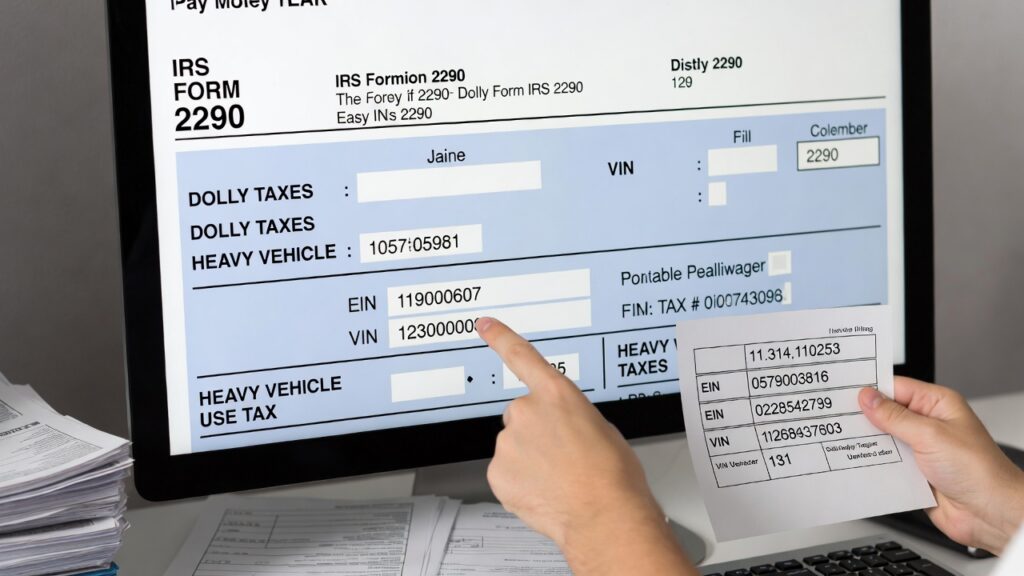
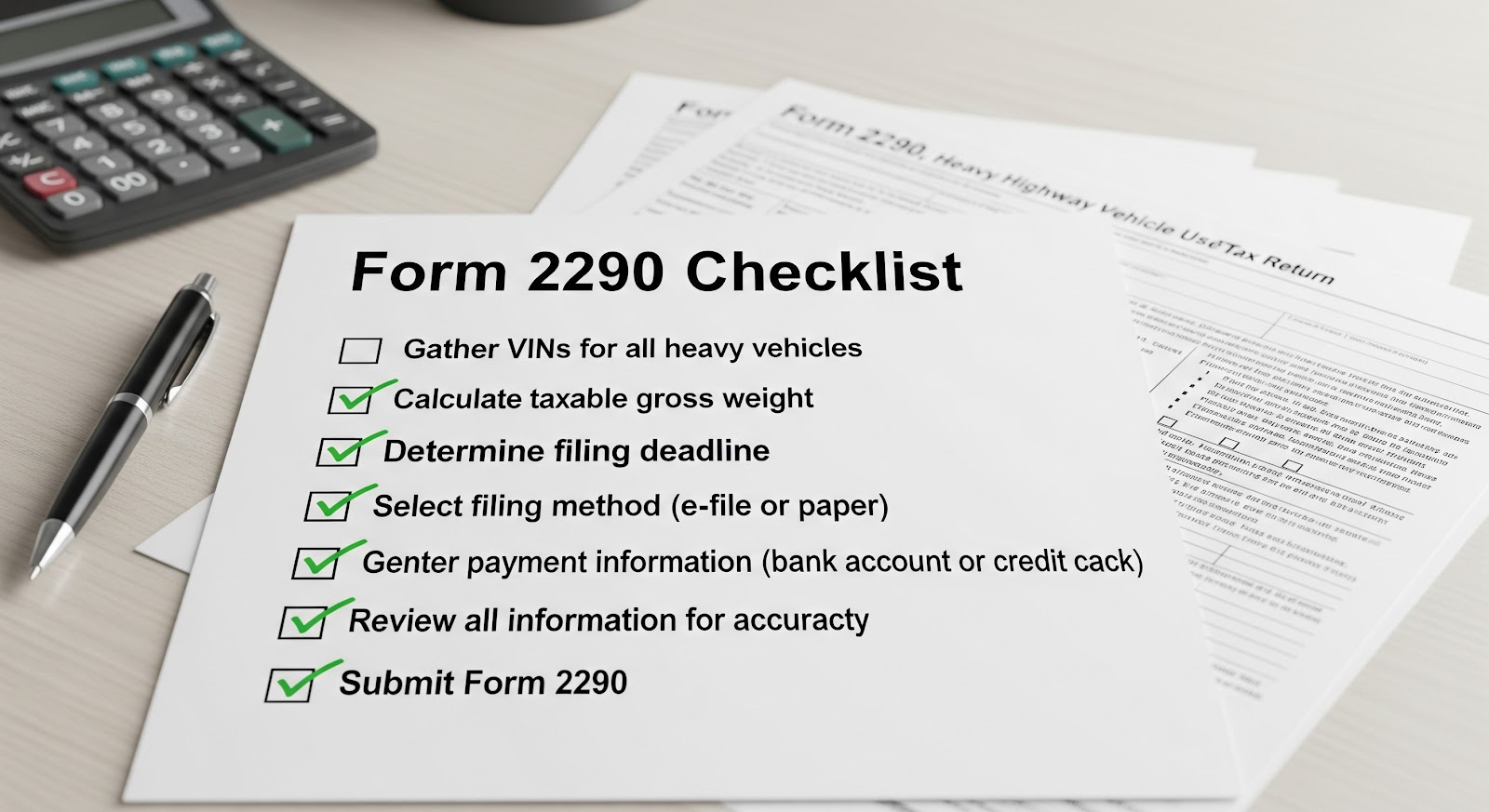
One wrong character in a 17‑character VIN can stop a truck at the counter: no accepted Schedule 1, no tag renewal, and lost time. In form 2290 filing, the VIN is the IRS’s anchor for Heavy Vehicle Use Tax, tying the tax to a specific chassis on vehicles 55,000 pounds or more. That makes accuracy non‑negotiable.
If you run a truck, manage a fleet, or handle back‑office compliance, you’ve likely felt how a tiny VIN error snowballs—confusing 1 with I or 0 with O, pasting a VIN with a hidden space, or triggering IRS rejection code R0000‑194 for a duplicate or invalid entry. These are preventable with the right checks, and fixable fast when they slip through.
This guide shows exactly how to avoid the most common VIN mistakes, validate a VIN before you submit (including check digit and model year), align it with first used month and weight, and file a precise VIN correction when needed. Next, we’ll pinpoint where VIN validation happens during the online process and what to verify before you press submit.
Why VIN Precision Is Non‑Negotiable for Fast 2290 Acceptance
A single character error in a 17-character VIN can derail your Form 2290 filing, delay your stamped Schedule 1, and stall vehicle registration. Because the IRS and DMV rely on the VIN as the exact identifier for each taxable vehicle, even small mistakes—like transposed numbers or confusing lookalike characters—trigger immediate e-file rejections, often under code R0000-194. There’s no downstream correction or “close enough” match; the VIN must align precisely with the title and registration.
Most VIN issues are preventable: mixing up O and 0, I and 1, filing under the wrong unit, duplicating submissions, or using provisional or outdated identifiers. These errors can lead to rejected returns, duplicate tax payments, refund claims, and registration holds during peak season. Getting VIN accuracy right from the start protects cash flow, avoids refiling cycles, and keeps your fleet on the road without interruption.
VIN Decoder Basics: The Fields IRS Systems Validate (and How to Check Them)
A 17-character VIN isn’t random—it follows a structured format that lets you catch most errors before filing Form 2290. Validate the key positions upfront to avoid IRS rejections and DMV registration delays. Positions 1–3 (WMI) confirm manufacturer and region; 4–8 (VDS) must be copied exactly; position 9 is the check digit that flags typos or transposed characters; position 10 identifies the model year (e.g., L=2020 through T=2026); position 11 shows assembly plant; and 12–17 are the unique serial sequence—where dropped zeros often cause failures. VINs never use I, O, or Q and must be entered in uppercase with no spaces or dashes.
Before e-filing, run a quick decoder check to confirm a valid check digit, correct model year, and matching make/model. Pay special attention to rebuilt or multi-stage units to ensure the VIN matches the current title—not an outdated identifier. If WMI, check digit, and model year align with your paperwork, you’re likely filing against the correct chassis and avoiding preventable rejection codes.
Top VIN Entry Mistakes That Cause Instant Rejections (And How to Catch Them)
Small VIN entry mistakes are the leading cause of IRS rejections during Form 2290 filing. E-file systems strictly enforce the 17-character VIN format, reject invalid characters (like I, O, and Q), and instantly flag issues such as transposed digits, hidden spaces, lowercase confusion, or lookalike swaps like O vs 0 or S vs 5—often under rejection code R0000-194. Even a single misplaced character breaks the check-digit calculation in position nine, causing a filing that “looks right” to fail immediately.
Most errors come from copy-paste artifacts, spreadsheet auto-formatting, rushed manual entry, or reading from unclear documents instead of the actual VIN plate. The fix is procedural: always source the VIN from the vehicle itself, enter it in uppercase plain text (no spaces or dashes), verify the check digit and model year with a decoder, and double-check bulk uploads for formatting corruption. These simple safeguards prevent avoidable delays and ensure your Schedule 1 matches the exact chassis you intend to register.
The Most Common VIN Character Confusions—and the Fastest Fixes
Confusing lookalike characters—such as O vs 0, I vs 1, or Z vs 2—is one of the most common reasons a Form 2290 filing gets rejected under code R0000-194. Because modern 17-character VINs never use the letters I, O, or Q, their appearance is an immediate red flag. These errors usually stem from copying VINs from handwritten notes, emails, or low-quality printouts instead of reading directly from the vehicle’s door jamb or dashboard plate.
To prevent rejections, always enter VINs in uppercase with no spaces or punctuation, and verify directly from the metal plate—not secondary documents. A quick two-person read-back or a clear photo of the VIN plate can catch ambiguous characters before submission. Eliminating these simple mix-ups keeps your Schedule 1 on track and avoids unnecessary refiling delays.
Form 2290 Electronic Filling
E-filing Form 2290 isn’t just faster—it catches VIN errors immediately. Electronic systems enforce the 17-character format, block invalid letters like I, O, and Q, and often validate the check digit and model year as you type. That real-time feedback lets you correct mistakes and resubmit within minutes, often receiving a stamped Schedule 1 the same day. Paper filing, while occasionally useful for rare non-standard VIN cases, delays error discovery and can leave you uncovering problems days later at the DMV.
For fleets, bulk uploads speed processing but require safeguards. Hidden spaces, lowercase entries, or transposed digits can slip through spreadsheets and trigger rejections. The best practice is proactive validation: read VINs from the vehicle plate, enforce uppercase 17-character formatting, strip whitespace, and confirm the check digit before submission. When issues arise, correct and refile promptly—or submit a VIN correction if already accepted. A disciplined e-file process keeps filings predictable and prevents unnecessary delays.
Hidden Workflow Errors That Derail Your VIN Filing (and How to Prevent Them)
Small VIN errors usually start in your workflow—not on the truck itself. Blurry photos, glare, or recently replaced door labels can hide character mistakes, while copy-paste from PDFs or emails often adds hidden spaces that cause 17-character validation failures. Bulk CSV uploads introduce another risk: column shifts or formatting changes can pair the wrong VIN with the wrong unit. The fix is procedural discipline—capture clear photos from multiple angles, prioritize the frame stamp and current title, paste VINs into plain text before upload, enforce 17-character uppercase formatting, and spot-check random rows against registration documents.
Outdated fleet lists and incorrect correction methods also create avoidable problems. Filing on sold units, reusing stale spreadsheets, or submitting a brand-new return instead of a VIN correction can trigger duplicate filings or error code R0000-194. Reconcile your active fleet before filing season, archive disposed units, and use the proper VIN correction workflow when needed. Locking down these quiet failure points keeps your Schedule 1 accurate and your trucks moving without delay.
Is “Close Enough” Good Enough for Your VIN? The Truth and the Fix
Many filers believe that if HVUT is paid, a small VIN typo won’t matter—but the VIN is the exact record key the IRS and DMV use to identify a specific vehicle. E-file systems validate all 17 characters, including the check digit and model year code, and even a one-character error can trigger rejection code R0000-194 or produce a Schedule 1 that doesn’t match your title. When that happens, the DMV will typically refuse registration until the VIN is corrected.
There’s no such thing as “close enough” with VINs. A transposed digit, mistyped character, or wrong unit number can require a formal VIN correction—or even a refund claim if tax was applied to the wrong vehicle. The fastest path is precision: verify directly from the plate or title, confirm the check digit before filing, and fix errors immediately. Accuracy upfront prevents delays, duplicate payments, and registration headaches later.
Building a VIN Governance System That Prevents Rejections and Delays
VIN accuracy isn’t just about typing 17 characters correctly—it’s a control point for your entire compliance operation. The VIN ties together IRS filings, DMV/IRP registration, insurance records, and roadside enforcement, so treating it like a permanent account number creates alignment across agencies. When handled casually, small errors lead to rejections, duplicate payments, and registration delays; when governed intentionally, filings become predictable and auditable each season.
The solution is simple governance. Maintain a single master VIN register tied to each unit’s EIN, weight class, and first-used month, supported by plate photos and title scans. Enforce uppercase formatting, validate the check digit and model year, require a second-person or automated review, and run a brief pre-season check before HVUT filing opens. Whether you manage one truck or hundreds, these small safeguards prevent R0000-194 rejections, protect cash flow, and keep Schedule 1 approvals moving without disruption.
Conclusion: File with Confidence, Not Corrections
You’ve seen how a single VIN digit can trigger R0000‑194, stall a stamped Schedule 1, and tie up cash with duplicate payments. If you want a clean, fast outcome in form 2290 filing, the safest path is to validate VINs in real time, align first used month and weight to what’s on the title and registration, and use a VIN correction—not a new return—if an error slips through.
ExpressTruckTax is built for that exact workflow: IRS‑authorized e‑file with instant VIN format and check‑digit checks, duplicate detection across EIN + VIN + first used month + weight, bulk uploads with data scrubbing, and guided VIN corrections and amendments—plus multiple IRS payment options and same‑day Schedule 1 delivery after acceptance. Keep your return clean and your trucks moving—File form 2290 today.
FAQs
Form 2290 & HVUT E-Filing FAQs
Q: What’s the fastest way to file Form 2290 online and get my Schedule 1 today?
A: Use an IRS-authorized e-file provider and prepare clean data before you begin. Read each VIN directly from the plate or title, confirm 17 uppercase characters with no I, O, or Q, and validate the 9th-position check digit using the NHTSA VIN Decoder. Align the first used month and taxable gross weight with the truck’s actual in-service date and registration. Clean filings are often accepted the same day, and your stamped Schedule 1 is delivered immediately after IRS acceptance.
Q: What are the best online services for filing Form 2290?
A: Choose a platform that validates VIN format and the 9th-position check digit in real time, and flags duplicate patterns based on EIN, VIN, first used month, and weight. Look for built-in VIN corrections, amendment support, and Form 8849 Schedule 6 filing, along with bulk upload tools that include data scrubbing for fleets. Multiple IRS payment options and responsive deadline support are also important. Reviews mentioning same-day acceptance with clean data are a strong indicator of reliability.
Q: How do I e-file 2290 for multiple trucks in one go?
A: Create a master VIN register tying each VIN to the correct first used month, taxable gross weight, and EIN for the current tax period. Clean your CSV file by enforcing 17 uppercase characters, removing spaces and hyphens, and rejecting I, O, and Q. Spot-check the 9th-position check digit using the NHTSA decoder. Import through your provider’s bulk upload feature and apply a duplicate rule: one VIN, one EIN, one weight, and one first used month per tax year. Complete a two-person verification on a sample set before submitting.
Q: What’s the cheapest way to file Form 2290 this year?
A: Accuracy saves the most money by avoiding rejections, rework fees, and duplicate payments. Select an e-file plan that matches your vehicle count, and use direct debit or EFTPS to avoid additional card processing fees when possible. File as suspended only if the vehicle will remain under 5,000 miles (7,500 for agricultural vehicles). Validate VINs in advance and confirm the first used month and taxable gross weight to prevent amendments and refund filings.
Q: How do I fix a wrong VIN on my 2290 and get a corrected Schedule 1?
A: If your original return was accepted, submit a VIN correction rather than filing a new return. Validate the correct VIN by confirming 17 uppercase characters, no I, O, or Q, a valid 9th-position check digit, and the correct model year code in position 10. Corrected Schedule 1 forms are typically issued the same day after IRS acceptance. If you accidentally paid twice, request a credit or refund using Form 8849 Schedule 6 with proof of both payments.
Q: How do I file a 2290 amendment online?
A: File an amendment if taxable gross weight increases, mileage exceeds the suspension limit, or the first used month needs correction. Select the amendment type, enter the VIN, and update the required details. The system will calculate any additional tax due. Validate VIN format carefully to prevent errors such as R0000-194. After IRS acceptance, you will receive an updated Schedule 1.
Q: How can I claim a refund or credit for 2290 tax I overpaid?
A: Use Form 8849 Schedule 6 to request credits or refunds for duplicate payments, vehicles sold or destroyed, or overpayments related to incorrect first used month or taxable gross weight. Attach supporting documentation, including stamped Schedule 1 forms, payment confirmations, and sale or loss documents, along with a brief written explanation. Many e-file systems provide guided steps for uploading attachments. Submit promptly once the overpayment is confirmed, as processing times vary.
Q: What do I need to file Form 2290 online?
A: You need:
An EIN and business information
Each vehicle’s VIN
First used month
Taxable gross weight
Usage type (taxable or suspended; agricultural or non-agricultural)
IRS payment method selection (direct debit, EFTPS, or card)
Read the VIN directly from the plate or title and confirm 17 uppercase characters with a valid check digit and model year code. Having complete and verified information allows you to file quickly and avoid corrections.
Q: How can I pay my 2290 HVUT online?
A: Payment options include direct debit from a bank account, EFTPS, or credit/debit card through an approved processor. Some filers may also use same-day wire transfers. Select your payment method during the e-file process and schedule payment by the due date. IRS acceptance and issuance of your stamped Schedule 1 depend on a valid return, not the payment method selected. Retain payment confirmations for your records.
Q: I’m filing late on 2290—what should I do to get my Schedule 1 fast?
A: E-file immediately using accurate VIN data and the correct first used month and taxable gross weight. Penalties and interest may apply if filing past the deadline. Validate each VIN using the NHTSA decoder to confirm length, allowed characters, and 9th-position check digit to avoid rejections. File as suspended only if the vehicle will remain under the mileage limit; otherwise, file as taxable. If an error is discovered after acceptance, submit a VIN correction instead of filing a duplicate return to prevent additional payments.
If you operate a heavy vehicle with a gross weight of 55,000 pounds or more on public highways, you’re required by the IRS to file Form 2290 and pay the Heavy Vehicle Use Tax annually. This tax helps fund the maintenance and repair of the nation’s highway system, ensuring the roads that commercial vehicles rely on remain safe and functional.
The HVUT tax year runs from July 1 through June 30, and most truck owners file their annual Form 2290 during the initial filing period, which ends August 31. But what happens if you buy a new truck or place a vehicle into service partway through the year, say, in November or March? That’s where pro-rated HVUT filing comes into play.
What is Pro-Rated HVUT Filing?
Pro-rated HVUT filing refers to the process of calculating and filing the Heavy Vehicle Use Tax (Form 2290) for a vehicle that was put into service after the start of the current HVUT tax year, which begins on July 1 and ends on June 30 of the following year.
Instead of paying the full year’s tax, you’re only responsible for the portion of the tax year during which the vehicle is actually used. The IRS calculates this based on the month the vehicle is first used on public highways, not the date of purchase or delivery. For example, if you purchase a truck in December but don’t operate it until January, January is considered your First Use Month, and that’s when your tax liability begins.
IRS Rule on First Use Month
The IRS requires Form 2290 to be filed by the end of the month following the vehicle’s first use. This means that if your truck is first used in January, your pro-rated Form 2290 is due by February 29 (or 28 in non-leap years). Filing late can result in penalties, interest charges, and delays in obtaining your IRS-stamped Schedule 1, which is required to register your vehicle with the DMV or renew your tags.
Why Pro-Rated Filing Matters
Timely pro-rated HVUT filing is crucial for:
Staying IRS compliant
Avoiding late filing penalties and interest
Ensuring your vehicle can be registered or remain legally on the road
Preventing costly delays in operations, especially for new or leased vehicles
Whether you’re an independent owner-operator or managing a growing fleet, understanding and acting on your pro-rated tax obligation is an essential part of running a compliant and efficient trucking operation.
When Is Pro-Rated HVUT Required?
You are required to file a pro-rated Form 2290 any time a taxable vehicle is first put into service after the start of the current HVUT tax year, which begins on July 1. Instead of paying the full year’s tax, the IRS allows you to pay only for the months the vehicle is actually used on public highways, starting from its first use month.
Here are the most common situations that require pro-rated HVUT filing:
Buying a New Truck Mid-Tax Year
If you purchase a new truck after July, for example, in October, and begin using it on the road that same month, you must file a pro-rated Form 2290 by the end of November (the month following first use). The tax will only apply from October through the end of the tax year (June 30), not the full 12 months.
Adding a Truck to Your Fleet
Fleets often grow throughout the year as business expands or contracts. If you acquire and begin using a new or used vehicle after July, even if you already filed Form 2290 for other trucks, you are still required to file a separate pro-rated return for any additional vehicle(s) put into service mid-year.
Bringing a Truck Out of Storage
If you have a vehicle that was previously suspended, stored, or not in use and you decide to place it back on the road, it becomes taxable again. You’ll need to file a pro-rated 2290 return based on the month it returns to active use. Even if the vehicle was filed as “suspended” earlier in the year, you must now pay HVUT for the months it will be used going forward.
It’s NOT Based on the Purchase Date
A common mistake is assuming the tax is due based on when the vehicle was purchased or delivered. However, the IRS bases HVUT liability strictly on the first use month, the first month the truck is operated on public highways, regardless of when it was bought. This distinction is critical for compliance and avoiding unnecessary penalties or overpayment.
By recognizing these scenarios and understanding the IRS’s first use month rule, you can ensure that you’re filing your HVUT accurately and on time, keeping your trucks on the road without disruption.
Step-by-Step: How to File a Pro-Rated HVUT Return
Filing a pro-rated HVUT return with ExpressTruckTax is simple, fast, and IRS-compliant. Whether you’re adding a new vehicle to your fleet or putting a truck into service mid-year, follow these steps to ensure a smooth filing process and receive your IRS-stamped Schedule 1 in minutes.
Step 1: Log In or Create an ExpressTruckTax Account
Visit ExpressTruckTax.com and either log in to your existing account or create a free account if you’re a new user. The platform is available via desktop and mobile app, giving you flexibility to file from anywhere.
Step 2: Start a New Return and Select “Pro-Rated 2290”
Once logged in, click “Start New Return” and choose Form 2290 for the appropriate tax year. You’ll then select the “Pro-Rated Filing” option for a new vehicle first used after July.
Step 3: Enter Filing Details
You’ll be prompted to enter:
First Use Month: This is the first month your vehicle operated on public highways, not the purchase or delivery date. The IRS uses this date to determine how much HVUT you owe.
Vehicle Details:
VIN – Double-check for accuracy to avoid rejections.
Taxable Gross Weight – Select the correct weight category. This determines your tax amount.
Logging Status – Indicate if the vehicle is used for agricultural purposes or not.
Business Information:
EIN – Required by the IRS; SSNs are not accepted.
Business name, address, and contact details.
ExpressTruckTax offers free VIN validation to help you avoid common filing errors.
Step 4: Choose Your IRS Payment Method
Select your preferred IRS tax payment method from the following options:
EFTPS – Schedule payment directly through IRS.gov.
Electronic Funds Withdrawal – Securely debit from your bank account during filing.
Credit/Debit Card – Pay via IRS-approved processors.
Check or Money Order – Mail payment to the IRS using payment voucher (Form 2290-V).
Pro tip: If using EFTPS, be sure to schedule your payment at least one day before the IRS deadline to ensure it posts on time.
Step 5: Review and Transmit
Before submitting, review your return using ExpressTruckTax’s built-in error check system, which catches common mistakes like:
Incorrect VINs
Invalid EINs
Mismatched first use dates
Once everything is verified, click “Transmit to IRS.”
Step 6: Receive Your IRS-Stamped Schedule 1 Instantly
After transmission, you’ll typically receive your IRS-stamped Schedule 1 within minutes, directly in your ExpressTruckTax account and by email. You can also opt to receive it via fax or text message.
This Schedule 1 is your official proof of payment and is required for:
DMV vehicle registration
Tag renewals
Lease agreements
DOT compliance checks
By filing with ExpressTruckTax, you avoid paperwork headaches and get the peace of mind that your return is accurate, timely, and fully IRS-compliant. Plus, our U.S.-based bilingual support team is here to help you every step of the way.
Benefits of Filing with ExpressTruckTax
When it comes to filing your pro-rated HVUT or full-year Form 2290, choosing the right IRS-authorized provider makes all the difference. ExpressTruckTax has been the trusted leader in HVUT e-filing since 2010, helping over 5 million truckers stay compliant and on the road. Here’s why thousands of owner-operators, fleet managers, and tax professionals choose ExpressTruckTax:
Instant IRS-Stamped Schedule 1 for DMV Use
Time is money in the trucking industry. With ExpressTruckTax, your return is transmitted directly to the IRS, and in most cases, you’ll receive your official IRS-stamped Schedule 1 within minutes. This document is required to:
Register your vehicle with the DMV
Renew your tags or apportioned plates
Prove compliance during audits or inspections
You can access your Schedule 1 instantly via email, download it from your account, or have it faxed or texted to you on the spot.
Built-In HVUT Calculator
Not sure how much tax you owe for a new vehicle filed mid-year? No problem. ExpressTruckTax features an automated HVUT calculator that:
Determines your pro-rated tax amount based on first use month
Applies the correct rate based on gross weight and logging status
Eliminates manual calculations and guesswork
This helps ensure accuracy and compliance, reducing the risk of IRS rejections or penalties.
Free VIN Corrections
Entered the wrong VIN by mistake? It happens, especially with 17-digit codes. If you originally filed with ExpressTruckTax and your return is accepted, you can file a VIN correction at no cost. This means:
No additional IRS penalties
No delays in getting an updated Schedule 1
A smoother process for registrations or renewals
US-Based, Bilingual Customer Support
When you have questions, you deserve to speak to a real person who understands the trucking industry. ExpressTruckTax offers:
Live, bilingual (English & Spanish) support
Based in Rock Hill, South Carolina, not outsourced overseas
Available via phone, email, and live chat
Whether you’re filing for one truck or managing a fleet of 500, our friendly team is here to help every step of the way.
Mobile App Filing On the Go
You don’t need to be at a desk to file your Form 2290. ExpressTruckTax offers a powerful mobile app that lets you:
File from your phone or tablet
Receive push notifications about IRS status
Store and download Schedule 1 anytime, anywhere
Complete VIN corrections or amendments on the go
Perfect for owner-operators and fleet drivers who spend most of their time on the road.
With ExpressTruckTax, you get more than just a filing tool, you get a full-service solution designed specifically for the trucking industry. Fast, secure, and backed by real people who care about your success.
If you operate a heavy vehicle with a taxable gross weight of 55,000 pounds or more, there’s one document you can’t afford to overlook: IRS Schedule 1. This crucial form isn’t just another piece of paperwork, it’s your official proof that you’ve filed Form 2290, the Heavy Vehicle Use Tax return, and paid any taxes due to the IRS.
Whether you’re an owner-operator, fleet manager, or handle compliance for a trucking business, understanding what Schedule 1 is and why it matters is essential to keeping your operations legal and on the road.
What is IRS Schedule 1?
IRS Schedule 1 is the stamped confirmation page you receive after filing Form 2290 with the IRS. It includes important details such as:
Your Employer Identification Number
The Vehicle Identification Numbers for your trucks
The tax period
And most importantly, the IRS e-file watermark or stamp proving the return was accepted
This document is required by law and is a key part of staying compliant with federal tax regulations for heavy highway vehicles.
Why Schedule 1 Matters for Truckers
For most truckers, the most immediate reason Schedule 1 is important is this: You can’t register your vehicle with the DMV without it.
Whether you’re renewing your tags, updating your registration, or purchasing a new truck, state DMVs require a current, IRS-stamped Schedule 1 to process your request. Without it, you could face delays in registration, fines, or even be pulled off the road.
Beyond registration, having an accurate and up-to-date Schedule 1 helps you:
Avoid IRS penalties for non-compliance
Prove tax payment during audits
Maintain accurate business and fleet records
Ensure you’re fully covered for insurance and leasing purposes
IRS Schedule 1 is a critical piece of your compliance puzzle. And the good news? Getting it doesn’t have to be complicated, especially if you e-file with an IRS-authorized provider like ExpressTruckTax, where most filers receive their Schedule 1 in minutes, not days.
Who Needs IRS Schedule 1?
If you’re involved in the operation, ownership, or management of heavy highway vehicles, IRS Schedule 1 is not optional, it’s essential. Whether you’re behind the wheel or managing a fleet from behind a desk, here’s who must file Form 2290 and keep a valid Schedule 1 on hand:
Owner-Operators
If you own and operate your own truck with a gross weight of 55,000 pounds or more, you’re legally required to file Form 2290 and obtain a Schedule 1. This form proves to the IRS, and the DMV, that you’ve paid the necessary Heavy Vehicle Use Tax for the year. Without it, you can’t:
Register or renew your vehicle registration
Get license plates
Stay compliant with federal regulations
Even if your truck is paid off and you’re the sole operator, you still need to file annually and have an up-to-date Schedule 1.
Fleet Managers
Managing a fleet of trucks? Whether it’s a handful of vehicles or thousands, each qualifying vehicle needs to be reported on Form 2290, and each must be covered by a valid Schedule 1. Fleet managers are typically responsible for:
Bulk filing Form 2290 for multiple vehicles
Ensuring each VIN is listed correctly
Distributing copies of Schedule 1 for registration and compliance
Filing 2290 Amendments if vehicle weights change or mileage limits are exceeded
Fleet compliance hinges on accurate and timely Schedule 1 filings.
Leasing Companies
If your company leases heavy vehicles under long-term contracts, the responsibility to file Form 2290 and secure Schedule 1 usually falls on you, not the lessee. The IRS defines long-term leases as contracts lasting 30 days or more, and in such cases, the leasing company is considered the owner for HVUT purposes. You’ll need to:
File Form 2290 using your company’s EIN
Provide Schedule 1 to your lessees so they can register the vehicles
Failing to do so could delay customer registrations or result in compliance penalties.
Agricultural vs. Non-Agricultural Vehicles
All heavy vehicles used on public highways are subject to HVUT, but the rules differ slightly depending on use:
Agricultural Vehicles:
Defined by the IRS as vehicles used primarily for farming
Must file Form 2290 if gross weight is 55,000 lbs+
Enjoy a higher mileage exemption limit of 7,500 miles annually (compared to 5,000 for regular vehicles)
Still require a Schedule 1, even if taxes aren’t owed due to mileage suspension
Non-Agricultural Vehicles:
Includes trucks used for freight, construction, towing, and other commercial uses
Must file Form 2290 and pay HVUT if mileage exceeds 5,000 annually
Schedule 1 is always required, whether tax is owed or not
Regardless of tax liability, if your vehicle meets the weight threshold, you must file and keep Schedule 1 as proof.
Anyone Registering a Heavy Vehicle with the DMV
This is the most universal requirement:
If you’re trying to register a heavy highway vehicle, your state DMV will require a valid, IRS-stamped Schedule 1.
This includes:
New vehicle purchases
Tag renewals
Title transfers
IRP applications
No stamped Schedule 1? No tags, no registration, no road time.
When Do You Need to File Form 2290 to Get Schedule 1?
Understanding the deadlines for filing Form 2290 is key to avoiding penalties and ensuring you get your IRS-stamped Schedule 1 in time for vehicle registration and compliance. The IRS has strict filing timelines based on when a vehicle is first used on public highways, and missing them can result in costly fines and delays.
Here’s what you need to know:
HVUT Tax Year Runs from July 1 to June 30
The Heavy Vehicle Use Tax (HVUT) operates on a tax year that begins July 1 and ends the following June 30. This is not the same as the calendar year or standard tax year used for income taxes.
If your vehicle is active on the road at the start of the HVUT tax year (July 1), you’re expected to file Form 2290 and obtain your Schedule 1 for that vehicle as part of your annual compliance.
Deadline: August 31 for Vehicles on the Road as of July 1
For vehicles that were already in use on or before July 1, the filing deadline is August 31 of that same year. This is the most common due date for most truckers and fleets.
For example:
If your truck was on the road July 1, 2025
You must file by August 31, 2025
Your Schedule 1 will cover the tax period from July 1, 2025, to June 30, 2026
Failing to file by August 31 can lead to IRS penalties, interest, and delays in renewing your vehicle registration.
Pro-Rated Deadlines for New Vehicles (Based on First Use Month)
If you add a new vehicle to your fleet or put a truck on the road mid-year, your Form 2290 filing deadline is pro-rated and based on the First Used Month of the vehicle.
The IRS requires you to:
File Form 2290 by the last day of the month following the vehicle’s first use
Only pay HVUT taxes for the months remaining in the tax year
Example: If your truck’s first use on public highways was in October, you must:
File Form 2290 by November 30
Pay a prorated HVUT amount covering October to June
This ensures you’re not overpaying tax, but you’re still compliant and can receive a valid Schedule 1.
ExpressTruckTax automatically calculates your pro-rated tax and due date based on the First Used Month you enter.
Penalties for Late Filing or Missing Schedule 1
The IRS takes HVUT compliance seriously. Failing to file Form 2290 or obtain your stamped Schedule 1 on time can result in:
Late Filing Penalties
4.5% of the total tax due, assessed monthly (up to 5 months)
Late Payment Interest
0.5% per month of the unpaid tax
Additional interest charges may apply
Business Consequences
Inability to register or renew vehicle registration at the DMV
Delays in putting new vehicles on the road
Risk of fines during DOT audits
Pro Tip: If you file through ExpressTruckTax, you’ll receive instant email notifications and alerts about upcoming deadlines, helping you stay ahead of penalties and stay compliant year-round.
How to Get IRS Schedule 1 Quickly
When it comes to getting your IRS Schedule 1, speed and accuracy matter. Whether you’re registering a new truck, renewing your tags, or undergoing a DOT audit, waiting days, or even weeks, for paperwork can put your operation on hold.
The fastest and most reliable way to receive your Schedule 1 is by filing Form 2290 electronically with an IRS-authorized e-file provider like ExpressTruckTax.
A. Filing Form 2290 Electronically
E-filing has quickly become the standard for HVUT compliance, especially for fleet owners and tax professionals managing multiple vehicles.
E-filing Required for 25 or More Vehicles
The IRS requires electronic filing if you’re reporting 25 or more vehicles on Form 2290. Even for fewer vehicles, e-filing is recommended because it eliminates:
Mail delays
Manual IRS processing time
Paper-based errors
It’s faster, safer, and gives you proof of compliance in minutes, not weeks.
Fastest Way to Receive Schedule 1 (Usually Within Minutes)
When you e-file, your return is transmitted directly to the IRS through a secure system. Once approved, you’ll receive your IRS-stamped Schedule 1 within a few minutes in most cases.
This allows you to:
Immediately register your vehicle with the DMV
Forward proof to leasing companies or insurers
Keep your trucks moving without delay
E-filing vs. Paper Filing: A Timeframe Comparison
Filing Method
Processing Time
Schedule 1 Delivery
Risks
E-filing
A few minutes to 24 hours
Instant (email, fax, or download)
Very low
Paper Filing (by mail)
4–6 weeks (or longer)
Mailed copy
Delays, lost mail, manual errors
E-filing is clearly the better option, especially if you’re under a tight deadline.
B. Using ExpressTruckTax
As the #1 IRS-authorized e-file provider for Form 2290, ExpressTruckTax offers truckers a fast, secure, and stress-free way to get their IRS Schedule 1. Whether you’re a first-time filer or managing thousands of trucks, our system is built to save time and reduce errors.
3-Step Easy Filing Process
Enter Business & Vehicle Details – Just your EIN, VIN, and gross vehicle weight.
Choose a Payment Method – EFTPS, EFW, debit/credit card, or check/money order.
Transmit Electronically – Review your return, submit, and receive your Schedule 1 in minutes.
The process is intuitive and can be completed in less than 10 minutes.
Guaranteed Schedule 1 or Your Money Back
We’re so confident in our system that we offer a Schedule 1 Guarantee:
If you don’t receive your IRS-stamped Schedule 1, we’ll refund your filing fee.
This peace of mind makes ExpressTruckTax the trusted solution for over 5 million filings.
Instant Delivery Options
Once your return is accepted, you’ll get your Schedule 1 via:
Email (automatically sent)
Fax (optional)
Download from your ExpressTruckTax dashboard at any time
You can also resend or reprint it as often as you need, at no extra cost.
Mobile App Convenience
Need to file from the road? Use the ExpressTruckTax mobile app to:
Get instant push notifications when your Schedule 1 is ready
Perfect for owner-operators and fleet managers who need flexibility and speed.
IRS-Authorized, Secure, and Error-Checked
ExpressTruckTax is:
An IRS-authorized e-file provider
SSL-encrypted and Comodo Hacker Safe certified
Built with smart error checks to reduce VIN mistakes and rejections
Our direct IRS integration ensures fast processing and real-time filing updates.
Schedule 1 for Tax Professionals & Fleet Managers
While individual owner-operators often file for just one or two vehicles, tax professionals and fleet managers deal with dozens, hundreds, or even thousands of trucks, and that means handling just as many IRS Schedule 1s. Managing HVUT compliance at scale requires specialized tools to ensure speed, accuracy, and accountability.
That’s where ExpressTruckTax excels, offering powerful features built specifically for high-volume filers who need to stay organized, compliant, and audit-ready.
Multi-Client Dashboards for Tax Professionals
For CPAs, enrolled agents, and tax preparers handling 2290 filings for multiple clients, ExpressTruckTax provides a centralized dashboard to:
Add and manage unlimited clients
File 2290s for each business under one login
View filing history and access IRS Schedule 1s instantly
Track which clients are due, filed, or pending
Store and retrieve documents for future returns or audits
You can also manage multiple EINs, keep client information securely stored, and download Schedule 1s any time for DMV or registration purposes.
Bonus: You can brand the portal with your firm’s logo and offer a seamless, professional experience to your clients.
Bulk Filing Capabilities, Upload Up to 40,000 VINs
For large fleets, entering vehicle data manually just isn’t an option. ExpressTruckTax offers robust bulk upload tools that allow you to:
Import thousands of vehicles at once using Excel or CSV templates
Instantly check for errors, duplicate VINs, or formatting issues
Group vehicles by weight categories for efficient tax calculations
Save and reuse vehicle lists year after year
This is ideal for:
Fleets with 25+ vehicles (mandatory e-filing threshold)
Leasing companies with frequent vehicle changes
DOT compliance teams that need speed and precision
Plus, every return includes built-in error-checks to prevent rejections due to typos or invalid VINs.
Direct Integrations with State DMVs
ExpressTruckTax is an official partner with multiple state Departments of Motor Vehicles, streamlining the process of Schedule 1 verification.
This offers major benefits for tax professionals and fleet managers:
Faster vehicle registrations
Reduced DMV rejections due to incorrect or missing Schedule 1s
Real-time confirmation of IRS filings
Enhanced fraud prevention through EIN and VIN validation tools
DMV staff can verify e-filed Schedule 1s directly, reducing paperwork delays and errors during registration or renewal.
Schedule 1 Management for Compliance & IRS Audits
Fleet operators and tax professionals often face compliance audits, where proving HVUT payment and proper documentation is critical. With ExpressTruckTax, you can:
Download IRS-stamped Schedule 1s on demand for any filing
Maintain organized digital records for all EINs and vehicles
Generate detailed reports on tax payments and filing status
Re-send or reprint documents any time, no paper trail needed
Having a centralized system to store and retrieve these forms can save hours of manual work and protect your business during an audit.
Whether you’re filing for one client or 40,000 trucks, ExpressTruckTax gives you:
A unified dashboard
Time-saving bulk upload tools
DMV-ready compliance support
Unlimited access to critical documents
You get the power and reliability to handle HVUT filing season without bottlenecks, rejections, or late penalties, keeping your clients and your fleet on the road.
If you operate heavy vehicles on public highways weighing 55,000 pounds or more, you’re required by the IRS to file Form 2290 and pay the Heavy Vehicle Use Tax (HVUT) annually. This tax helps maintain the nation’s roadways and is critical for compliance with federal regulations, especially for trucking companies, owner-operators, and fleet managers.
Filing Form 2290 is relatively straightforward for a single truck, but the process becomes significantly more complex when dealing with a fleet of 25 or more vehicles. The volume of data, the need for speed and accuracy, and the IRS’s strict requirements make it essential to follow the correct process and use the right tools.
One key difference for large fleets is that the IRS mandates electronic filing for any taxpayer reporting 25 or more taxable vehicles for any tax period. This means paper forms are not accepted, and using an IRS-authorized e-file provider becomes a legal necessity, not just a convenience.
Beyond just compliance, e-filing offers operational benefits such as faster processing, fewer errors, and quicker access to the IRS-stamped Schedule 1, which is required for vehicle registration with the DMV. For large fleets, choosing the right e-filing solution is critical to avoiding delays, penalties, and administrative headaches.
Who Needs to File for a Fleet of 25+ Vehicles?
If you’re responsible for managing or operating a large number of heavy vehicles, typically 25 or more, you’re required by the IRS to file Form 2290 electronically each year. This applies to a wide range of professionals and businesses in the transportation and logistics industry. Understanding who qualifies under this requirement is key to ensuring compliance and avoiding penalties.
Owner-Operators with Large Fleets
Owner-operators who have grown their business to manage 25 or more trucks fall under the IRS e-filing mandate. Even if your operation started small, once you reach the 25-vehicle threshold, your filing responsibilities change. Whether all vehicles are owned outright or financed, if you’re operating them on public highways, you’re required to file Form 2290 and pay HVUT.
Fleet Managers, Logistics Providers, and Leasing Companies
Larger organizations, including trucking fleets, logistics and freight companies, and vehicle leasing firms, often manage hundreds or even thousands of taxable vehicles. These professionals are typically tasked with overseeing compliance for multiple units at once, which can include tracking VINs, weights, mileage thresholds, and first-use months. Filing for these entities isn’t just about compliance, it’s about streamlining operations, avoiding errors, and ensuring every vehicle remains registered and road-ready.
In many cases, leasing companies or logistics businesses that offer long-term leases may still be responsible for filing HVUT on behalf of the lessee, depending on how the contracts are structured. It’s important to clearly understand which party is liable for the tax to ensure timely filings.
Anyone Responsible for 25+ Taxable Vehicles Over 55,000 lbs
This includes companies or individuals managing fleets across multiple locations or businesses with several EINs. If you’re responsible for tracking, maintaining, and reporting on a fleet of heavy vehicles with a gross taxable weight of 55,000 pounds or more, and you’re filing for 25 or more of those vehicles in a single tax year, you must e-file Form 2290.
The IRS considers each VIN reported on Form 2290 as a unique taxable vehicle. So even if you manage 25+ vehicles across multiple categories, taxable, suspended, or agricultural, once you hit that 25-vehicle threshold, electronic filing is not optional.
IRS Requirements for Large Fleet Filings
When filing Form 2290 for a fleet of 25 or more vehicles, the IRS enforces specific requirements designed to ensure accuracy, efficiency, and compliance. Large fleet operators must meet these standards to avoid rejected returns, penalties, and delays in receiving their Schedule 1.
Mandatory E-Filing for 25+ Vehicles
The IRS requires electronic filing for any Form 2290 return that reports 25 or more taxable vehicles for a single tax period. Paper filing is not permitted for large fleet filings and will result in processing delays or outright rejection.
E-filing is not just faster, it significantly reduces errors by validating data before transmission. Large fleets must file through an IRS-authorized e-file provider, which securely transmits the return directly to the IRS and provides quicker access to the stamped Schedule 1 needed for DMV registration.
Valid Employer Identification Number Required
All Form 2290 filings must be submitted using a valid Employer Identification Number (EIN). The IRS does not accept Social Security Numbers (SSNs) for HVUT filings.
If your business is newly established, your EIN must be issued by the IRS and fully activated before filing. Attempting to file with an incorrect or newly issued EIN that hasn’t been recognized by IRS systems can result in a rejected return, something especially costly for large fleets operating on tight timelines.
Required Information for Large Fleet Filings
To successfully file Form 2290 for a large fleet, you’ll need to gather and verify the following information for each vehicle:
EIN: The EIN under which the fleet operates and pays HVUT.
Vehicle Identification Numbers: Each vehicle must be reported with a 17-character VIN. VIN accuracy is critical, common errors such as transposed numbers, incorrect characters (like O vs. 0), or using internal asset IDs instead of VINs can cause IRS rejections and DMV registration issues.
Taxable Gross Weight: Vehicles must be categorized into the correct IRS taxable gross weight class, which determines the HVUT amount owed. This includes the weight of the truck, trailer, and maximum load typically carried.
First Use Month: The month the vehicle was first operated on public highways during the tax year. This determines whether the tax is owed for the full year or calculated on a prorated basis for newly added vehicles.
For fleets with dozens, or even hundreds, of vehicles, maintaining accurate and up-to-date records is essential. Using bulk upload tools and built-in error checks can help ensure every vehicle is reported correctly and prevent costly delays.
Why Choose ExpressTruckTax for Fleet of 25+ Vehicles Tax Filing
When managing tax compliance for a fleet of 25 or more vehicles, accuracy, speed, and dependability are non-negotiable. That’s why thousands of fleet managers, leasing companies, and logistics providers trust ExpressTruckTax as their go-to solution for Form 2290 e-filing. Backed by over a decade of industry experience, ExpressTruckTax offers the tools and support large fleets need to stay compliant, without the hassle.
Trusted by Over 5 Million Filings
Since its launch in 2010, ExpressTruckTax has processed more than 5 million Form 2290 returns, helping businesses large and small meet IRS requirements with ease. Our platform is built with the unique needs of fleet operators in mind, ensuring you can file quickly, reduce manual errors, and avoid costly penalties.
Used by Major Fleet Operators and Leasing Companies Nationwide
Whether you’re a national carrier with thousands of vehicles or a regional leasing company with a growing operation, ExpressTruckTax is designed to scale with your business. From bulk VIN uploads to multi-EIN support, our system simplifies complex filings, making it easier than ever to file for hundreds or even thousands of trucks in a single session.
Many of the nation’s leading fleets rely on ExpressTruckTax not only for tax compliance, but also for the speed and accuracy we bring to their operations. Our bulk upload features, real-time filing status updates, and built-in audit checks make managing HVUT filings for large fleets efficient and stress-free.
Direct IRS Integration with Guaranteed Schedule 1
ExpressTruckTax is an IRS-authorized e-file provider, which means your Form 2290 is submitted directly to the IRS through our secure, encrypted system. Once accepted, you’ll receive your IRS-stamped Schedule 1 instantly, guaranteed, or your money back.
Need that Schedule 1 for DMV registration? We’ve got you covered with automatic notifications and instant access to your documents from your dashboard. You can also email, fax, or print your Schedule 1 straight from the platform.
U.S.-Based Bilingual Support (Phone, Email, and Chat)
Our commitment to customer service sets us apart. With ExpressTruckTax, you get access to a team of real, U.S.-based support specialists, not robots or outsourced agents. Whether you speak English or Spanish, our bilingual team is here to assist via phone, email, or live chat.
Need help bulk uploading vehicle data? Got a rejected return and not sure why? Need to refile an amendment quickly? Just give us a call, we’ve helped thousands of fleet operators fix issues fast and stay compliant without delay.
If you operate a heavy vehicle weighing 55,000 pounds or more on public highways, you’re required to file IRS Form 2290, also known as the Heavy Vehicle Use Tax (HVUT) return. This annual filing ensures that all heavy vehicles contribute fairly to the upkeep of the roads they use. The HVUT is collected by the IRS and helps fund federal highway programs.
Whether you’re an owner-operator, part of a fleet, or involved in agricultural operations, compliance with Form 2290 is essential—not just to avoid IRS penalties, but also to keep your vehicle legally registered. Without an IRS-stamped Schedule 1, your state’s DMV will typically refuse to register your vehicle or renew tags.
But what if your vehicle is used exclusively for farming? Do the same HVUT rules apply?
That’s where things get interesting.
The IRS makes special allowances for agricultural vehicles, recognizing that these trucks and tractors generally travel fewer miles on public roads. If your vehicle qualifies as “agricultural” under IRS guidelines, you may be eligible for significant tax relief—even if you still need to file Form 2290.
What Is an Agricultural Vehicle According to the IRS?
Not all heavy vehicles are treated the same under IRS regulations. If you’re a farmer or agricultural operator, your vehicle may fall under a special category that offers tax benefits, but only if it meets the IRS definition of an agricultural vehicle.
So, what exactly qualifies?
According to the IRS, an agricultural vehicle is a highway motor vehicle that is:
Primarily used for farming purposes, and
Registered with your state as an agricultural vehicle.
Let’s break that down:
1. Primarily Used for Farming Purposes (50% Rule)
To be considered “primarily” used for farming, more than 50% of the vehicle’s total mileage during the tax period must be related to agricultural operations. This includes activities such as:
Transporting crops or livestock to market or storage
Hauling feed, seed, fertilizer, or other farm supplies
Moving equipment between fields or farm locations
Performing work directly connected to the farm’s day-to-day operations
If your truck spends most of its time doing farm work and not general hauling or commercial transport, it likely meets this criterion.
2. Registered as an Agricultural Vehicle with the State
Even if your vehicle is used exclusively for farming, the IRS still requires it to be registered as an agricultural vehicle with your local Department of Motor Vehicles (DMV) or relevant state agency. This formal designation helps prove that your vehicle qualifies for the special tax treatment under Form 2290.
Registration requirements may vary slightly by state, but typically involve:
Paying reduced registration fees
Showing proof of farming use
Displaying a special agricultural or farm-use plate
If your truck isn’t properly registered as agricultural, even if you use it only for farming—you may not be eligible for HVUT exemptions or mileage extensions.
Key Differences in IRS Form 2290 for Agricultural Vehicles
While agricultural vehicles still fall under the scope of IRS Form 2290, there are some important distinctions that set them apart from standard commercial trucks. Understanding these differences can help you stay compliant and potentially reduce or eliminate your tax liability.
Let’s break down the three biggest differences:
a. Mileage Limit
One of the most important differences for agricultural vehicles is the higher mileage threshold before Heavy Vehicle Use Tax (HVUT) is owed.
Standard commercial vehicles are taxed if they travel more than 5,000 miles on public highways during the tax year (July 1 – June 30).
Agricultural vehicles, however, can travel up to 7,500 miles before HVUT is due.
This means if your qualifying farm truck stays under 7,500 miles of public highway use during the year, you do not owe the HVUT, even though you still need to file Form 2290.
This special allowance reflects the reality that most farm-use vehicles are driven much less on public roads and are typically operated within a limited radius from the farm or field.
Important Note: The IRS defines “public highways” as any roads open to public use—not just interstates or major highways. So even limited on-road use counts toward this mileage total.
b. Suspended Vehicle Status (Category W)
Even if your agricultural vehicle qualifies for exemption due to low mileage, you are still required to file Form 2290.
In this case, you would file your vehicle under “Suspended Vehicle” status, which is also referred to as Category W.
Here’s what that means:
You’ll report the vehicle on Form 2290.
You’ll check the box indicating that it is suspended from HVUT because it will not exceed the mileage limit.
No HVUT payment is required, as long as the vehicle stays under the 7,500-mile threshold.
The IRS will return a stamped Schedule 1 that shows your vehicle is suspended—but still compliant.
This stamped Schedule 1 is essential for renewing your vehicle’s registration with the DMV. Even if you owe no tax, you won’t be able to register your truck without it.
If the vehicle later exceeds the mileage limit, you must file an amended return and pay the HVUT from that point forward (more on that later).
c. First Used Month and Pro-Rated Tax
Just like all other heavy vehicles, agricultural vehicles follow the “First Used Month” rule for filing Form 2290.
The HVUT is an annual tax that runs from July 1 to June 30 each year.
However, if your vehicle was first put into service during the middle of the tax year, your tax is prorated based on the month the vehicle began operating on public roads.
This rule applies whether the vehicle is agricultural or not. The IRS will calculate the tax due (if applicable) based on how many months remain in the tax year.
Example: If you start using your agricultural truck in October, and it’s not suspended, you’ll only owe tax for 9 months rather than the full 12-month amount.
Even if your agricultural vehicle qualifies as suspended, the First Used Month is still important, because:
You must file Form 2290 by the end of the month following the first use month.
Filing late, even for suspended vehicles, can trigger penalties or delays in registration.
How to File Form 2290 for Agricultural Vehicles
Filing Form 2290 for agricultural vehicles doesn’t have to be complicated. With ExpressTruckTax, you can complete the process online in minutes and receive your IRS-stamped Schedule 1 instantly.
Here’s a step-by-step guide to filing your Form 2290 for agricultural vehicles using ExpressTruckTax:
New users can set up a free account in under a minute—no credit card required until you file.
Pro Tip: Your account stores past filings, vehicle details, and EIN information—saving time year after year.
Step 2: Enter Business Information
You’ll need to provide basic business details, including:
Legal business name
EIN (Employer Identification Number) – Note: The IRS does not accept Social Security Numbers for Form 2290.
Business address and contact info
ExpressTruckTax also verifies your EIN format to reduce IRS rejection risk.
Step 3: Add Vehicle Information and Select “Agricultural Vehicle”
Here’s where you enter the details for each truck or tractor:
Vehicle Identification Number (VIN)
Taxable Gross Weight
Logging status (most agricultural vehicles are non-logging)
Select the “Agricultural Vehicle” checkbox to apply for the higher mileage exemption (up to 7,500 miles)
Helpful Feature: Use the free VIN checker to avoid common mistakes like typos or transposed characters, which can lead to rejections or delays.
Step 4: Indicate Suspended Status (If Applicable)
If your agricultural vehicle will travel 7,500 miles or fewer on public roads during the tax year:
Check the box to file it as a “Suspended Vehicle” (Category W)
ExpressTruckTax will automatically calculate $0 tax owed for suspended vehicles but still generate a valid IRS Schedule 1.
Step 5: Choose IRS Payment Method (If Tax Is Due)
If your vehicle exceeds the 7,500-mile limit, or was placed into service mid-year, tax may be due.
Choose from several IRS-approved payment options:
Electronic Funds Withdrawal (EFW)
EFTPS (Electronic Federal Tax Payment System)
Credit or Debit Card
Check or Money Order
ExpressTruckTax helps you compare methods and includes step-by-step instructions for each.
Step 6: Review and Transmit to the IRS
Before you submit, ExpressTruckTax runs smart error checks to catch common issues like:
Invalid VINs
EIN formatting errors
Duplicate vehicle entries
Once everything is verified, hit “Transmit to IRS”—and you’re done!
Step 7: Receive Your IRS-Stamped Schedule 1
After filing, you’ll receive your IRS Schedule 1 via:
Email
Download from your account
Fax (optional)
Mobile push notification (if using the app)
In most cases, you’ll get your stamped Schedule 1 within minutes—perfect for taking to the DMV for registration or renewal.
Why ExpressTruckTax Is Ideal for Agricultural Filers
ExpressTruckTax makes the process even easier with:
Free VIN corrections if you make a mistake
Instant Schedule 1 notifications
Mobile app for filing from the field or on the go
Wallet system to prepay and save on future filings
US-based, bilingual customer support via phone, chat, and email
Whether you’re a solo farmer with one truck or managing a fleet of agricultural vehicles, ExpressTruckTax offers the fastest, most reliable way to stay compliant with the IRS.
Tips for Farmers and Agricultural Fleet Owners
Whether you operate a single farm-use truck or manage a large agricultural fleet, staying compliant with IRS Form 2290 is a critical part of running your business smoothly. While agricultural vehicles do benefit from mileage-based tax exemptions, that doesn’t mean you can skip filing.
Here are some essential tips to help you stay on top of your HVUT obligations and avoid common pitfalls:
Always File — Even If No Tax Is Due
One of the most common misconceptions among farmers is that if your truck qualifies as a low-mileage agricultural vehicle, you don’t need to file Form 2290 at all.
That’s false.
Even if your agricultural vehicle:
Travels fewer than 7,500 miles/year, and
Qualifies for a suspended (Category W) status
You are still required to file Form 2290 and list the vehicle as suspended.
The IRS requires this filing so they have a record of the vehicle’s mileage status, and your IRS-stamped Schedule 1 is still necessary for:
Vehicle registration
Tag renewals
Proof of compliance during audits
Skipping the filing altogether, regardless of tax owed, can result in penalties, fines, or DMV registration issues.
Keep Accurate Mileage Logs to Track Eligibility
The IRS gives agricultural vehicles a 7,500-mile limit before HVUT becomes due. But if your vehicle exceeds that threshold at any point during the tax year, you must:
File a 2290 Amendment (Mileage Exceeded)
Pay the tax due from the month mileage was exceeded
Update your Schedule 1
To ensure you don’t accidentally violate this limit, it’s crucial to:
Track vehicle mileage consistently throughout the year
Use logbooks, ELDs (Electronic Logging Devices), or telematics systems
Document farm vs. public highway use, if applicable
Good mileage records protect you from IRS scrutiny and help you avoid late amendment filings that may result in penalties.
File Early to Avoid Penalties and DMV Delays
Even if no tax is due, late filing can still lead to:
IRS late filing penalties
Delayed Schedule 1
Holds or rejections at the DMV
Difficulty renewing farm vehicle plates
Filing as early as possible gives you time to:
Fix any errors (e.g., VIN corrections)
Re-file if your return is rejected
Ensure your Schedule 1 is ready when you need it for registration or proof of use
With ExpressTruckTax, you can file in minutes and get instant confirmation from the IRS, no waiting in line, no mailing forms, and no guesswork.
As a trucker, time is everything. Between long hauls, tight delivery windows, and DOT regulations, the last thing you need is to stop your momentum to file taxes. Fortunately, with today’s mobile technology, staying compliant with IRS regulations has never been easier or faster.
Filing IRS Form 2290, the Heavy Vehicle Use Tax (HVUT), is a required step for operating vehicles over 55,000 lbs on public highways. But traditionally, this meant paperwork, long waits at tax offices, or being tied to a desktop computer. Now, that process fits in your pocket.
Why It Matters:
Filing from your phone gives you flexibility and speed, whether you’re at a rest stop, truck wash, or waiting on a load, you can handle your HVUT filing in just minutes.
Avoid penalties and DMV delays, even if you’re away from home base. Filing on time ensures you’ll get your IRS-stamped Schedule 1, which is required for truck registration or renewal.
Stay compliant while staying mobile. No more lost paperwork, missed deadlines, or scrambling to find a computer.
The ExpressTruckTax mobile app makes it all possible, offering an IRS-authorized, secure, and easy-to-use filing solution designed specifically for truckers.
If you’re always on the road, this app puts the power of fast, accurate filing right in the palm of your hand. In this guide, we’ll walk you through exactly how to file Form 2290 from your phone in just a few simple steps.
Can You Really File Form 2290 from Your Phone?
Yes, as long as you’re using the right tool, you can file IRS Form 2290 entirely from your phone in just minutes. With the right mobile app, there’s no need for paperwork, printers, or computer access. You can manage the entire HVUT filing process, from entering vehicle details to receiving your stamped Schedule 1, right from the cab of your truck, a truck stop lounge, or anywhere you’ve got a phone signal.
The ExpressTruckTax mobile app is specifically designed for truckers, fleet owners, and owner-operators who want the freedom to file on the go. It’s IRS-authorized, user-friendly, and packed with features that make mobile tax filing fast, accurate, and secure.
What You’ll Need to Get Started:
To successfully file Form 2290 from your phone, make sure you have the following:
Internet Access: A stable cellular or Wi-Fi connection is required to securely transmit your return to the IRS and receive your stamped Schedule 1.
Employer Identification Number (EIN): The IRS does not accept Social Security Numbers (SSNs) for 2290 filings. You’ll need an active EIN registered at least 2 weeks prior to filing, or your return may be rejected.
Vehicle Identification Number (VIN): Make sure the VIN is entered accurately, typos or internal fleet numbers can delay your filing. ExpressTruckTax includes a free VIN checker to help avoid common mistakes.
Taxable Gross Weight of the Vehicle: This determines the HVUT amount due. You’ll select the correct weight category when entering your vehicle details.
First Used Month of the Vehicle: The IRS calculates your tax based on the month your vehicle was first used on public highways during the tax year (July 1 – June 30). This determines whether you owe the full tax or a prorated amount.
IRS Payment Method: Choose how you want to pay the IRS:
EFTPS (Electronic Federal Tax Payment System)
Electronic Funds Withdrawal (direct debit)
Credit or debit card
Check or money order
With these basics on hand and the ExpressTruckTax app on your device, you’re ready to file from the road, quickly, securely, and without the hassle of stopping at an office or logging into a desktop.
Benefits of Filing Form 2290 on Your Phone
Filing Form 2290 doesn’t have to be a hassle. With the ExpressTruckTax mobile app, you get all the features of a full-service e-filing platform, right in the palm of your hand. Whether you’re an owner-operator or managing a fleet, mobile filing keeps you compliant without disrupting your schedule.
File From Anywhere
No more waiting until you’re back at your office or home computer. With mobile filing, you can:
File your 2290 from a truck stop, rest area, repair shop, or even your sleeper cab.
Start a return in one location and finish it later, the app saves your progress securely.
Fast IRS Response, Get Schedule 1 in Minutes
Once you submit your return, the IRS typically processes it within minutes, even when filing from your phone. You’ll receive your IRS-stamped Schedule 1 directly in the app and via email, so you can:
Head straight to the DMV for registration.
Show proof of payment on the spot if needed.
Instant Filing Notifications
Stay in the loop with real-time updates:
Push notifications right to your phone.
Email alerts with status updates and your Schedule 1.
Optional fax delivery if you need a hard copy sent to a shop, terminal, or office.
Secure Access to Past Returns and Documents
The app keeps a digital record of your filings, so you can:
Download past Schedule 1s anytime for audits, renewals, or registration.
Avoid paperwork clutter, everything is safely stored in your account.
Quickly copy vehicle info from a previous return with the Ready Return feature (available if you filed with ExpressTruckTax before).
Free VIN Checker and Instant Corrections
Make sure your VINs are accurate before filing, the app includes a built-in VIN checker to catch common entry errors. And if you filed with ExpressTruckTax and made a mistake:
VIN Corrections are 100% free.
Submit the corrected return from the same app, no extra steps, no extra fees.
Bottom line? Filing from your phone saves time, reduces stress, and ensures you stay on the road without unnecessary delays or paperwork issues. Whether you’re filing one truck or managing dozens, the ExpressTruckTax app makes it easy to stay compliant, anywhere, anytime.
Step-by-Step Guide: How to File Form 2290 Using the ExpressTruckTax Mobile App
Filing Form 2290 on your phone is simple, fast, and secure with the ExpressTruckTax mobile app. Whether you’re parked at a truck stop or relaxing during your break, you can complete your filing in just a few steps.
Step 1: Download the App
Start by installing the ExpressTruckTax Mobile App on your smartphone or tablet.
Available for both iOS (Apple) and Android devices.
Simply search for “ExpressTruckTax” in the App Store or Google Play, or click here to download directly from your device.
The app is lightweight, fast, and designed specifically for busy trucking professionals.
Step 2: Create or Log Into Your Account
If you’re a new user, follow the prompts to quickly create your free account using your email and a secure password.
Already have an account on ExpressTruckTax.com? Just log in with the same email and password, all your past filings and vehicle details will be synced automatically.
Your account is protected with SSL encryption and Comodo HackerSafe certification.
Step 3: Enter Business Details
Enter your company’s basic information:
EIN (Employer Identification Number) – Required by the IRS (Note: SSNs are not accepted).
Business Name – Must match what’s on file with the IRS.
Phone Number, Email, and Address – Used for notifications and IRS communication.
If you’re a sole proprietor, you’ll still need an EIN, you can’t file Form 2290 using your SSN.
Step 4: Add Vehicle Information
Add each vehicle you’re reporting HVUT for:
VIN (Vehicle Identification Number) – Double-check for accuracy.
Taxable Gross Weight – Used to determine the correct tax amount.
Logging Status – Choose whether the vehicle is used for logging or general highway use (logging vehicles qualify for reduced tax).
Have multiple vehicles?
Use the bulk upload feature to import multiple trucks at once using a CSV file, perfect for fleet managers and leasing companies.
The app includes a free VIN checker to help catch typos before you file.
Step 5: Choose IRS Payment Method
Select how you want to pay the Heavy Vehicle Use Tax to the IRS. The app supports all IRS-approved methods:
EFTPS – Login and schedule payment through the IRS EFTPS system.
Electronic Funds Withdrawal (EFW) – Direct debit from your bank account during filing.
Credit/Debit Card – Pay securely through an IRS payment processor (you’ll be directed to complete payment after filing).
Check or Money Order – Mail payment with a completed 2290-V voucher (download provided after filing).
You can file now and pay later, just make sure your payment reaches the IRS by the due date to avoid penalties.
Step 6: Review & Transmit to the IRS
The app will automatically run a real-time error check to catch any issues before submission.
Once everything looks good, tap “Transmit to IRS.”
In just minutes, you’ll receive your official IRS-stamped Schedule 1, available for immediate download in the app or sent to your email.
Need it faxed to your office or DMV? You can choose to send it by fax right from the app.
Filing on the go has never been easier. The entire process typically takes less than 10 minutes, and your Schedule 1 is instantly stored in your account for future access, anytime, anywhere.
Why Truckers Trust the ExpressTruckTax App
When it comes to staying compliant with the IRS and avoiding delays with your truck registration, truckers across the country turn to ExpressTruckTax and for good reason. Designed with the needs of owner-operators, fleet managers, and leased owner-operators in mind, the ExpressTruckTax mobile app combines reliability, speed, and top-tier support, all from a trusted, IRS-authorized provider.
Here’s why ExpressTruckTax is the go-to choice for mobile HVUT filing:
IRS-Authorized E-File Provider
ExpressTruckTax is not just another filing app, it’s an officially IRS-authorized e-file provider. That means:
Your Form 2290 is transmitted directly to the IRS through a secure and verified system.
You’ll receive your IRS-stamped Schedule 1 faster, often in just minutes.
The system is SSL encrypted, Comodo HackerSafe certified, and built for 100% compliance.
You can file with confidence, knowing your return is in safe, government-approved hands.
US-Based, Bilingual Customer Support Team
Need help on the road? You’re never alone.
Get assistance from real humans, not bots.
Our team is based in the U.S. and available by phone, email, or live chat.
Bilingual support (English & Spanish) ensures you can file comfortably in your preferred language.
Whether it’s walking you through the app or helping fix a rejected return, our team has your back, fast.
Free Retransmission for Rejected Returns
If your Form 2290 is rejected due to a typo, VIN issue, or EIN mismatch, don’t stress:
ExpressTruckTax lets you correct and re-transmit your return at no extra cost.
You’ll get step-by-step guidance on fixing the issue and re-submitting quickly.
Mistakes happen, we make it easy (and free) to fix them.
Ready Return Feature for Faster Filing
If you’ve filed with ExpressTruckTax before, the mobile app makes the next filing even faster:
The Ready Return feature auto-fills your business and vehicle details from your last return.
Just review, update if needed, and submit, saving you valuable time every year.
Ideal for fleets or repeat filers, no need to start from scratch each time.
Instant Access to Your Tax Documents Anytime
Whether you need to show proof of HVUT payment at the DMV, during a DOT inspection, or while updating insurance records, you can:
Instantly view, download, or email your IRS-stamped Schedule 1.
Access past filings securely right from the app, no hunting through paperwork or waiting on email.
Your tax documents go wherever you go, always available when you need them.With over 5 million Form 2290s filed and trusted by thousands of truckers nationwide, ExpressTruckTax is the top-rated mobile solution for reliable, fast, and compliant HVUT filing.
If you’re a trucker or manage a fleet, you already know how critical it is to have your IRS-stamped Schedule 1 in hand. This document is your official proof that you’ve filed Form 2290, the Heavy Vehicle Use Tax return required by the IRS for vehicles with a gross weight of 55,000 lbs or more.
Without Schedule 1, you can’t register your vehicle or renew your tags with the Department of Motor Vehicles and that can put your entire operation on hold. Whether you’re trying to hit the road after buying a new truck, renewing your plates, or managing tax filings for a fleet, a delayed Schedule 1 can cost time, money, and serious frustration.
Unfortunately, delays happen and when they do, they usually strike at the worst possible time. But most delays are caused by avoidable errors or misunderstandings during the filing process.
In this article, we’ll break down:
The most common reasons why your Schedule 1 may be delayed, from IRS rejections to VIN or EIN errors.
How to fix the problem fast so you can get your Schedule 1 and stay compliant.
Smart tips to avoid delays in the future, especially during high-volume filing periods like July and August.
Whether you’re filing for one truck or managing a fleet, this guide will help you stay ahead of delays and keep your rigs rolling legally.
What Is Schedule 1?
Schedule 1 is the IRS-stamped confirmation page that proves you’ve successfully filed Form 2290, the Heavy Vehicle Use Tax return. It includes critical details such as:
Your Employer Identification Number (EIN)
The tax period you filed for
A list of vehicles by their Vehicle Identification Numbers (VINs)
The official IRS e-file watermark showing the date and time the return was accepted
In short, Schedule 1 is your receipt from the IRS showing that you’ve paid the HVUT for your heavy vehicle(s).
Why Schedule 1 Matters
Without an IRS-stamped Schedule 1, you’re essentially driving without tax compliance and that can trigger serious issues, including DMV registration denials, legal penalties, or delays in leasing, titling, or renewing insurance.
Here’s why Schedule 1 is essential for truckers and fleet owners:
Required by the DMV for Vehicle Registration and Renewal
Most state Departments of Motor Vehicles (DMVs) will not issue new registration or renew your tags unless you present a valid Schedule 1. Whether you’re registering a newly purchased truck or renewing an existing vehicle, your HVUT tax must be filed first and Schedule 1 is the proof.
This applies to:
Owner-operators
Fleet managers
Leased owner-operators
Dealers and financing companies managing title transfers
Proof of HVUT Payment for Leased or Financed Vehicles
If you’re leasing a vehicle or financing it through a bank or dealership, the lessor or lender will often require a stamped Schedule 1 to verify the tax has been paid. This is especially important during:
Title transfer processes
Loan approval or renewals
End-of-lease inspections
Without Schedule 1, you could face delays in getting on the road or meeting contract deadlines.
Compliance with Federal Regulations
All vehicles weighing 55,000 pounds or more and operating on public highways must comply with federal HVUT laws. The IRS Schedule 1 serves as proof that you’re following those regulations, helping you avoid fines, audits, or penalties for non-compliance.
In summary, Schedule 1 isn’t just a form, it’s your ticket to legally operate your truck. Knowing its importance can help you prioritize timely and accurate filing, especially during busy seasons or when adding new trucks to your fleet.
Common Reasons Why Schedule 1 is Delayed
Despite how quick and easy e-filing with ExpressTruckTax can be, certain errors during the filing process can still lead to delays or even IRS rejections. Here’s a breakdown of the most common issues that may prevent you from receiving your stamped Schedule 1 on time and how they can impact your ability to stay compliant and on the road.
A. Incorrect VIN (Vehicle Identification Number)
One of the most frequent reasons for delay is an incorrect or invalid VIN entered during filing. Common mistakes include:
Typos or missing characters (VINs must be exactly 17 characters)
Transposed numbers/letters (e.g., typing “8” instead of “B”)
Entering internal ID numbers or unit numbers instead of the actual VIN
Using outdated VINs for replaced or sold vehicles
The IRS validates VIN formats, and any mismatch can lead to:
Rejection of your return
A Schedule 1 that doesn’t match your vehicle registration
DMV processing delays
Pro Tip: ExpressTruckTax includes a free VIN checker and offers free VIN correction if your return was originally filed with us.
B. Missing or Invalid EIN
The IRS does not accept Social Security Numbers for Form 2290 filings, only valid EINs are accepted. Filing under the wrong identifier results in immediate rejection.
Two key issues here:
First-time filers often use their SSN by mistake.
New EINs (recently issued by the IRS) can take up to 2 weeks to become fully active in the IRS system. Filing before that can trigger an automatic rejection.
Fix: Make sure your EIN is active and matches IRS records before filing. ExpressTruckTax has built-in checks to alert you if there’s a mismatch.
C. IRS Processing Delays
Even if you file everything correctly, sometimes the delay comes from the IRS itself.
IRS maintenance periods, especially during weekends or federal holidays, can cause short-term delays.
High-volume filing periods, such as late July and August (before the August 31 deadline), lead to processing backlogs.
Occasional IRS system outages or slowdowns during peak times can delay transmission of the stamped Schedule 1.
Tip: ExpressTruckTax provides real-time filing status updates and instant notifications so you’re never left guessing.
D. Incorrect Payment Method or Issues with Payment
If you choose to pay your HVUT when filing Form 2290 and the payment method fails, it may impact processing:
Bank account issues with Electronic Funds Withdrawal (EFW): routing or account number errors cause failure.
Credit/debit card payments: expired cards or insufficient funds result in failed payment transactions.
Check or money order: choosing this slower method can delay IRS acknowledgment if payment isn’t received promptly.
Note: The IRS still accepts your return even if payment is delayed, but until the issue is resolved, your Schedule 1 may be held up.
E. Wrong Filing Year or Duplicate Filings
Another common mistake is selecting the wrong tax year or submitting multiple filings for the same truck.
Examples:
Accidentally choosing a prior tax year (e.g., 2022–2023 instead of 2023–2024)
Filing twice for the same vehicle/month without making a correction or amendment
These mistakes can trigger IRS rejections or confusion with your DMV when the Schedule 1 doesn’t match their system records.
Tip: Always double-check the First Use Month and tax year. ExpressTruckTax prompts you to verify this before final submission.
F. IRS Rejection of Return
If the IRS rejects your return, your Schedule 1 will not be issued until the issue is corrected and the return is re-submitted. Common rejection reasons include:
Name and EIN mismatch: IRS records don’t match what was filed.
Gross weight errors: filing in the wrong tax category (e.g., 55,000 lbs instead of 80,000 lbs).
Mileage misclassification: listing a truck as suspended (under 5,000 miles) when it isn’t.
Duplicate filings: trying to file again for the same vehicle without filing a proper amendment.
The good news? If you file with ExpressTruckTax, you can re-transmit rejected returns for free after making corrections.
Most Schedule 1 delays are preventable with accurate information, the right tools, and a clear understanding of IRS requirements. ExpressTruckTax helps you catch these issues before submission, but if something slips through, we’re here to help you correct and re-file fast.
How to Fix a Delayed or Rejected Schedule 1
A delayed or rejected Schedule 1 can cause major headaches, especially when your registration deadline is looming or you’re trying to get on the road. The good news? Most issues can be resolved quickly, especially if you’re using ExpressTruckTax. Below are the key steps to troubleshoot and correct the problem so you can receive your IRS-stamped Schedule 1 as soon as possible.
A. Use ExpressTruckTax to Check Your Filing Status
The first step when you’re wondering where your Schedule 1 is? Log in to your ExpressTruckTax account. You can immediately check your return status on your dashboard:
See if your return is “Accepted,” “Rejected,” “Processing,” or “Needs Correction.”
If it’s rejected, you’ll get a specific IRS rejection reason (e.g., EIN mismatch, VIN error) so you know exactly what needs to be fixed.
EFTPS Customer Service (for payment issues): If your HVUT payment failed or hasn’t been processed via EFTPS:
Confirm payment submission
Check routing/account number accuracy
Get help rescheduling payment
EFTPS Customer Service: 1-800-555-4477
ExpressTruckTax also provides step-by-step payment instructions and reminders for each payment method.
D. Use Ready Return or Refile from History
If you’ve filed with ExpressTruckTax before, you can speed up your correction or resubmission process using tools like:
Ready Return: Automatically generates your new return using data from your previous filing, no need to re-enter vehicle, business, or EIN details.
Return History: Access your past returns with a single click and copy over verified info to avoid repeat errors.
This is especially useful if:
You manage a fleet with multiple filings
You need to re-file under time pressure
You want to minimize the chance of rejections due to data entry mistakes
When your Schedule 1 is delayed or rejected, time is of the essence. ExpressTruckTax is built to get you back on track fast, with instant status tracking, free corrections, and expert support. Whether the issue is a simple typo or a more complex EIN mismatch, our platform and team help ensure you’re not sidelined by paperwork.
How ExpressTruckTax Helps Prevent Delays
At ExpressTruckTax, we understand that time is money, especially in the trucking industry. A delayed Schedule 1 doesn’t just mean paperwork problems; it can mean missed deadlines, delayed registrations, and lost revenue. That’s why we’ve built our platform to proactively help you avoid delays before they happen.
Here’s how ExpressTruckTax helps truckers, owner-operators, and fleet managers file accurately and get their IRS-stamped Schedule 1 fast and hassle-free:
Instant Error Checks Before Submission
As you fill out your Form 2290, ExpressTruckTax automatically runs built-in error checks in real time to catch common mistakes before you submit. This includes:
VIN format validation (must be exactly 17 characters, correct character types)
EIN structure verification
First Use Month and tax year accuracy
Duplicate vehicle entries or inconsistent weight categories
By catching issues upfront, we help you avoid IRS rejections and unnecessary delays, giving you peace of mind that your form is clean before it ever reaches the IRS.
IRS-Authorized E-Filing with Real-Time Updates
ExpressTruckTax is an IRS-authorized e-file provider, which means we are directly connected to the IRS system for fast and secure processing.
Once you submit your return:
It’s transmitted directly to the IRS for instant processing
You’ll receive real-time filing status updates, including accepted or rejected notifications
Most users receive their IRS-stamped Schedule 1 within minutes of approval
You’ll never be in the dark about your return’s status and if the IRS is experiencing downtime, we notify you immediately and resubmit automatically when they’re back online.
Free Corrections for VINs and Rejected Returns
Mistakes happen and when they do, we’ve got you covered.
VIN Corrections are 100% free if your original filing was done through ExpressTruckTax. Just correct the VIN and resubmit instantly.
If your return is rejected by the IRS, you can re-file at no extra cost after fixing the issue , whether it’s a name/EIN mismatch, weight class error, or any other problem.
No extra fees, no hidden charges, just fast, accurate filing made easy.
US-Based Bilingual Support Team
Have a question or hit a snag? You’re never alone. Our dedicated support team is based right here in the U.S. and available via:
Phone
Email
Live Chat
We speak English and Spanish to better serve the diverse trucking community, and we don’t use bots or offshore call centers. You’ll always speak with a real person who understands Form 2290 and the trucking industry.
Need help? Call us at 877-520-8640.
Mobile App for On-the-Go Tracking and Filing
Truckers aren’t always at a desk and we don’t expect you to be. That’s why ExpressTruckTax offers a fully functional mobile app that allows you to:
File your Form 2290 from anywhere
Receive push notifications about your IRS status
Access and download your Schedule 1 instantly
Store documents securely for future access
Whether you’re parked at a rest stop, waiting at a weigh station, or managing your fleet remotely, you can stay compliant and in control all from your smartphone.
With ExpressTruckTax, you get more than just a filing tool, you get a full-service HVUT compliance solution built specifically for truckers. From real-time IRS integration to U.S.-based support and instant error checks, we take the delays out of the 2290 process, so you can get your Schedule 1 fast and keep your wheels turning.
If you operate a heavy highway vehicle weighing 55,000 pounds or more, you’re required by the IRS to file Form 2290, the Heavy Vehicle Use Tax return. This annual form ensures that heavy trucks contributing wear and tear to public highways are properly taxed. Once your Form 2290 is accepted, you receive a stamped Schedule 1, which is required for vehicle registration and tags through the DMV.
But what happens when your 2290 filing is rejected by the IRS?
Don’t worry, IRS rejections are more common than you might think, and in most cases, they’re simple to fix. From minor typos in your VIN or EIN to mismatched business names, most issues can be resolved in just a few minutes. The key is understanding what caused the rejection and knowing how to correct it quickly.
If you filed your Form 2290 using ExpressTruckTax, you’re in good hands. We provide clear instructions, instant IRS notifications, and free retransmission for rejected returns. No additional fees, no added stress, just an easy path to getting your Schedule 1 as fast as possible.
Common Reasons IRS Rejects Form 2290
Form 2290 rejections are frustrating, but almost always preventable. Below are the most frequent reasons the IRS may reject your HVUT return, along with insights on how to recognize and avoid these issues.
A. Incorrect EIN
The #1 reason for Form 2290 rejections is an error with the EIN. This unique number, issued by the IRS, identifies your business for tax purposes.
Common EIN Issues:
Mismatch with IRS Records: The IRS checks the EIN and business name on your 2290 against their database. If they don’t match exactly, spacing, punctuation, or abbreviations included, your return will be rejected.
Newly Issued EIN Not Yet in IRS Database: If you recently applied for an EIN, it may not be fully registered in the IRS e-file system. It typically takes 10–15 business days after issuance for the IRS to recognize it electronically.
SSN Used Instead of EIN: Personal Social Security Numbers are not accepted for 2290 filings. Individuals operating under their own name must still obtain a business EIN to file.
Tip:
Before filing, verify your EIN and legal business name exactly as it appears on your IRS CP 575 letter (the confirmation letter you received when your EIN was issued).
B. Business Name Mismatch
Even if your EIN is correct, your 2290 can still be rejected if your business name doesn’t match IRS records.
Common Causes:
Spelling Errors or Typos: Even a small misspelling or inconsistent use of punctuation (like “LLC,” “Inc,” or ampersands) can trigger a mismatch.
Wrong Business Structure: Listing your business as a sole proprietorship when the EIN is associated with an LLC or Corporation will result in rejection.
Name Format Issues: Use the exact business name formatting from the IRS database, no abbreviations unless they appear that way on your EIN letter.
Tip:
Avoid copying your business name from DMV paperwork or bank accounts. Always refer to your IRS-issued EIN documentation when e-filing.
C. VIN Errors
Your VIN is the unique 17-character identifier for your vehicle, and it’s essential that it’s 100% accurate. The IRS validates VIN formatting and checks for duplication or inconsistencies.
Common VIN Mistakes:
Incorrect or Invalid VIN: Typos, transposed numbers, or confusing letters like “I” and “1” or “O” and “0” can cause your return to be rejected or delayed.
Wrong VIN Format: The IRS only accepts VINs that follow the standard 17-character format. Shorter or longer entries will be flagged.
Internal Reference Numbers Used Instead of VIN: Some fleet managers mistakenly use internal tracking numbers or unit IDs rather than the official VIN.
Tip:
Use ExpressTruckTax’s free VIN checker tool before filing to catch formatting issues early.
D. Duplicate Filing
Another common rejection reason occurs when the IRS detects an attempt to file Form 2290 twice for the same vehicle in the same tax year.
Examples of Duplicate Filing:
You already filed a 2290 earlier for the same truck and forgot.
You tried to correct a mistake by submitting a new return rather than filing a VIN correction or amendment.
Tip:
If you made a mistake on your VIN or weight category, don’t file a new Form 2290, use the appropriate VIN correction or 2290 amendment instead to avoid duplicates.
E. IRS System or Technical Errors
Not every rejection is due to filer error. Sometimes the problem lies with the IRS systems themselves.
Examples:
IRS Outages or Maintenance: During peak periods (like the August 31 deadline), the IRS e-file system may go offline or time out due to high volume.
Transmission Errors: Rare issues during electronic transmission may cause the return to be rejected even if the form is correct.
Tip:
If this happens, simply wait and re-transmit. ExpressTruckTax users can re-submit their returns for free if the IRS system error caused the rejection.
What to Do If Your Form 2290 Is Rejected
If your IRS Form 2290 return is rejected, don’t panic. It’s a fixable situation, and with the right steps, you can correct and re-submit your return in just a few minutes. Here’s a step-by-step guide to get your filing back on track and receive your IRS-stamped Schedule 1.
Step 1: Review Your IRS Rejection Code or Message
As soon as your return is rejected, you’ll receive a notification, either by email, dashboard alert, or both, depending on your filing service.
Each rejection includes an IRS rejection code and a brief message explaining the issue. Understanding this message is key to resolving the problem correctly.
Example Rejection Codes:
R0000-922-01: The EIN and business name do not match IRS records.
R0000-194: Invalid VIN format or incorrect number of characters.
F2290-932-02: Duplicate filing for the same vehicle and tax year.
Tip:
If you use ExpressTruckTax, your rejection notice will be explained in plain language, so you don’t have to decode IRS jargon. It’ll also link you directly to the return that needs fixing.
Step 2: Log Into Your E-Filing Account
Once you’ve reviewed the rejection message, log back into your e-filing account.
In ExpressTruckTax:
Go to your Dashboard.
Locate the return that says “Rejected” next to it.
Click the “Fix Errors” or “Edit & Resubmit” button to begin correcting your form.
This will pull up your previously filed return, so you don’t have to start from scratch.
Step 3: Correct the Identified Errors
Carefully review each part of the return and correct the problem based on the IRS rejection notice.
Common Fixes:
EIN or Business Name Errors: Use your IRS CP 575 letter to confirm the exact spelling, formatting, and structure of your legal business name and EIN.
VIN Mistakes: Double-check the 17-character VIN for typos or incorrect characters. Make sure it’s the official VIN from your registration, not an internal ID or unit number.
Duplicate Filing: If you already filed for that vehicle and tax period, don’t refile, file a VIN correction or amendment instead, depending on what needs to be changed.
ExpressTruckTax highlights the fields that may need correction and offers in-app tips as you make changes.
Step 4: Re-Transmit the Return for Free
Once you’ve corrected the necessary information, carefully review the updated return to ensure everything is accurate.
Then, click “Transmit to IRS” to refile.
With ExpressTruckTax:
Re-transmission is completely free if you originally filed with us.
You can re-submit as many times as needed until the IRS accepts your return.
You’ll receive a new email notification once your corrected return is accepted.
Pro Tip:
Before submitting, double-check your EIN, business name, and VIN one more time to avoid repeated rejections.
How to Avoid IRS Rejections in the Future
While it’s reassuring that IRS Form 2290 rejections are fixable, the best approach is to avoid them altogether. Most rejections come down to simple errors, typos, incorrect data, or timing issues, that can be easily prevented with a few best practices.
Here’s how to make sure your 2290 gets accepted the first time:
1. Use a Free VIN Checker Before Filing
Your Vehicle Identification Number (VIN) must be exactly 17 characters and match the one listed on your vehicle’s registration documents. Even a single incorrect digit can cause a rejection or delay in getting your Schedule 1.
Common VIN Mistakes:
Typing “I” instead of “1” or “O” instead of “0”
Entering internal truck/unit numbers instead of the actual VIN
VINs that are too short or too long
How to Avoid:
Use the free VIN checker available through ExpressTruckTax before submitting your form. This tool verifies formatting and alerts you to any common issues with your VIN entry.
2. Double-Check EIN and Business Name Against IRS Records
Your EIN and legal business name must exactly match what the IRS has on file.
Why It Matters:
The IRS uses its internal EIN database to validate all e-filed forms. If the business name on your 2290 doesn’t match the one linked to your EIN, even due to small things like punctuation or abbreviations, your return will be rejected.
How to Avoid:
Refer to your IRS CP 575 letter (the official EIN issuance letter) to verify exact name and formatting.
Avoid copying from DMV paperwork or business cards, which may use nicknames or variations.
3. Don’t File Twice for the Same Vehicle and Tax Year
Duplicate filings are a common (and avoidable) reason for rejections.
Why This Happens:
You file a return, then realize there’s a mistake, so you submit a second full 2290 rather than filing a correction or amendment.
You lose track of previously filed returns for multiple vehicles.
How to Avoid:
Use VIN corrections (for typos) or 2290 amendments (for weight or mileage changes) instead of starting over.
Keep clear records of what you’ve already filed, especially if managing a fleet.
ExpressTruckTax keeps a history of your previous returns and notifies you of possible duplicates before submission.
4. Wait at Least 2 Weeks After Getting a New EIN Before Filing
If you recently applied for an EIN, it may take 10–15 business days for the IRS to activate it in their electronic systems.
Why This Causes Rejections:
Even if you receive your EIN immediately, it won’t be recognized for e-filing until the IRS database updates. Filing too soon results in an automatic rejection due to an unverified EIN.
How to Avoid:
Wait at least two full weeks after receiving your EIN before filing your 2290 electronically.
In the meantime, gather your vehicle and business information so you’re ready to file once the EIN is active.
Bonus Tip: Use an IRS-Authorized E-File Provider Like ExpressTruckTax
ExpressTruckTax is built to catch errors before the IRS does. Our platform automatically checks for:
Invalid VIN formatting
EIN and business name mismatches
Duplicate filings
Missing vehicle details
Plus, if a mistake still slips through, you can re-transmit your corrected return for free, no additional fees, no hassle.
Operating commercial motor vehicles in the U.S. comes with significant responsibility, especially when it comes to safety and regulatory compliance. One of the most critical ways the Federal Motor Carrier Safety Administration (FMCSA) ensures companies are meeting these responsibilities is through a DOT audit.
What is a DOT Audit?
A DOT audit (also referred to as a FMCSA compliance review or safety audit) is a formal review conducted by the Department of Transportation to verify that a motor carrier is complying with federal safety regulations. These audits are designed to evaluate whether a fleet is operating safely, maintaining accurate records, and properly managing drivers, vehicles, and hours-of-service requirements.
Depending on the type of audit, it may be conducted on-site at your place of business, virtually (off-site), or via roadside inspections. The audit may be routine, triggered by a safety issue, or part of a new entrant review for carriers who recently received their USDOT number.
Why DOT Audits Matter
DOT audits aren’t just a formality, they have real operational, financial, and reputational consequences:
Financial Risk: Failing an audit can result in costly fines and civil penalties.
Operational Impact: A poor audit outcome may lead to your carrier being placed out of service, meaning you cannot legally operate.
Safety Rating: Your Safety Fitness Determination may be downgraded to “Conditional” or “Unsatisfactory,” affecting your ability to retain customers or secure contracts.
CSA Scores: Audit results can negatively impact your Compliance, Safety, Accountability scores, increasing your risk profile.
Why Preparation is Key
Many fleets wait until they receive notice of an audit to start scrambling for records, but by then, it’s often too late to fix what’s missing. Being audit-ready at all times should be the goal of every fleet operation. It demonstrates a proactive safety culture, reduces risk, and ensures that your company can withstand regulatory scrutiny without disruption.
This guide offers a step-by-step framework to help you understand, prepare for, and successfully navigate a DOT audit, whether it’s tomorrow or a year from now.
Step 1: Understand the Types of DOT Audits
The first step in preparing for a DOT audit is understanding what kind of audit your company might face. The FMCSA conducts several types of audits, each with different purposes, scopes, and levels of intensity. Knowing the differences helps you tailor your preparation and avoid being caught off guard.
1. New Entrant Safety Audit
This is a mandatory audit for all new motor carriers operating in interstate commerce. It typically occurs within the first 12 months of receiving a USDOT number.
Purpose: To ensure that new carriers are aware of and following the core safety regulations, including driver qualification, hours of service, drug and alcohol testing, and vehicle maintenance.
Key Points:
Conducted either on-site or remotely (off-site).
Carriers must pass to continue operating interstate.
Failure to correct identified violations can lead to revocation of authority.
Not graded with a safety rating, but passing is required to complete the New Entrant Program.
2. Compliance Review (CR)
This is the most comprehensive and intensive type of audit. A Compliance Review is usually conducted on-site by an FMCSA Safety Investigator and evaluates a carrier’s overall compliance with federal safety regulations.
Purpose: To determine a carrier’s safety fitness and compliance with regulations under 49 CFR.
Outcomes May Include:
Issuance of a Safety Fitness Rating: Satisfactory, Conditional, or Unsatisfactory
Fines or civil penalties for violations
Mandatory corrective action plans
Possible Out-of-Service orders for severe noncompliance
Common Focus Areas:
Driver qualification files
Drug and alcohol program compliance
Hours of service logs
Maintenance and inspection records
Accident history and register
Hazmat compliance (if applicable)
3. Focused Review
A Focused Review is a targeted audit that hones in on specific areas of concern, often triggered by poor performance data or specific complaints.
Purpose: To address identified problems in limited compliance areas, such as driver logs, drug testing, or maintenance, without reviewing the entire operation.
When It Occurs:
Elevated CSA BASIC scores in one or two areas (e.g., Unsafe Driving, HOS Compliance)
Complaints filed against the carrier
Follow-up to prior violations or audit outcomes
Benefit: Since the scope is limited, it’s an opportunity to correct issues without a full Compliance Review, but serious findings can escalate to a full audit.
4. Security Contact Review
Primarily applicable to Hazardous Materials carriers, this review evaluates security plans and protocols.
Purpose: To ensure compliance with the Hazardous Materials Regulations (HMR) regarding transportation security risks.
Focus Areas Include:
Security plan and risk assessment
Security training for employees
Security contact designation
Emergency response procedures
Important For: Carriers transporting hazardous materials that require placarding or are considered high-risk.
What Triggers a DOT Audit?
While some audits are scheduled as part of standard FMCSA protocol (like the New Entrant Safety Audit), others are triggered by data, safety performance, or complaints.
Here are the most common triggers:
Poor CSA Scores: Elevated scores in any of the seven BASIC categories (e.g., Unsafe Driving, HOS Compliance, Driver Fitness) may prompt a focused or full audit.
Crash Rates: A high number of DOT-reportable crashes, especially involving injuries or fatalities, can lead to scrutiny.
Roadside Inspection Violations: Frequent or severe violations during roadside inspections raise red flags for compliance issues.
Public Complaints: Complaints submitted through FMCSA’s National Consumer Complaint Database (NCCDB) or whistleblower reports can lead to an investigation.
Data Quality Issues: Inaccurate or inconsistent MCS-150 filings and out-of-date fleet or contact information can attract attention.
Follow-Up on Past Audits: If a carrier previously received a Conditional or Unsatisfactory rating, FMCSA may conduct a follow-up review.
HazMat Operations: Operating under a HazMat permit increases the likelihood of receiving both compliance and security reviews.
Understanding the type of audit your fleet could face, and what triggers them, empowers you to proactively address risk areas and stay prepared year-round. It also helps you prioritize internal reviews and compliance efforts based on what regulators are most likely to scrutinize.
Step 2: Know What the DOT Will Look For
To successfully prepare for a DOT audit, you must understand exactly what auditors will examine. The FMCSA’s focus is on determining whether your operations comply with federal safety regulations and whether your policies, records, and practices demonstrate a strong safety culture.
During an audit, investigators will review records across several core compliance categories. Each area aligns with specific parts of the Federal Motor Carrier Safety Regulations (FMCSRs), and failure to meet requirements in any of them can result in penalties or a downgraded safety rating.
1. Driver Qualification Files
Regulation Reference: 49 CFR Part 391
Auditors will thoroughly inspect your Driver Qualification Files to ensure all drivers meet FMCSA requirements.
Required DQF Elements Include:
Driver’s employment application
Copy of valid Commercial Driver’s License
Medical Examiner’s Certificate (DOT physical)
Motor Vehicle Record, initial and annual
Road test certificate or equivalent CDL road skills waiver
Driver’s Statement of On-Duty Hours (for new hires)
Key Tip: Missing or expired documents in a DQF are some of the most common audit violations. Keep files up to date and audit them internally at least quarterly.
2. Hours of Service Records
Regulation Reference: 49 CFR Part 395
Auditors will examine your driver logs to verify compliance with Hours of Service limits and the use of Electronic Logging Devices.
What They Look For:
Accurate HOS records for each driver
Proper use of ELDs (unless exempt)
Supporting documents (fuel receipts, bills of lading, etc.)
Identification of false logs or log manipulation
Evidence of violations (e.g., driving beyond the 11-hour or 14-hour limits)
Common Red Flags:
Log inconsistencies
“Unassigned drive time” not properly accounted for
Repeated form and manner violations
3. Vehicle Maintenance Files
Regulation Reference: 49 CFR Part 396
Proper vehicle maintenance is critical to fleet safety, and auditors will evaluate whether your maintenance program meets regulatory standards.
Required Records Include:
Scheduled and unscheduled maintenance logs
Daily Driver Vehicle Inspection Reports
Annual DOT inspections and certifications
Repair records and defect corrections
Records of brake inspections (every 90 days)
Tip: Maintenance-related violations, such as failing brakes or lighting systems, are frequent CSA score contributors. Organize records by unit number and ensure documentation covers at least the past 12 months.
4. Drug & Alcohol Testing Program
Regulation Reference: 49 CFR Part 382
All CDL drivers operating vehicles requiring a DOT number must be part of a compliant Drug & Alcohol Testing Program.
Program Must Include:
Pre-employment drug tests
Random drug and alcohol testing (with proper selection methods)
Post-accident, reasonable suspicion, return-to-duty, and follow-up testing
Designated Employer Representative (DER)
Proof of enrollment in a compliant consortium (if applicable)
Substance Abuse Professional (SAP) process for return-to-duty cases
Documentation Required:
Chain of custody forms
Test results and records
Random selection rosters and results
Supervisor training records (for reasonable suspicion)
Audit Risk: A non-compliant drug & alcohol program is considered a “Critical Violation” and can result in an Unsatisfactory rating or immediate Out-of-Service Order.
5. Accident Register and Reports
Regulation Reference: 49 CFR Part 390.15
The DOT requires carriers to maintain an accident register for all DOT-reportable crashes over the last 3 years.
Must Include:
Date and location of each accident
Driver name
Number of injuries or fatalities
Whether hazardous materials were released
Copies of police reports (if available)
Auditors use this data to evaluate your crash rate and identify patterns of unsafe operations. Even if a crash wasn’t your fault, how you respond and document it matters.
6. Hazmat Compliance (If Applicable)
Regulation Reference: 49 CFR Parts 171–180
For fleets that transport hazardous materials, DOT auditors will assess compliance with HazMat-specific regulations.
Container markings, labels, and packaging compliance
Incident reporting
Note: HazMat violations are taken very seriously due to public safety risk and can lead to major penalties, including federal enforcement action.
Key Regulations to Know
Here’s a quick reference list of the most relevant FMCSA Parts tied to audit categories:
FMCSR Part
Regulatory Focus
Part 382
Drug and Alcohol Testing
Part 383
Commercial Driver’s License Standards
Part 385
Safety Fitness Procedures
Part 387
Insurance Requirements
Part 390
General FMCSA Requirements
Part 391
Driver Qualification
Part 392
Driving of Commercial Vehicles
Part 395
Hours of Service
Part 396
Inspection, Repair, and Maintenance
Parts 171–180
Hazardous Materials Regulations
Each of these categories represents a pillar of DOT compliance. A single weak point, such as outdated DQFs or missing maintenance records, can jeopardize your audit outcome. By organizing documentation, cross-checking records, and keeping systems updated, your fleet can confidently withstand any compliance review.
Step 3: Conduct an Internal Audit
Even the most organized fleets can fall out of compliance without realizing it. That’s why performing a thorough internal audit, also known as a mock DOT audit, is essential. This proactive step allows you to identify and fix compliance gaps before a real DOT audit occurs, reducing your risk exposure and protecting your safety rating.
Perform a Mock DOT Audit
A mock audit is a simulated DOT audit that mirrors the structure and process of an actual FMCSA investigation. It helps you assess your level of compliance across all major regulatory categories and reveals weak spots in your systems, documentation, and processes.
Steps to Conduct a Mock Audit:
Select an audit period (e.g., the last 6–12 months of operations)
Randomly sample a portion of driver files, vehicle records, and logs
Conduct mock interviews with supervisors and safety managers
Simulate how records would be retrieved and presented to an auditor
Review your accident register and safety event history
Tip: Approach the mock audit as if the FMCSA were in your office, ask tough questions, document findings, and treat it seriously.
Use FMCSA’s Audit Checklist or Software Tools
The FMCSA provides official checklists and forms that mirror what investigators use during compliance reviews. These include:
Safety Audit Checklist
Driver Qualification File Checklist
Drug & Alcohol Testing Checklist
Maintenance File Checklist
Hazmat Compliance Checklist (if applicable)
How to Use These Tools:
Download official FMCSA audit forms or use trusted compliance software
Compare your documentation directly to the checklist requirements
Mark areas as “Compliant,” “Needs Attention,” or “Non-Compliant”
Note expiration dates, missing files, or documentation inconsistencies
Technology Tip: Fleet compliance platforms like Samsara, KeepTruckin, JJ Keller, or Fleetworthy Solutions offer tools that automate audit readiness by tracking expiring documents, monitoring driver logs, and generating digital audit checklists.
Involve Compliance and Safety Personnel
An internal audit shouldn’t be done in a silo. It’s important to involve key personnel who manage various aspects of your operation, including:
Safety Managers: For driver behavior, accident tracking, training records
Compliance Officers: For regulatory oversight and documentation
Dispatch/Operations Staff: For HOS and trip records
HR or Driver Recruiting: For DQF and hiring practices
Maintenance Technicians or Managers: For inspection and repair logs
Benefits of a Team Approach:
Identifies knowledge gaps among departments
Encourages cross-functional accountability
Builds a culture of compliance across the organization
Pro Tip: Schedule internal audits quarterly or semi-annually and assign responsibility for follow-up actions.
Identify Red Flags or Missing Documentation
The primary goal of an internal audit is to uncover red flags, issues that could lead to violations, penalties, or audit failure.
Common Internal Audit Red Flags:
Incomplete or expired medical certificates in DQFs
Drivers operating without valid CDLs or endorsements
Missing pre-employment drug test results
Gaps or falsifications in HOS logs
Unrecorded roadside inspection violations
Outdated or missing annual vehicle inspections
Inaccurate accident records or failure to report DOT-recordable crashes
What to Do When You Find Issues:
Document all findings and categorize them by severity
Establish deadlines and assign responsibility for resolution
Track progress and re-audit problem areas after correction
Build an Ongoing Internal Audit Program
Internal audits should not be a one-time activity. A strong fleet compliance program includes a structured and repeatable internal audit schedule.
Best Practices for Ongoing Internal Audits:
Create a written internal audit SOP (Standard Operating Procedure)
Rotate audit focus areas each quarter (e.g., Q1: DQFs, Q2: HOS, etc.)
Use dashboards or software to monitor compliance in real time
Track KPIs such as “% of Complete DQFs” or “Average HOS Violations Per Driver”
By conducting a mock audit and involving your compliance team, you gain valuable insights into your fleet’s operational health and regulatory posture. This internal review is one of the most powerful tools you have to stay ahead of DOT scrutiny, reduce risk, and ensure continuous improvement.
Step 4: Organize and Maintain Documentation
No matter how compliant your fleet may be operationally, disorganization can cost you during a DOT audit. If you can’t produce the required records quickly and accurately, auditors may assume you’re non-compliant, even if the activity was done correctly.
Organizing and maintaining documentation is about more than just filing paperwork, it’s about creating systems that ensure accuracy, accessibility, and timeliness across all areas of DOT compliance.
Digitize Records for Easy Retrieval
Gone are the days when compliance binders and filing cabinets were enough. Today, fleets need digital recordkeeping systems that enable fast, secure, and organized access to documentation, especially since many audits are now conducted off-site.
Benefits of Digital Recordkeeping:
Faster response time during audits
Easier access across departments and locations
Automated alerts for expiring documents (e.g., CDLs, medical cards)
Reduced risk of lost, damaged, or outdated paperwork
Cloud-based storage (e.g., Google Drive, SharePoint, Dropbox)
HR/driver management systems with DQF tracking
Tip: Ensure your digital system is well-organized using consistent naming conventions (e.g., “DriverName_MVR_2026.pdf”) and folder structures by driver, vehicle, or compliance category.
Create a DOT Audit Binder or Digital Compliance Dashboard
Whether physical or digital, every fleet should maintain a central “audit-ready file” or compliance dashboard that consolidates all essential records in one place.
What to Include in Your Audit Binder or Dashboard:
List of current drivers with hire dates and roles
Table of contents for quick navigation
Driver Qualification File summaries
Drug and alcohol testing program details
HOS and ELD compliance summaries
Maintenance records by unit
Accident register for the past 3 years
Insurance certificates and operating authority
FMCSA registration documents (MCS-150, DOT number info)
Pro Tip: Include a “Quick Reference Sheet” with login credentials or access instructions for systems like ELD platforms, telematics portals, or third-party testing consortiums, so you’re ready during virtual audits.
Ensure DQFs Are 100% Complete and Current
Driver Qualification Files are one of the first things auditors request and one of the most common sources of violations. Incomplete or outdated DQFs can result in critical violations and affect your Driver Fitness BASIC score.
DQF Must-Haves (Per FMCSA 391):
Completed driver application
Copy of current CDL
Medical Examiner’s Certificate (not expired)
Initial and annual MVRs
Road test certification or equivalent
Safety Performance History (from past employers)
Annual review and certification of violations
Driver’s certification of on-duty hours (for new hires)
Best Practices:
Set alerts for expiring medical cards or license renewals
Use a checklist to verify DQF completeness during onboarding
Perform quarterly DQF audits to catch issues early
Archive DQFs of terminated drivers for at least 3 years
Maintain Accurate Logs, Inspection Reports, and Repair Records
Proper maintenance documentation is critical to show you’re operating safe, roadworthy vehicles in compliance with FMCSA standards.
Vehicle Records Should Include (per 49 CFR 396):
Driver Vehicle Inspection Reports (DVIRs): Pre- and post-trip inspections (especially if defects were noted)
Maintenance Logs: All scheduled and unscheduled maintenance activities, including oil changes, tire replacements, etc.
Annual DOT Inspections: Certification showing vehicles passed a full inspection by a qualified technician
Repair Records: Documents showing prompt correction of safety defects
Brake Inspection Records: Documented at least every 90 days, if applicable
Vehicle File Tip: Organize maintenance records by unit number, and track each vehicle’s compliance history across its lifecycle. Include a summary sheet for each unit with VIN, make/model, and inspection due dates.
Common Pitfalls to Avoid
Mixing active and inactive driver files without clear labeling
Failing to document repair completion dates on DVIRs
Losing access to digital records due to poor file management or expired subscriptions
Keeping handwritten logs or outdated forms without digitizing them
Having the required documents is only half the battle, being able to produce them quickly and confidently is what defines audit success. A well-organized documentation system signals to auditors that your fleet is disciplined, compliant, and safety-conscious.
Step 5: Train Staff and Drivers
Even with perfect documentation and compliance systems in place, your staff and drivers are the front line during a DOT audit. If they’re unprepared, give incorrect information, or appear confused, it may raise red flags and damage the auditor’s confidence in your operation.
That’s why investing in ongoing, targeted training is essential, not just for drivers, but also for supervisors, dispatchers, safety managers, and anyone who may interact with DOT officials or handle compliance processes.
Prepare Frontline Employees on What to Expect
DOT audits, whether on-site or virtual, often involve direct interaction with employees. Auditors may ask to speak with dispatchers, driver managers, safety personnel, and administrative staff who handle driver files or logs.
How to Prepare Non-Driver Staff:
Explain the audit process and what documentation may be requested
Train staff on how to access compliance systems quickly (e.g., ELD portal, maintenance software, DQF storage)
Review policies around data privacy and appropriate communication with auditors
Assign specific roles and responsibilities in the event of an audit (e.g., “Jane pulls maintenance files, Mark handles DQFs”)
Tip: Conduct short audit-prep huddles or refreshers at least twice per year to keep the team confident and current.
Educate Drivers on Logbook Accuracy and Roadside Inspections
Drivers are often the most visible part of your operation, and auditors pay close attention to driver behavior, log accuracy, and roadside inspection histories.
Train Drivers On:
Hours of Service (HOS) Rules: 11-hour driving limit, 14-hour on-duty window, 30-minute break rule, 60/70-hour weekly limits
ELD Usage: How to log in/out, certify logs, annotate discrepancies, handle malfunctions
Unassigned Drive Time: How to claim or reject, and when to notify dispatch
Roadside Inspections: What to do during an inspection, required documents (CDL, medical card, registration, ELD info), and respectful communication
Pro Tip: Emphasize that form and manner violations (e.g., missing location, not certifying logs) may seem minor but can quickly add up to audit findings.
Role-Play Audit Interview Questions
Practice makes perfect, especially when employees are nervous about interacting with federal auditors. Role-playing audit scenarios can build confidence and reduce errors under pressure.
Sample Interview Questions to Role-Play:
“Can you walk me through how you verify a driver’s qualification before hire?”
“Where do you store your DVIRs and annual inspection records?”
“What’s your process for handling a failed drug test?”
“How do you ensure drivers are taking required breaks?”
Role-Play Tips:
Assign mock auditors during training sessions
Encourage natural but accurate responses, don’t over-rehearse
Provide feedback and clarify correct responses after the exercise
Record mock interviews and review them for coaching
Bonus: For drivers, simulate a roadside inspection with a checklist and scorecard to reinforce correct behavior and documentation readiness.
Supervisors play a critical role in compliance, not only do they oversee day-to-day operations, but they’re also often responsible for reviewing logs, approving time records, and maintaining driver files.
Train Supervisors On:
Where all critical documents are stored and how to access them (e.g., DQFs, ELD logs, drug test results, maintenance records)
How to spot and correct compliance issues (e.g., log discrepancies, expired credentials)
What to do if contacted by a DOT officer or auditor
Internal reporting protocols and chain of command during audits or inspections
Documentation Tip: Provide written SOPs and cheat sheets for audit preparation, including a contact list for compliance support.
Reinforce a Culture of Compliance
Training is not just about passing an audit, it’s about embedding safety and compliance into your team’s daily mindset. Ongoing reinforcement of these values reduces audit risk and improves overall operational performance.
Best Practices for Building a Compliance-Focused Culture:
Include audit readiness and compliance in new-hire orientation
Offer periodic refresher training on HOS, vehicle inspections, and DOT policy changes
Recognize and reward staff for clean inspections or proactive compliance efforts
Make training interactive, real-world, and scenario-based
DOT auditors don’t just evaluate records, they evaluate people and processes. Well-trained staff and drivers who understand what to do, how to communicate, and where to find records can make the difference between a smooth audit and one that escalates into fines, investigations, or operational disruptions.
Step 6: Leverage Technology
Technology has transformed fleet safety and compliance from a reactive, paper-based process into a proactive, data-driven system. Leveraging the right tools not only saves time and labor, it significantly reduces the risk of violations, missed deadlines, and audit failures.
In a DOT audit, the ability to quickly access, verify, and produce accurate compliance data is crucial. Technology makes that possible while also helping you automate routine tasks, flag potential risks early, and maintain continuous visibility into fleet operations.
Use Fleet Management Software to Track Compliance
Fleet management platforms centralize the data and documents needed to run a safe, compliant operation. These systems bring together driver files, vehicle records, training documentation, HOS logs, and inspection histories into one digital interface.
What It Can Do:
Monitor driver qualification file completeness and expiration dates
Track maintenance schedules and inspections by vehicle unit
Log and report roadside inspections and violations
Provide dashboards to monitor audit readiness across all compliance areas
Simplify document uploads and storage for audits
Step 7: Review and Update Policies
Written policies form the backbone of a compliant, well-run fleet operation. They define expectations, document procedures, and guide decision-making during both day-to-day operations and regulatory audits. However, outdated or misaligned policies can create serious problems during a DOT audit, especially if what’s on paper doesn’t match what’s happening in the field.
Regularly reviewing and updating your policies ensures your operation is aligned with FMCSA regulations, internal practices, and industry best practices.
Ensure Written Policies Reflect Actual Practices
Auditors often compare your documented procedures to your actual activities. If there’s a gap between what your policy says and what your team is doing, that inconsistency can be viewed as a compliance failure.
Steps to Align Policy with Practice:
Conduct periodic audits of both written policies and field-level procedures
Interview drivers, dispatchers, and supervisors to understand how policies are being followed in real life
Identify areas where behavior or practices have shifted over time (e.g., new ELD usage procedures, updated drug testing steps)
Revise documents to accurately reflect your current systems and workflows
Key Policy Areas to Validate:
Driver onboarding and qualification process
Hours of Service logging and log review protocols
Vehicle inspection and maintenance workflows
Drug & Alcohol testing procedures (random, post-accident, etc.)
Accident response and reporting procedures
Disciplinary process for safety violations
Pro Tip: Include policy audits as part of your internal compliance review schedule to catch and correct inconsistencies early.
Update Safety and Compliance Procedures Regularly
Safety and compliance procedures should be treated as living documents, not static forms. They should evolve alongside your fleet’s growth, changes in operations, regulatory shifts, and technology upgrades.
When to Update Procedures:
After significant regulatory updates (e.g., FMCSA rule changes)
When implementing new technologies (e.g., new ELD platform or telematics system)
Following a safety incident or audit finding
When expanding services (e.g., adding HazMat transport or new vehicle types)
At least annually, even if no changes seem necessary
How to Manage Policy Updates Effectively:
Use version control to track changes and maintain historical records
Document the reason for each policy revision (e.g., “Updated to reflect 2025 FMCSA drug testing rate increase”)
Communicate updates clearly to staff and drivers through meetings, digital platforms, or printed manuals
Require acknowledgment or sign-off from affected employees to confirm understanding
Pro Tip: Integrate policy updates into your training calendar so drivers and staff receive refreshers aligned with the most current procedures.
Make Sure Policies Align with Current FMCSA Rules
The FMCSA regularly updates its regulations to reflect new safety standards, technology advancements, or industry needs. If your policies aren’t reviewed regularly, they can quickly become outdated, putting your fleet at risk of violations, penalties, or poor audit outcomes.
Key Areas to Monitor for Regulatory Updates:
Hours of Service rules (e.g., short-haul exemptions, split sleeper berth options)
Drug and alcohol testing thresholds, procedures, and clearinghouse requirements
Driver medical certification requirements
ELD mandates and data transfer protocols
Record retention timelines for compliance documentation
DOT audit procedures (especially for off-site audits and digital submissions)
Fleet safety publications or trade associations (e.g., ATA, CVSA)
Telematics and compliance software alerts
Webinars, safety bulletins, and regulatory updates from trusted vendors
Pro Tip: Assign someone on your safety or compliance team as a “regulatory watch officer” to track FMCSA updates and initiate policy changes when needed.
Well-written, up-to-date policies are a cornerstone of audit readiness. They demonstrate to auditors that your company takes compliance seriously and has systems in place to manage risk. When policies match real-world practice and align with current FMCSA rules, your fleet is positioned for operational excellence and audit success.
Step 7: Post-Audit Action Plan
The work doesn’t end when the DOT audit concludes. In fact, how you respond after the audit is just as important as how well you prepared for it. Whether your audit result was satisfactory or you received citations or violations, having a structured post-audit action plan is essential for maintaining compliance and improving your fleet’s safety posture.
A post-audit strategy helps you understand the auditor’s findings, correct any deficiencies, and reinforce your commitment to continuous improvement. It also demonstrates to regulators that your organization takes compliance seriously, even if mistakes were made.
Review the Auditor’s Findings
After the audit, the DOT (or FMCSA) will typically issue a report or summary of findings. This may include:
A Safety Fitness Rating (Satisfactory, Conditional, or Unsatisfactory)
A Notice of Violations (NOV) or Notice of Claim (NOC) detailing infractions
A list of specific compliance issues discovered during the review
Documentation of any critical or acute violations
Guidance for submitting a Corrective Action Plan (CAP) if needed
Action Steps:
Review the findings carefully with your compliance and safety team
Identify which violations are factual issues (e.g., missing MVRs) vs. potential disputes or misinterpretations
Compare the findings to your internal audit results, did you catch these issues beforehand?
Save and securely store the audit documentation for future reference or appeals
Pro Tip: If you disagree with any of the findings, consult a transportation attorney or compliance expert before responding.
Respond to Violations Promptly (If Any)
If violations are cited during your audit, the FMCSA will usually give you a deadline to respond, often within 15 to 30 days. Delaying or ignoring a response can escalate the situation, resulting in fines, downgraded safety ratings, or even an Out-of-Service Order.
Key Response Components:
A formal written response acknowledging each cited violation
An explanation of the root cause (why the issue occurred)
A description of immediate steps taken to correct the issue
Supporting documentation (e.g., updated DQFs, proof of training, policy changes)
A commitment to prevent recurrence
If a Notice of Claim (NOC) is issued:
You may have the opportunity to contest the claim or request a mitigation of penalties
Legal counsel is strongly recommended to navigate the process and protect your company’s interests
Implement Corrective Actions
A key part of your post-audit plan is creating and executing a Corrective Action Plan (CAP) that addresses the specific problems identified during the audit.
Corrective Actions May Include:
Completing or updating missing documents (e.g., MVRs, inspection records)
Re-training drivers or staff on compliance procedures (HOS, roadside inspections, DVIRs)
Updating policies and SOPs to prevent future noncompliance
Enhancing recordkeeping or using new technology for better oversight
Revising hiring, onboarding, or drug testing procedures
How to Ensure Follow-Through:
Assign owners for each corrective action (who is responsible?)
Set deadlines for completion and conduct follow-up audits
Maintain a corrective action log with dates, actions taken, and verification steps
Submit documentation to the FMCSA (if required) showing the corrections were made
Pro Tip: If you received a Conditional or Unsatisfactory rating, you may need to formally request a safety rating upgrade after implementing your CAP.
Maintain a Continuous Improvement Cycle
Regardless of whether the audit went well or uncovered issues, use it as a learning opportunity to improve your fleet’s long-term safety and compliance performance.
Best Practices for Continuous Improvement:
Conduct a full internal audit 30–60 days after the DOT audit to validate progress
Update your training programs to address any deficiencies exposed during the audit
Track key performance indicators (KPIs) like:
Percentage of complete DQFs
HOS violations per driver
Maintenance-related downtime
Driver safety scores
Create a quarterly or monthly compliance review process to monitor:
Document expirations
Inspection trends
CSA score changes
Encourage staff and driver feedback to improve policies and close operational gaps
Cultural Impact: Use the audit as a way to reinforce a compliance-first mindset across all levels of your organization, from frontline drivers to senior leadership.
An effective post-audit action plan turns a regulatory review into a powerful catalyst for growth. Whether the audit outcome was clean or came with penalties, your response, accountability, and commitment to improvement can define your company’s long-term safety performance and reputation.
Successfully navigating a DOT audit isn’t about scrambling to pull paperwork together when the notice arrives, it’s about building a fleet operation that is always audit-ready.
When you proactively prepare for a DOT audit, you’re not just checking boxes, you’re protecting your company’s reputation, minimizing legal and financial risk, and proving to regulators, partners, and clients that your fleet prioritizes safety, accountability, and compliance.
If you own or operate heavy vehicles with a taxable gross weight of 55,000 pounds or more, then you’re required to file IRS Form 2290, also known as the Heavy Vehicle Use Tax return. This form is essential for staying compliant with federal tax regulations and is necessary to receive your IRS-stamped Schedule 1, a document you’ll need for truck registration and DMV renewals.
Form 2290 applies to owner-operators, trucking companies, fleet managers, and long-term vehicle lessees, making it a critical filing for most of the commercial trucking industry. The IRS mandates that Form 2290 be filed annually, with the tax year running from July 1 through June 30. For vehicles active at the start of the tax year, the deadline to file is August 31.
Despite being an annual requirement, many filers face delays, IRS rejections, or penalties due to avoidable mistakes, such as using an incorrect VIN, forgetting to include their EIN, or choosing the wrong payment method. That’s where a Form 2290 checklist can make all the difference.
A comprehensive Form 2290 checklist to help you gather all the necessary information and documents before you start filing. Whether you’re submitting for a single truck or managing a large fleet, this checklist will guide you through everything you need, ensuring a smooth, accurate, and on-time filing process.
Form 2290 Checklist: What You Need Before You File
Before you sit down to file your IRS Form 2290, it’s important to gather the right information and documents. This checklist will help you avoid common errors and ensure your filing is fast, accurate, and accepted on the first try.
Here’s everything you need before filing:
1. Employer Identification Number (EIN)
The IRS requires that all Form 2290 filings be submitted using a valid Employer Identification Number, Social Security Numbers are not accepted.
If you’re a first-time filer and recently applied for an EIN, be aware that it can take up to 2 weeks for the IRS system to recognize it for e-filing purposes.
Filing with an unverified or incorrect EIN is one of the most common reasons for IRS rejection.
Pro Tip: Make sure your EIN matches the IRS business name exactly to avoid issues.
2. Vehicle Identification Number (VIN)
Your 17-character VIN must be entered exactly as it appears on your truck registration or title.
Avoid common mistakes like:
Transposing digits (e.g., 64 instead of 46)
Replacing letters with numbers (e.g., using “O” instead of “0”)
Using internal vehicle codes instead of the official VIN
Use ExpressTruckTax’s FREE VIN Checker tool before filing to ensure accuracy.
3. Taxable Gross Weight of Vehicle(s)
This is the total weight of the vehicle when fully loaded, including the truck, trailer, and cargo.
It determines your HVUT amount and must fall into one of the IRS’s weight categories (e.g., 55,000–75,000 lbs, etc.).
If your vehicle’s configuration changes during the year (e.g., added axles), you may need to file a 2290 amendment.
Reference the IRS weight category chart if unsure.
4. First Use Month
The first use month is when your vehicle was first operated on public highways during the tax period.
If your vehicle was in use at the start of the tax year (July), then July is your first use month.
For new vehicles, this will be the month you started using them, even if it’s mid-year.
The tax due is prorated based on the first use month for newly used vehicles.
5. Logging Status
Logging vehicles are used exclusively for the transportation of forest products from forest sites.
If your vehicle qualifies as a logging vehicle, you may be eligible for a reduced tax rate.
Be sure to correctly mark your vehicle’s status during filing to avoid overpaying.
Logging vehicles must be registered as such with the state and used strictly in logging operations.
6. IRS Payment Method
You must select one of the following IRS-approved payment methods to pay your HVUT:
EFTPS (Electronic Federal Tax Payment System) – Pre-enrollment required.
Electronic Funds Withdrawal (EFW) – Enter bank account and routing number.
Debit or Credit Card – IRS-authorized processors apply processing fees.
Check or Money Order – Submit with Form 2290-V Payment Voucher.
Important: You cannot pay your tax through ExpressTruckTax itself; payment goes directly to the IRS.
7. Business Contact Information
Include your legal business name, physical address, email, and phone number.
This information must match what the IRS has on file for your EIN.
Incorrect or mismatched data can cause delays or rejections.
Keep your IRS CP 575 notice handy to verify exact business name and EIN format.
8. Prior Year Schedule 1 (If Amending or Refiling)
If you’re filing an amendment (e.g., due to weight increase or exceeding the mileage limit), you’ll need a copy of your previously filed Schedule 1.
This also applies if you’re submitting Form 8849 Schedule 6 to request a refund or credit.
Prior filings can be pulled directly from your ExpressTruckTax account if you used it before.
Optional (But Helpful) Items:
Truck registration or title (to verify VIN)
Mileage logs, especially if claiming “suspended” status (under 5,000 miles or 7,500 for agriculture)
IRS Letter 147C or CP 575 (for EIN verification)
How ExpressTruckTax Makes Filing Easier
Filing IRS Form 2290 doesn’t have to be stressful, time-consuming, or error-prone. With ExpressTruckTax, you get a trusted, IRS-authorized e-file provider that simplifies every step of the process, whether you’re a first-time filer or managing a fleet of thousands.
Here’s how ExpressTruckTax helps make your filing faster, easier, and more accurate:
Built-In VIN and Error Checks
Before you transmit your return, ExpressTruckTax automatically runs built-in error checks to catch the most common mistakes, like invalid VINs, incorrect EINs, or missing information. This helps reduce IRS rejections and speeds up the approval process.
Avoid typos and formatting issues that can delay your Schedule 1.
Ready Return – Auto-Fill from Previous Filings
If you’ve filed with ExpressTruckTax before, your next return is even easier. Our Ready Return feature automatically pulls your previous vehicle and business details into a new return, saving you time and eliminating repetitive data entry.
Just review, update if needed, and file in minutes.
Free VIN Corrections (When Filed with Us)
Mistyped a VIN? No problem. If you filed your Form 2290 with ExpressTruckTax and realize you’ve entered a wrong VIN, you can file a VIN correction for free, as many times as needed.
VIN corrections are processed quickly so you can get your updated Schedule 1 without delay.
Instant IRS-Stamped Schedule 1
Once the IRS accepts your filing, your official Schedule 1 is automatically emailed to you, often within minutes. You can also download it anytime from your account, fax it to your DMV, or store it securely for records.
No waiting around, your proof of HVUT payment is delivered fast.
Mobile App & Cloud Access – File Anywhere
On the road? No problem. With the ExpressTruckTax mobile app, you can file your Form 2290, receive IRS notifications, and store documents, all from your smartphone or tablet.
Access your Schedule 1 anytime, from any device.
Bilingual, US-Based Support You Can Trust
Stuck or have questions? Our dedicated support team is here to help, real people, no robots. You can reach us via phone, email, or live chat in English or Spanish.
Call us at 877-520-8640 or chat with a tax expert during business hours.
Secure, IRS-Authorized Filing
ExpressTruckTax is SSL-encrypted, Comodo Hacker-Safe certified, and directly connected to the IRS. Your data is protected with industry-leading security protocols every step of the way.
File with confidence, knowing your information is safe and secure.
Whether you’re managing one truck or a fleet of thousands, ExpressTruckTax is designed to make Form 2290 filing simple, fast, and accurate, backed by expert support when you need it most.
Filing Form 2290 may be a required part of running a trucking business, but it doesn’t have to be a hassle. The key to a smooth, stress-free experience is being prepared, and that starts with having the right checklist in hand.
By gathering everything you need in advance, your EIN, VINs, gross vehicle weight, payment method, and other key details, you’ll not only save time, but also avoid costly mistakes, rejections, and delays. Whether you’re filing for one vehicle or an entire fleet, preparation is what ensures your Schedule 1 is accepted quickly and your trucks stay on the road without interruption.
We encourage you to bookmark this checklist or even print it out and keep it in your office, dispatch center, or glove box. It’s a small step that can make a big difference during tax season.
Ready to File?
Get Started with ExpressTruckTax Today and experience the easiest, fastest way to file Form 2290, with built-in checks, free VIN corrections, instant Schedule 1 delivery, and top-rated customer support every step of the way.